

STANDARDS: A Community Exhibition with Zigzag Days
10th July – 3rd November 2026
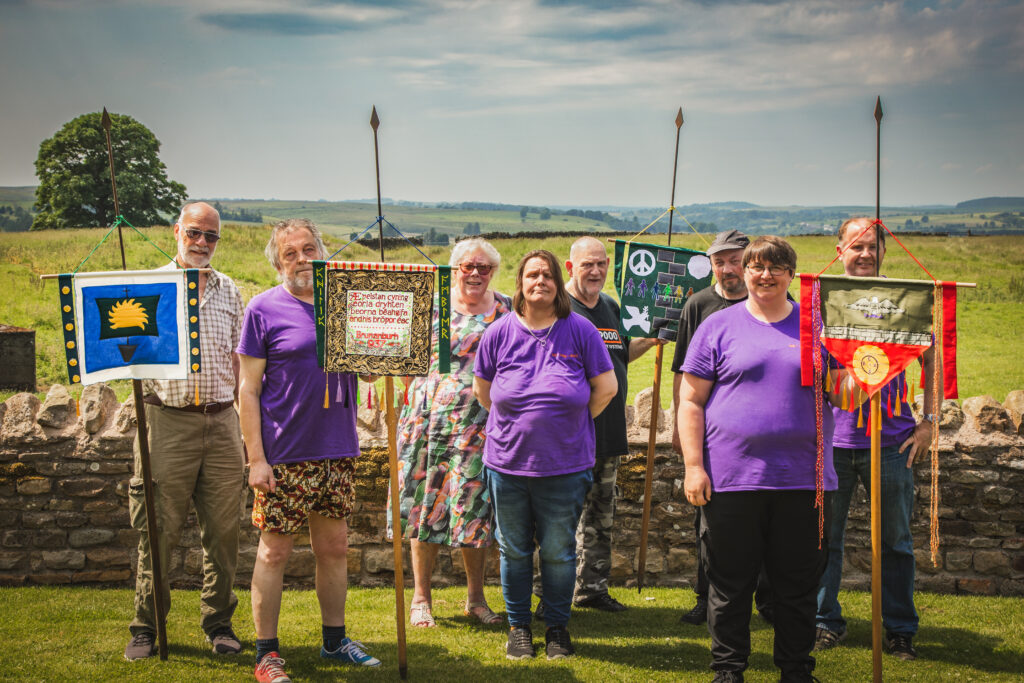
A community art exhibition led by The Vindolanda Trust, in collaboration with artist Mani Kambo and Zigzag Days, explores symbols of identity and belonging at Magna Roman Fort.
Magna Roman Fort, situated adjacent to the Roman Army Museum on Hadrian’s Wall, is currently under excavation as part of the wider Magna Project – uncovering ancient remains that have been largely unknown to local communities until now. STANDARDS builds on that work, forging a new connection between the frontier landscape and the people who live alongside it today.
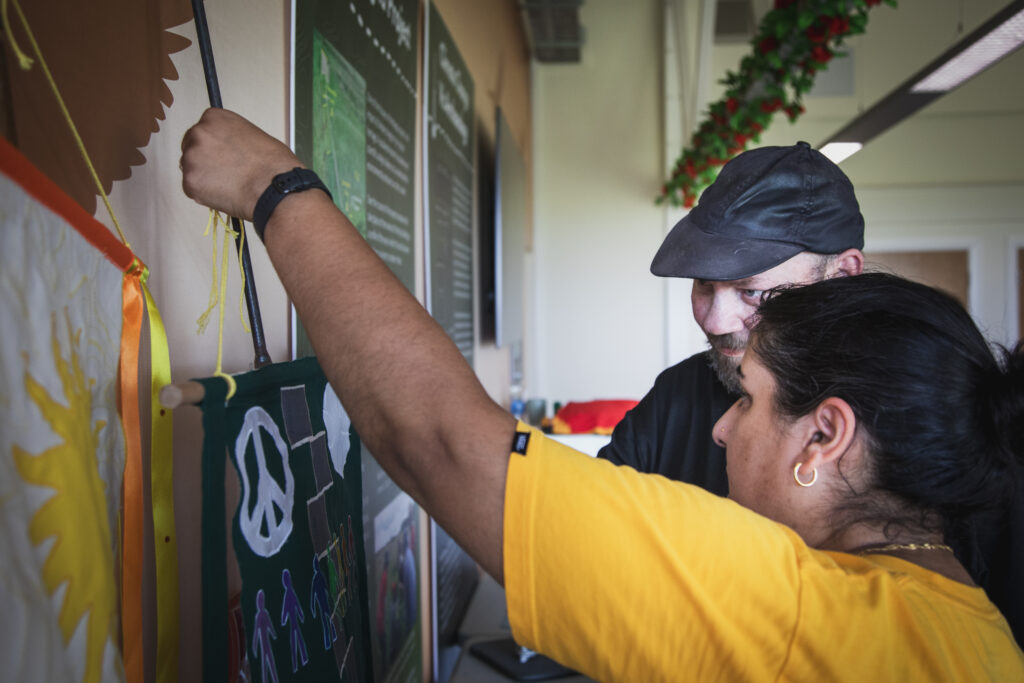
Building on the success of Unearthing History (2025), members of Haltwhistle community group Zigzag Days have taken part in artist-led workshops with Newcastle-based multidisciplinary artist Mani Kambo. Together, the group has explored their relationship to the landscape at Magna Roman Fort, reflecting on their thoughts, feelings, and experiences of this historic place to co-produce a body of contemporary artwork rooted in the site.
The project is part of The Land We Walk On, led by Morag Iles, Contemporary Art Curator, and Sophie Westlake, Activity & Diversity Officer of the Magna Project, in partnership with Zigzag Days and Mani Kambo.
As Sophie Westlake explains, “This project continues to strengthen our relationship with Zigzag Days, and creates an opportunity to reflect the group and their relationship to the landscape -allowing us to create markers of identity for the local community within this space.”
The artworks take their inspiration from Roman standards. In the ancient world, military units carried their own standard, a flag decorated with the unit’s number, name, and a symbolic figure or animal, as a visible expression of shared identity. Recruits drawn from across the Empire, from many different religious and cultural backgrounds, were unified under the same standard. That idea of collective identity, layered over individual difference, sits at the heart of this project.
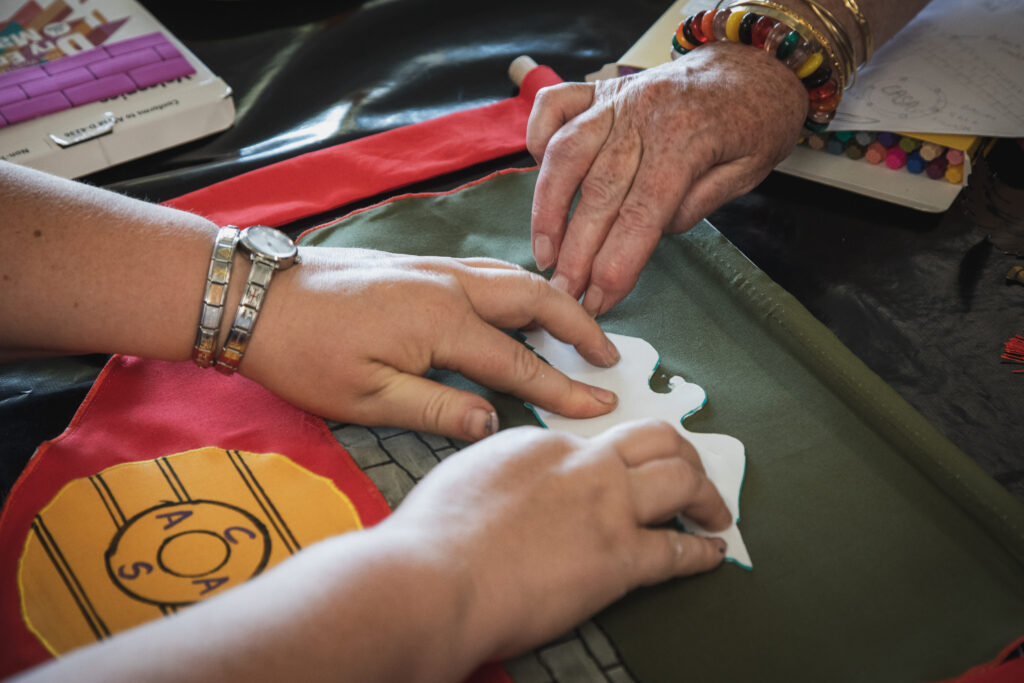
Mani Kambo reflects, “We took time to stop and consider our own mark in time: who we are, where we are, and what we connect with. That time together was grounded in physical creations, inspired by the Roman Standard Bearer. The relationship between making and location has been central to the work, with pieces created onsite, individually and in groups, in dialogue with the landscape where our final outcomes are activated.”
The artworks will be on display alongside photographs by Kit Haigh in a temporary exhibition at the Roman Army Museum from 10th July – 3rd November 2026. Visitors will be able to view the works and explore the landscape of Magna Fort, experiencing the site through both ancient history and the contemporary voices of the local community.
ENDS
Notes to Editors
About Magna Roman Fort and the Magna Project
Magna, a unique Roman fort on Hadrian’s Wall, under the care of the Vindolanda Trust, holds some of the keys to understanding the biggest questions about the people of the Roman frontier. Magna has it all and includes half a milecastle, part of Hadrian’s Wall, the Vallum ditch, a large town, rubbish dumps and pits, cemeteries and the fort itself. It’s the junction point between three Roman roads, the Military Way, the Stanegate and the Maiden Way. The site covers an area larger than Vindolanda and has the same preservation layers of organic remains and it is now under threat from climate change.
The Magna Project is a five-year research programme that commenced in 2023. It examines three areas of the site from north to south, combining archaeological investigation with non-intrusive survey to build a full profile of the land from ancient to modern times. Its legacy will be an informed management plan to help preserve this irreplaceable landscape for future generations.
About Zigzag Days
Zigzag Days, a Haltwhistle Partnership project launched in 2017, supports adults not in employment and at risk of social isolation — filling the gap between youth clubs and older people’s social groups. Many members face challenges related to disability, mental health, or physical health. The group meets fortnightly for outings, activities, lunch, and conversation.
About Mani Kambo
Mani Kambo is a multidisciplinary artist based in Newcastle upon Tyne. Primarily working in textile, print and moving image, Mani explores the inner spirit by drawing on her own personal totemic symbols. Influenced by her upbringing in a household filled with superstition, Mani focuses on objects, routines and rituals distilled both from the everyday and mythology.
About The Land We Walk On
The Land We Walk On: art, archaeology and climate change is a new creative programme for the Vindolanda Trust, bringing researchers, archaeologists, and curators together with artists to develop temporary exhibitions and activities that use artistic practice to unlock the Trust’s collections and enliven its ongoing research.
The Land We Walk On is funded by Arts Council England, the John Ellerman Foundation and Newcastle University.
www.romanarmymuseum.com / www.vindolanda.com
Follow @VindolandaTrust on Facebook, Instagram and YouTube