

Work Experience 2026
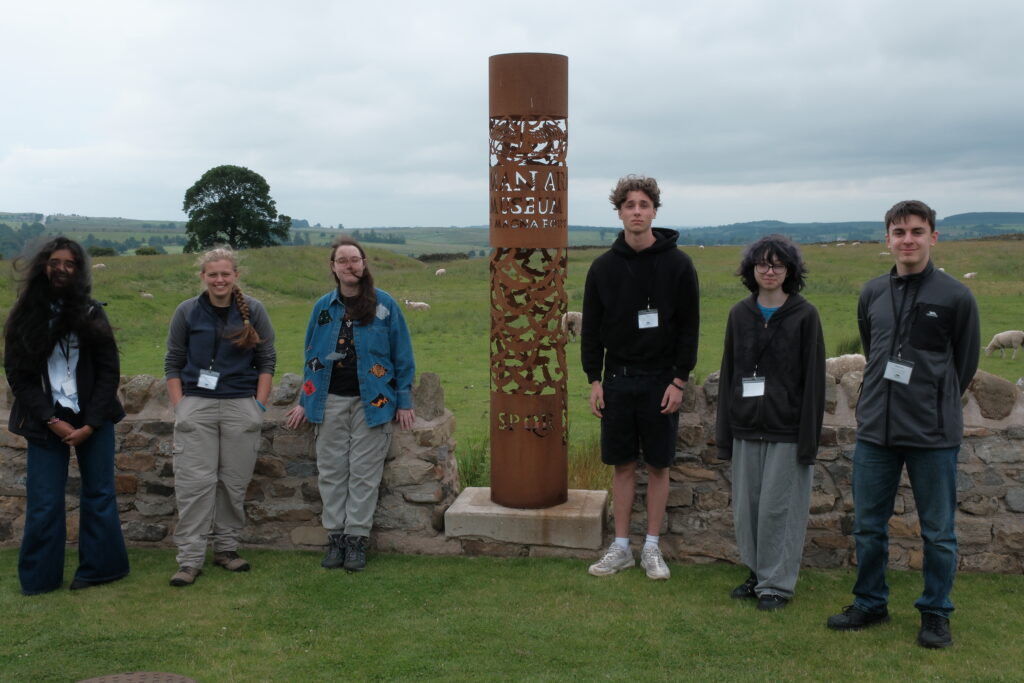
In June and July 2026, we welcomed students to the Roman Army Museum for a week of work experience. Below, some of the group reflect on their time here with us.
If you wanted to know about our work experience programme for 2027, you can find out more here.
Vincent
On my first day, we began by exploring the museum, which was interesting as there were a lot of things to find. We thought about how to consider different disabilities, through accessibility awareness training, which was enlightening and helped me better understand how to support as many people as possible.
On my second day, I was really exited to see the archaeological archives at Vindolanda. It was very interesting to see how different objects are archived and preserved, such as photographs and letters from the Charlie Anderson archive. After the archives we took a tour of the Vindolanda Roman Fort. It was fascinating to see what buildings had which purpose and to be able to imagine the fort in Roman times.
On my third day at the work experience, I was excited to do some post excavation work myself. It was very interesting to do the cleaning with a toothbrush, with gentle washing and sorting of the various objects that have been found during this excavation season. After that, we were able to try some geoarchaeological skills, sorting through heavy fraction from an oven on site, looking for pottery sherds, iron nails and various other things. After we had finished the sorting, it was explained about how much of an impact climate change had on archaeology, in terms of impacting the preservation conditions of the soil, causing textiles and other organic materials to be at risk of decomposing.
On Thursday, the fourth day of the work experience, started with an interesting tour of the Magna Roman Fort, where it was explained about how the excavations were structured and how we could get into archaeology. After the tour, we had a conversation with the Visitor Experience Coordinator and the Administration Assistant, who explained to me how engagement events were developed and managed.
On my last day at the work experience, we had the opportunity to design my own trail, which I was excited about and focused on the Daily Life of a Soldier in the Roman Army. I had a wonderful time at the museum and the work experience, and would definitely recommend it to others who are interested in archaeology and museums.

Paige
The work experience helped me to discover different areas of archaeology that I was unaware of, the main area that caught my attention during the work experience was the preservation of artefacts through the post excavation process and the archives.
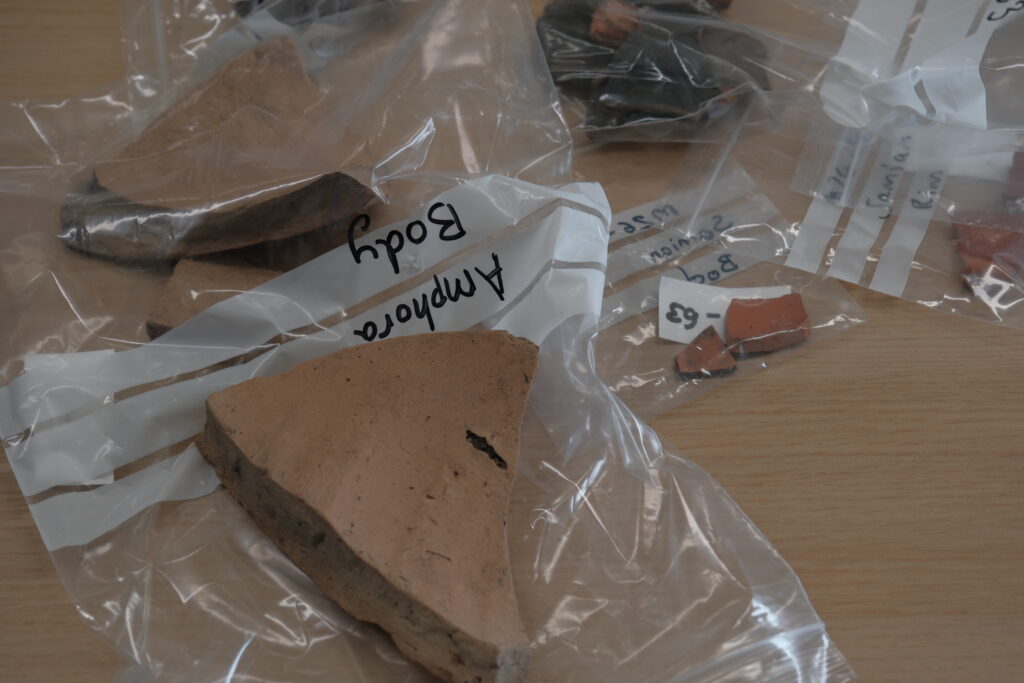
Through participating in the work experience I discovered a variety of career paths in archaeology that allowed me to work with artefacts without having to be onsite. The hands-on experience during the post excavation process showed me how artefacts are cleaned, sorted, and bagged ready to be sent to the archives. Furthermore, the post-excavation volunteers helping me during the process by showing me the correct way to clean and bag the artefacts. During this process I learnt about the different types of amphorae and the ways to tell what they were used to transport improving my knowledge.
Additionally, through talking to The Vindolanda Trust’s archivist I learnt the ways items can be preserved and stored, as well as the digital aspects and process of preservation. This experience helped me understand the significance of preserving artefacts left by the Romans for future generations to see. Through meeting the archivist and taking part in the post excavation process it helped me widen my knowledge on the process of archaeology, and the different roles involved in archaeology available.
Florence
I applied for this week as I am really interested in History, and I wanted to know more about the job opportunities in heritage sites and archaeology. Over the course of this week, we met lots of people who worked at the Vindolanda Trust and learnt more about different careers available. I found it really useful to hear how everyone had got to a job they enjoyed, even if it wasn’t what they had originally planned or a straightforward path.
One of my favourite moments this week was learning more about the archaeological side of heritage and getting hands on with post excavation, which I found very interesting. We also had a presentation from Rachel – the senior archaeologist at the Magna site – where we learnt more about what they were currently doing. She showed us aerial photographs of the site and highlighted the different areas of the fort that they’re currently excavating, before we went outside to look at the excavations ourselves. This was one of my highlights as I found it cool to see what was getting uncovered, especially after being given the opportunity to clean and sort the objects they were finding in post excavation. I also found it fascinating to find out new facts, like that Roman forts were built on the same model, so that if a new soldier joined, he would know where to go.
It was also really useful to hear about the current effects of climate change on archaeological sites like this one, as I wasn’t previously aware of how damaging it can be for these sites. For that same reason I also really enjoyed our session with Franki – the Geoarchaeologist – where they went into detail on these effects. I am really glad I was able to participate in this work experience and I would recommend it to anyone interested in history. Florence
Luka
In my five days in Vindolanda and the Roman Army Museum, I have become aware and learned a lot of the challenges archaeologists face in an and out of the field, one of which being climate change.
While imagining the effects of climate change I tend to imagine raising water levels, rising temperatures and a polluted atmosphere, however the idea of its effects on archaeology was foreign to me. Archaeology and the preservation of the site and its finds are largely dependent on the environment, however climate change is distorting this. For example, through climate change as more and more water, oxygen and minerals seep further down into the soil the current anaerobic conditions, for preservation of organic finds, are beginning to falter and organic material such as wood, leather and famous Vindolanda writing tablets may be at risk of decomposition.
Moreover, as we know climate change is largely down to the releasing of certain gases into the environment, but how does the affect archelogy? When gases such as nitrogen oxide and sulphur dioxide dissolve into rain clouds, the pH of the rain begins to lower and form acid rain.
This ‘acid rain’ poses a growingly ominous threat as seen across the world, such as the Acropolis of Athens. The two and a half thousand year old monument has begun to crack, as well as the threat of collapse has become possibility in the not so near future. As Vindolanda and Magna Roman Fort becomes more and more exposed, it becomes more and more likely these two significant historical sites, not just to Northumbria but to the understanding of Roman Britain as a whole, may soon face a similar fate.
Overall, I believe my week at both Vindolanda and the Roman Army Museum has been an incredibly valuable experience to learn and become aware of the everyday challenges faced in archaeology on site or behind the scenes. Luka
Amanda
For me the most interesting aspect of this work experience was doing the post excavation process and viewing the excavation sites.
I really enjoyed this because before this week, I did not have much knowledge about archaeology and thought that archaeology was only about excavation and putting artefacts in the exhibition. Now, I know that there are process like cleaning the artefacts, recording them and sorting them out. The cleaning process had to be done very carefully because some artefacts like the pottery and bones are very delicate. The easiest artefact to clean was the glass pieces, because the surface was smooth. I found the iron nails to be the most difficult artefact to clean because there was a lot of slag on it.
There was another process where we had to sort the artefacts after it was cleaned, and separate them into bones, pottery, teeth, etc. This was fascinating to me because some of the artefacts were difficult to differentiate, for example between bones and pottery, as they looked similar and had only a few differences, such as the pores in bones which made it easier to identify. I found this interesting because it showed me how even small artefacts can be valuable and provide information about the Romans.
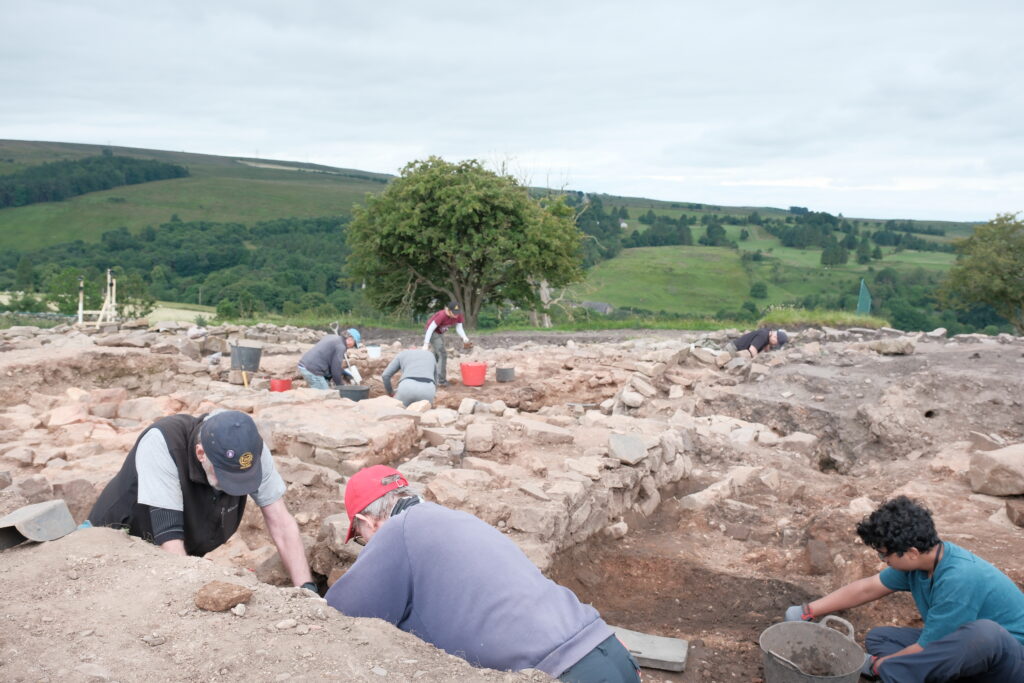
I also enjoyed the visits to the excavation sites at both Magna and Vindolanda Roman Forts. This was because I saw archaeologists working together as a team, showed clear communication and planning. This was exciting for me because this was the first time where I had visited an excavation site.
Overall, I am grateful for this opportunity because I got to learn more about archaeology and it has helped me decide that archaeology is the right path for me.
Isabella
Our first day began at the Roman Army Museum, followed by spending the next day at the Vindolanda site before returning to the Roman Army Museum for the last three days for more information about the excavation of the site at Magna Roman Fort.
I found the first day particularly interesting because of all the new information. Getting to look at the all the facts documented at the exhibits really helped me to gain a more comprehensive and detailed understanding of Roman history in Britain. I especially found the methods of treating the DNA of objects such as the Isotopic analysis interesting.
The second day was very helpful in helping me narrow down what I would want to look at for a future career. Learning more detailed information about the role of a curator and an archivist was very useful in this regard. My time at the Vindolanda Museum also illuminated several interesting similarities between Greek and Roman history such as their similar use of a water clock to keep time.
Learning and getting to practise with post excavation was yet another way I learnt a lot about archaeology. It was quite interesting to see the variety of different roles in this field and to learn what these roles may entail. All this information helped me to expand not only my knowledge of Roman artefacts, and what may be found at these kinds of sites, but of archaeology as a whole which was both useful and pretty interesting. This also helped me to see the impact of climate change on our world in a new light. It is strange, I never considered that climate change even had an impact of something like archaeology.
I have ended this week with more information than I anticipated having and a good start on where I want to go and what I want to learn next.