

End of Excavation
Rachel, Franki, and Tommy reflect on the end of the 2026 Magna Excavation Season, and looking forward to what will happen next year!
Rachel, Senior Archaeologist
And just like that we have reached the end of the 2026 dig at Magna. As always happens in the final week, everyone was pushing to finish off their areas and find that last flagstone or end of a wall! We also made sure to spend time making the site look its best for the final drone shot and photos for the archaeological record, doing some detailing on walls and even weeding parts of the trench. It wasn’t all cleaning though, some nice finds were discovered throughout the week, including a bone ear lath from an archer’s bow and Samian pottery with beautiful decoration, stamps and graffiti.
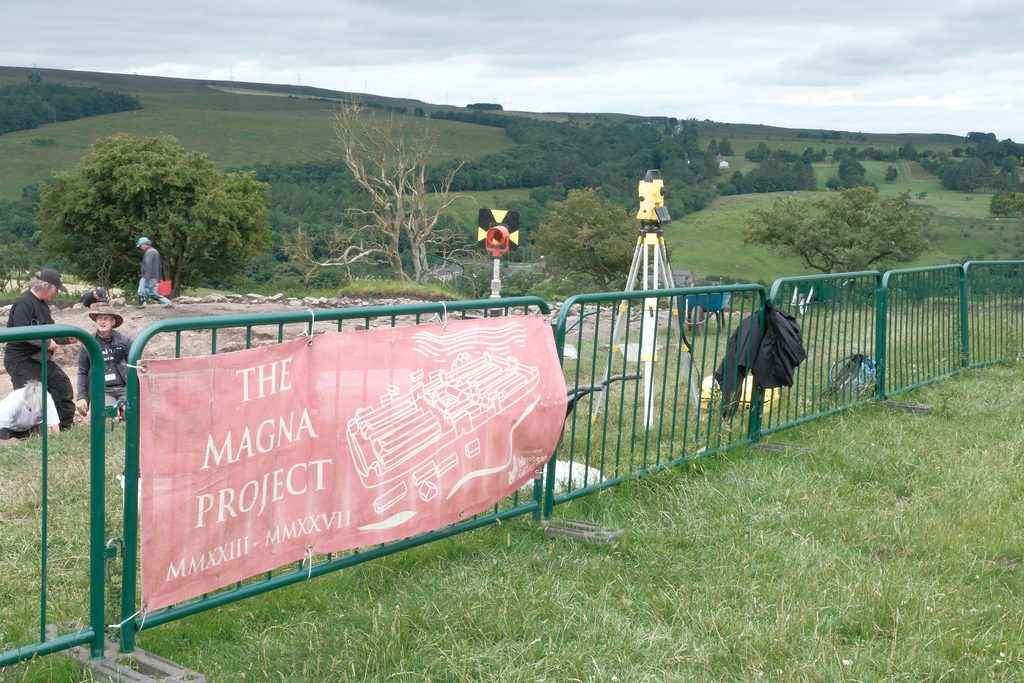
Overall, it has been a really fantastic year at Magna, the site looks almost unrecognisable compared to six months ago. We’ve been spoiled with great archaeology, great finds and most importantly great company provided by all our volunteers and visitors. The hard work and positive energy they have all brought to site whatever the weather has been invaluable, and I can’t wait to see everyone again next year! Rachel
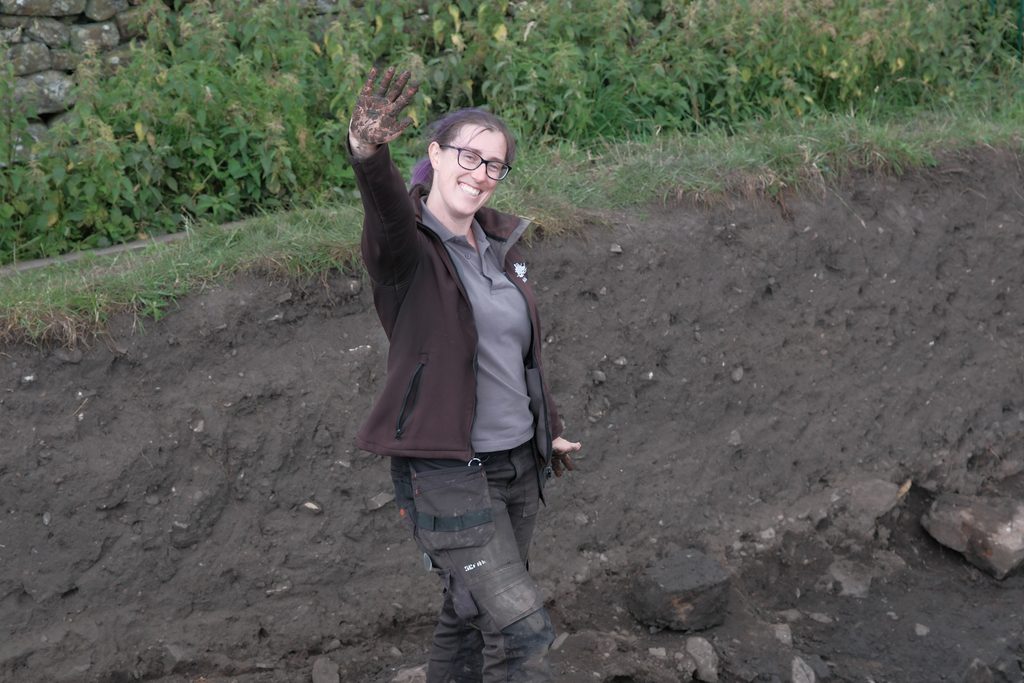
Franki, Geoarchaeologist
It’s been an amazing season out in windy Northumberland this year. On the environmental side of the excavation, the highlights include installing a new probe array in the southern defensive ditch and sampling over 500L of soil which will hopefully shed light on the historic environment and diet of those living at the fort. This data will add to the incredible archaeological information collected this season.
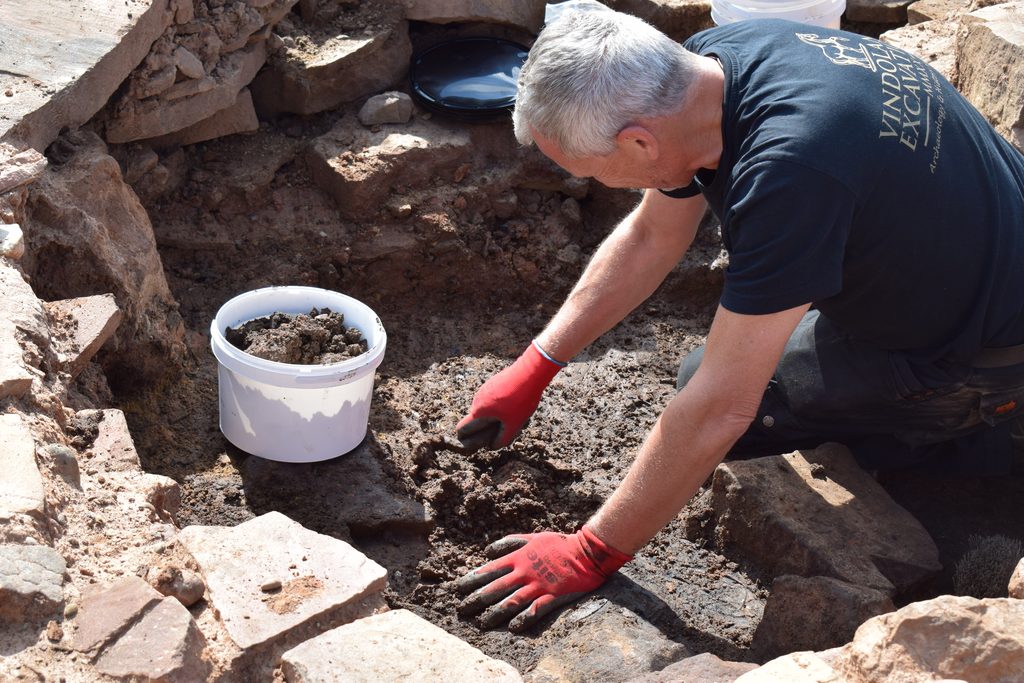
Part of the reason we were able to have such a productive digging season is due to the unusually dry summer we’ve experienced in Britain. During our 2026 excavation season (April-September), we totalled 300mm of rainfall – this is nearly 100mm less than our 2025 season. Our wettest month was June with 65.6mm of total rainfall, which falls short of June 2025 which totalled 109.4mm of rainfall – nearly double the volume. The lack of rainfall is not a surprise to anyone living in Britain or those tuned into British news: two-thirds of Britain have been in a declared state of drought while the four northernmost regions have had ‘prolonged dry weather’. This drought has impacted the daily life of Britons, especially those living in the south. I vividly remember when the government emergency alert sounded out simultaneously amongst all pub-goers on the evening of August 14th, stating that bonfires and BBQs were banned due to increased risk of wildfires. This followed unprecedented wildfires in the Scottish Cairngorms and other parts of the UK. Being from the USA, I am used to regularly seeing reports of wildfires in the western USA during the summer months; however, I never thought that would be in an issue in the strikingly green, rainy landscape of Britain.
While the lack of rainfall might mean we get more days outside excavating the fort, this has an overall negative effect on the landscape. The British climate is clearly shifting, and this is severely impacting the preservation of our archaeological remains. Next year, when we dig into the wooden fort of Magna, we will have to hope that the organic artifacts and structures still remain. During this year’s excavations at nearby Vindolanda, they found empty postholes which used to contain the wooden structural posts of the early 2nd century fort. These wooden posts degraded so quickly that the postholes did not even have time to fill in with soil, instead they remained as empty cavities within the room – hopefully Magna will not suffer the same fate.
Thus, our current excavations at Magna are of the utmost importance as time is of the essence. In our final year, we must work to learn all we can about those early inhabitants at Magna before their stories degrade. We’ve been lucky in the first four years of our excavation to experience the rich history that only anaerobic deposits can provide: such as the remarkably large Roman shoes, evidence of barley cultivation pre- and post-Roman occupation, and even the handwritten letter from the very first Magna writing tablet. We are fortunate to be able to dig this landscape before it’s too late, and the Trust is forever grateful to the volunteers who help us uncover these hidden stories, the visitors for their everlasting interest in those who lived on this land before us, and to the National Lottery Fund and Historic England who gave us the funding and permissions to make this vital project possible. Franki
Tommy, Archaeology Assistant
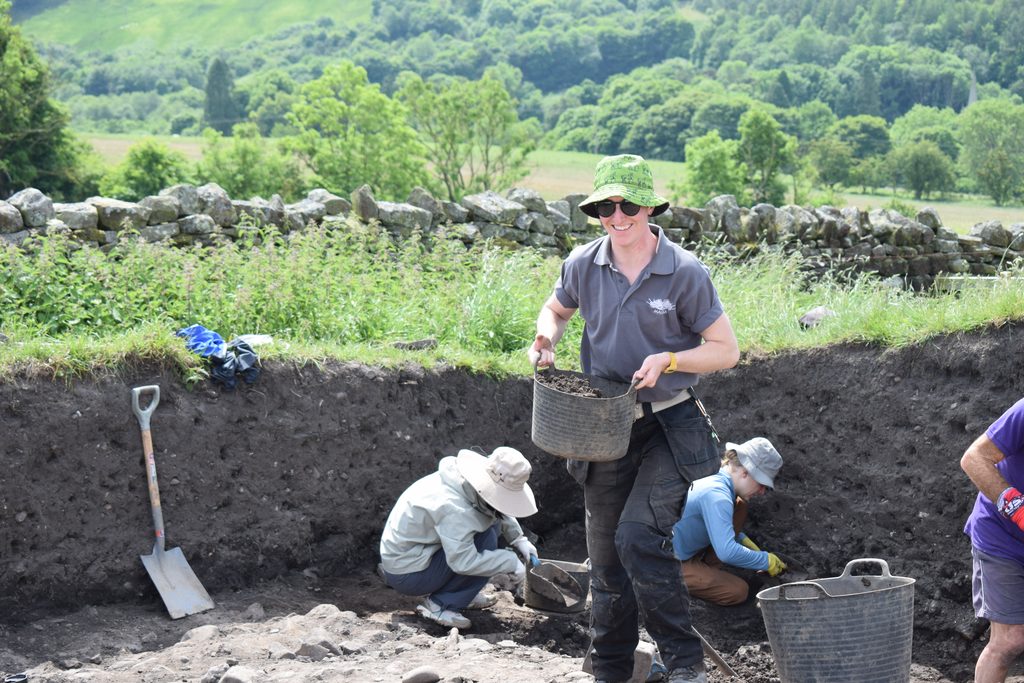
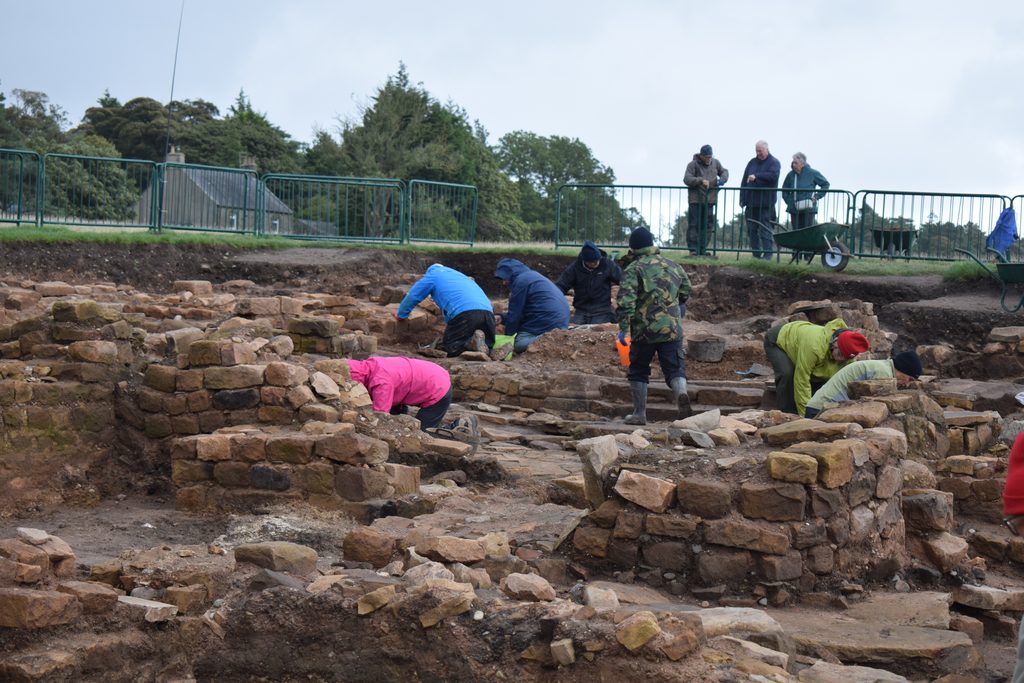
What a fantastic end to the season at Magna! So much has been uncovered in and around the praetorium: the western fort walls, southern Hadrianic walls, and the many , many interior rooms that have been trowelled, cleaned, and dropped down to reveal so much archaeology. We’ve had outstanding finds, along with a few brilliant surprises!
There have been some real stand-out moments for me on this shared excavation: uncovering the kitchen complex (complete with oven and Roman ladle to boot!), exploring phases that included storerooms and a large kiln, and my personal favourite, the large rectangular room on the western side of the praetorium with its intact opus signinum floor (fingers crossed for a larger, earlier heated pool! I guess that will have to wait for next year).
Beyond the structural story, the individual finds have been incredible. How could I not mention the six-sided bone die, which must have heard many a hearty laugh or groan of despair with each lucky or unlucky roll? The gaming pieces popping up everywhere add another fantastic human layer, as does a simple tile left out to bake 1700 years or so ago, only for a mischievous cat to leave its paw prints embedded for us to find. Personal highlights for me included uncovering a bone hairpin, a delicate copper ring, a lovely “Mediterranean Sea” blue half-melon bead, and, of course, the plentiful pottery sherds across the site.
Ultimately, as brilliant as the archaeology has been, the real privilege was working alongside such an amazing team: the Vindolanda Trust staff, my wonderful colleagues, and our smashing cafe crew who kept morale high with sandwiches, warm soups, and lovely chats when the weather turned and we trudged in for lunch. Then, of course, our brilliant digging volunteers who braved all elements with infectious enthusiasm, and the post-ex team who got stuck in with eyes peeled to ensure not even the smallest bead was missed.
The time and effort everyone has poured into this site is astonishing. Looking at the spoil heap, our teams have quite literally moved mountains to bring this spectacular building back into the Northumbrian sun.
To everyone at Magna who helped uncover the lives of those who came before us: you’ve all played your part in adding to a rich story that is still being told today.
Thank you all, and I look forward to seeing what discoveries await next year. Tommy