

Period 1
Here we will post regular updates on the current excavations and post excavation taking place on site here at Magna Roman Fort during Period 1 of the 2026 excavation season.
You will hear from our archaeologists and volunteers as they share news and thoughts about what is being uncovered, the challenges and the highlights of the excavation season.
6th April
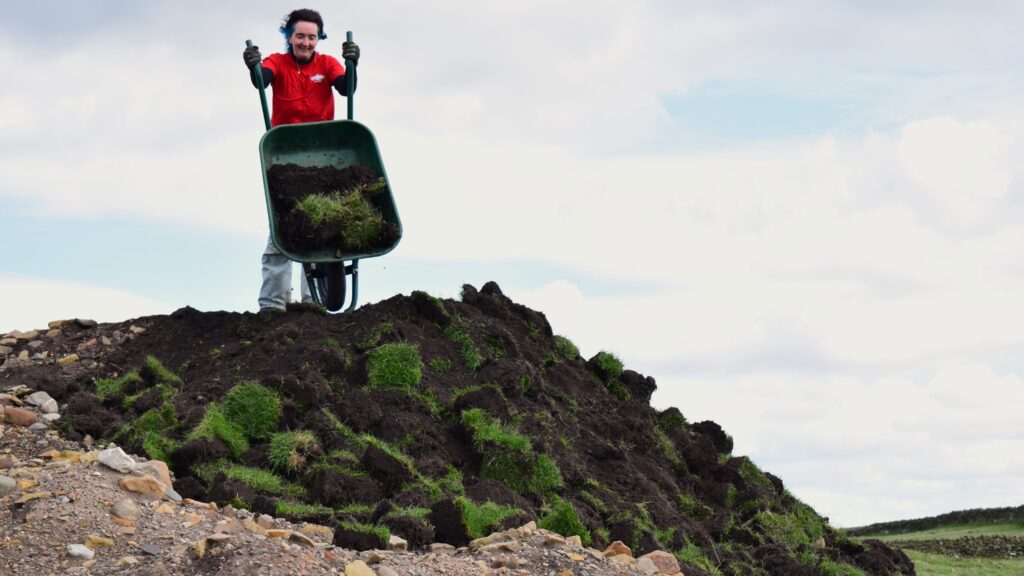
We’ve kicked off the 2026 season at Magna Roman Fort as the crew began by de-turfing in the southwest quadrant of the fort. Yesterday, the team were extending the trenches out to the north, shuttling wheelbarrows and already building up a nice spoil heap!
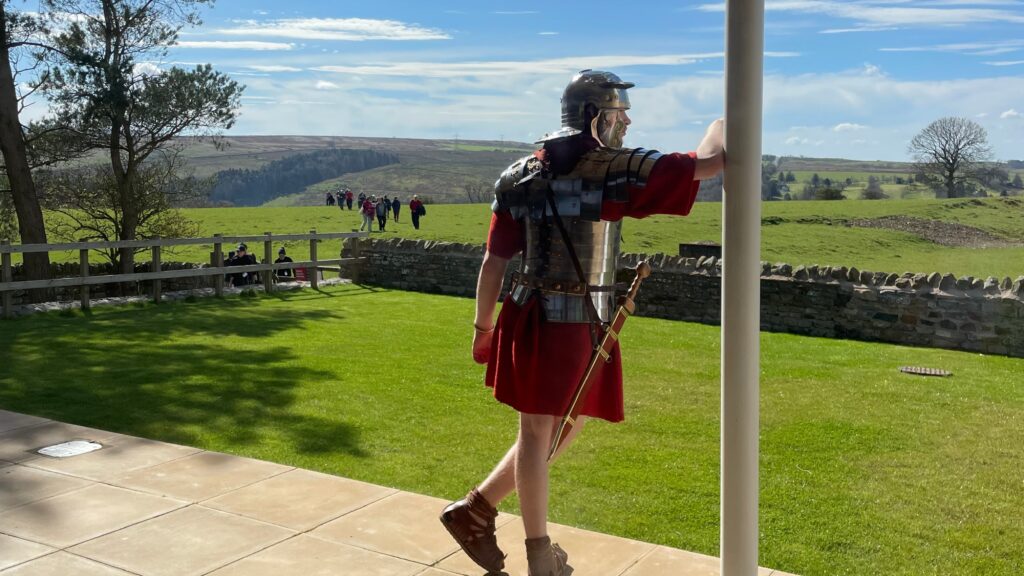
We were also joined by a Roman legionary for our Snap a Selfie event, part of our Teddy Bears Picnic running throughout April. He was keeping a very watchful eye on the diggers, as they came in for their tea break!
Speaking of tea breaks, the biscuit barrel is well and truly overflowing, which should keep everyone going through another sunny day of excavating. Sophie
8th April
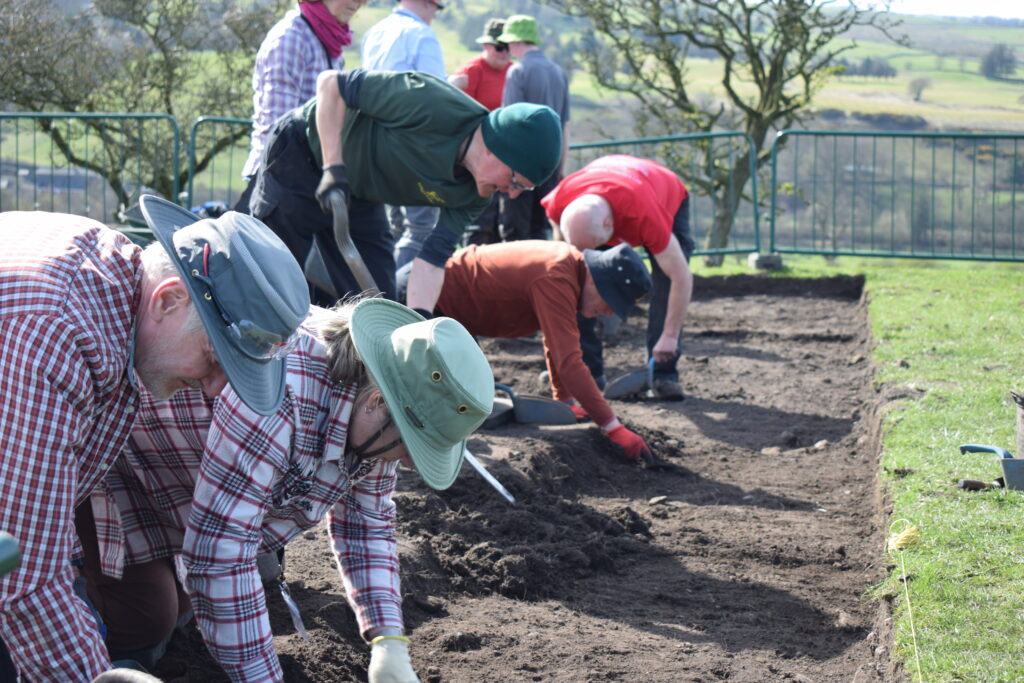
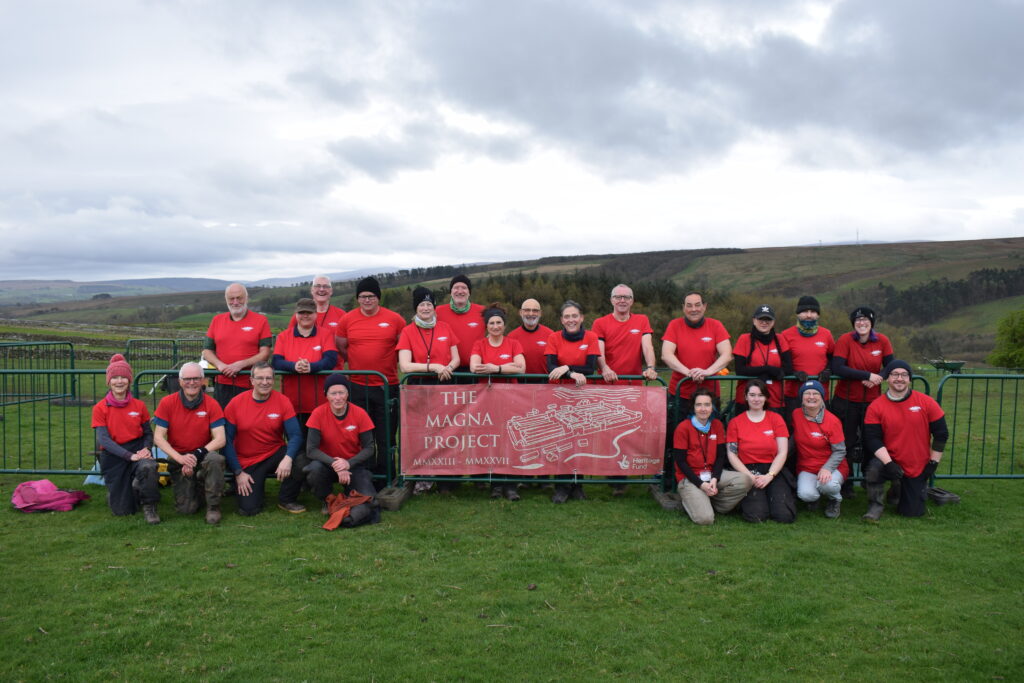
We are thrilled to announce that the 2026 season at Magna has officially begun. We kicked things off with a wonderful team of international and national volunteers for Period 1. To escape the initial windswept chill of the Roman Army Museum surroundings, we gathered indoors for a warm meet-and-greet to introduce the team. Fortunately, the “windswept” part was short-lived, as we were later treated to glorious sunshine for the remainder of the week.
Once introductions were complete, we headed out into the crisp April air. Rachel led the way, sharing the rich history and archaeological significance of the site to set the stage as well as Franki discussing how we monitor the effect of climate change and the conditions underground before we reached for our spades and trowels. But first… a well-earned lunch!
Post-lunch, it was all hands-on deck. Our first task involved de-turfing and removing the topsoil from the southwest quadrant. This served as a perfect “welcome back” for our Magna veterans and a hands-on introduction to the world of archaeology for our newcomers. Monday afternoon was a whirlwind of activity, with wheelbarrows moving steadily between the site and the spoil heap. The progress made was truly commendable, and the team certainly earned a restful evening.
As the sun stayed with us through Tuesday and Wednesday, the pace didn’t slacken. The team made such efficient progress with the de-turfing that we have already transitioned to trowelling the area. We are already seeing results, including:
Mixed sherds of pottery , Various CBM (Ceramic Building Material) and the plentiful Roman nail or two. Its great to be finding such an array of Roman small finds already. There is so much more waiting to be uncovered. Stay tuned for further updates as we dig deeper into the season! Tommy
10th April
Well, I can’t believe we have already reached the end of the first week of this year’s excavations here at Magna! It has been really great to get back out into the trench and continue to build on the results of last year’s work uncovering the structures of the SW quadrant.
So far this week the focus has been on expanding the trench to the north, and the team have already started to reveal some of the archaeological features in this area. The continuation of a very late earth and stone rampart, which may be associated with occupation on the site after the Romans left, has been located. It will be interesting to see how far up the west edge of the trench this extends and whether the whole fort platform was enclosed by the later inhabitants of Magna. Meanwhile some of the volunteers are exposing more of a large clay bank on the west edge of the trench – last year excavations revealed ovens built into this clay, suggesting it could be the internal rampart of the stone fort’s west wall, so there are high hopes for more of these in the near future! Elsewhere large areas of packed stone are starting to appear from beneath the topsoil – hardly surprising when we are digging in a space with lots of collapsed stone buildings! However, some of these may have been more intentionally laid down to form floors or road surfaces but we will have to wait until more is uncovered to see if that’s the case.
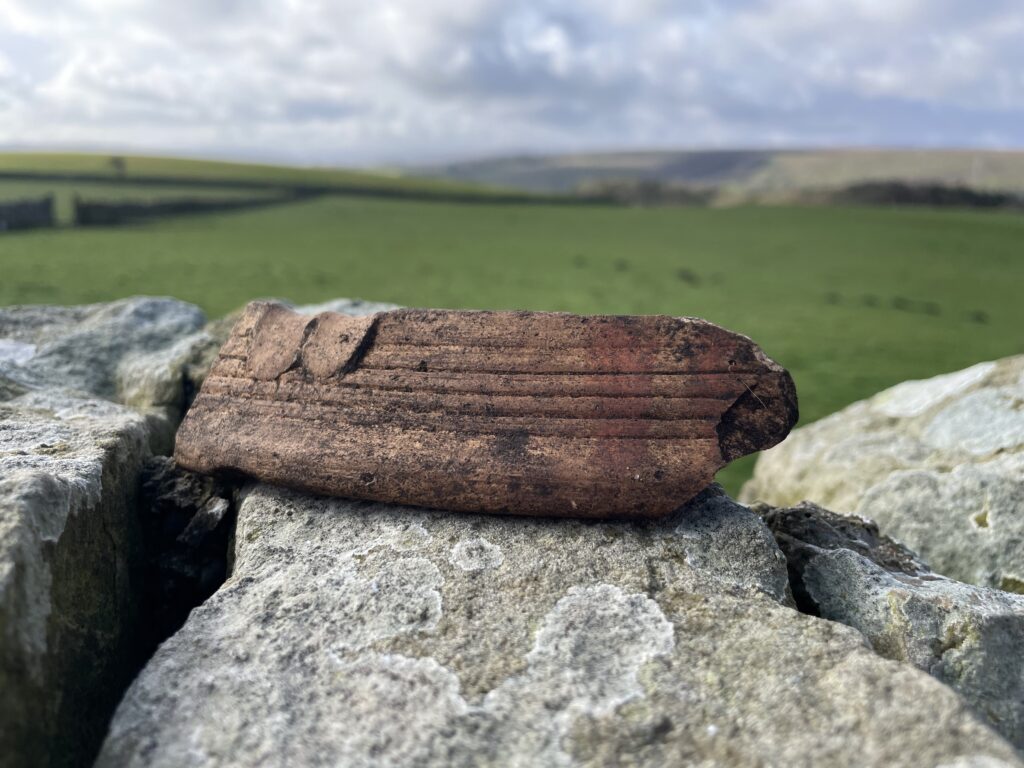
It has also been really nice to see that most of our finds so far have been Roman – we’ve had pottery such as Samian and mortaria (including a piece with fingerprints on the rim!), but also small finds including coloured glass beads, bone decorations for furniture and even an ancient trowel!
Overall, it’s been a great start to the season, and I can’t wait to see what happens next week. Rachel
15th April
It’s been a lovely start to our second week of excavations at Magna. We’ve had some interesting small finds and pockets of glorious sunshine, but the most exciting part of the week for me, as the geoarchaeologist, has been seeing that the soil redox levels are nearing anaerobic conditions.
Analyzing data from our weather station and environmental probe array is a large part of my role at the Magna Project. The probe array is located within the peatland in the northern field and takes measurements for multiple weather variables and geochemical parameters every fifteen minutes, every day. This instrument has been continuously recording data for the past four years, and in that time we’ve noticed that the soil environment tends to become aerobic over the winter and then anaerobic over the summer. We have some preliminary theories on why this might be the case, which will be published in our upcoming 2025 interim report (read our 2023 and 2024 interim reports here), but we cannot positively identify a cause for this four-year pattern until more data is collected. Regardless, in 2024, the redox switched from aerobic to anaerobic on May 30th – in 2025, this happened on June 8th. Thus, it is interesting to see that the redox switch might happen in mid-April! This is likely due the past year having markedly different weather than the previous two years, although further analysis is certainly required. Luckily, our weather station data will help identify different in trends in the climate to pair with our geochemical data.
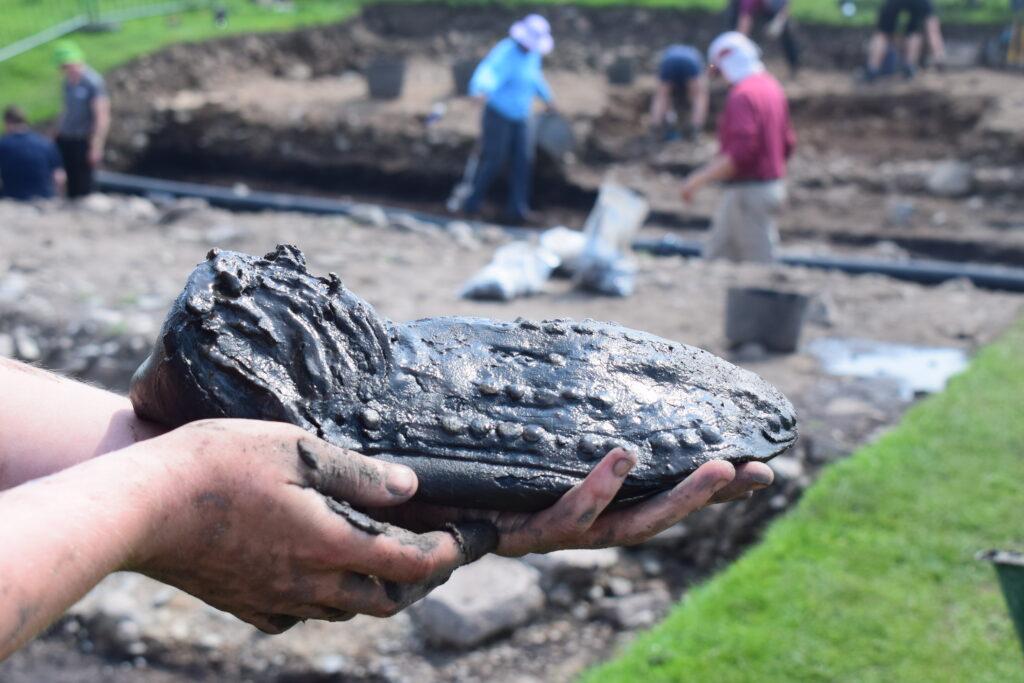
Nevertheless, it is good news for our organic artifacts that our solidly positive four-year trendline might flatten out a bit. An aerobic soil environment allows microbes and fungi access to energy which allows them to eat at organic finds such as leather shoes or wooden writing tablets. An anaerobic soil environment, on the other hand, nearly stops the decomposition process. So it’s great to see the redox switch earlier than the past two years! Franki
16th April
What a difference a few days make. After weathering a bit of a literal storm at the end of last week (and some more this Wednesday) , we were thrilled to kick off a new Monday under clear blue skies once again. The energy onsite has been high as we dive back into the dirt, and the archaeology is certainly rewarding our persistence.
Our teams have been focusing on the remnants of the Commanding Officer’s bathhouse, searching through the evidence of heat and burning nearby to reveal the beginnings of a possible hypocaust. Simultaneously, we have begun the painstaking process of cleaning the post-Roman wall in the southwestern quadrant.
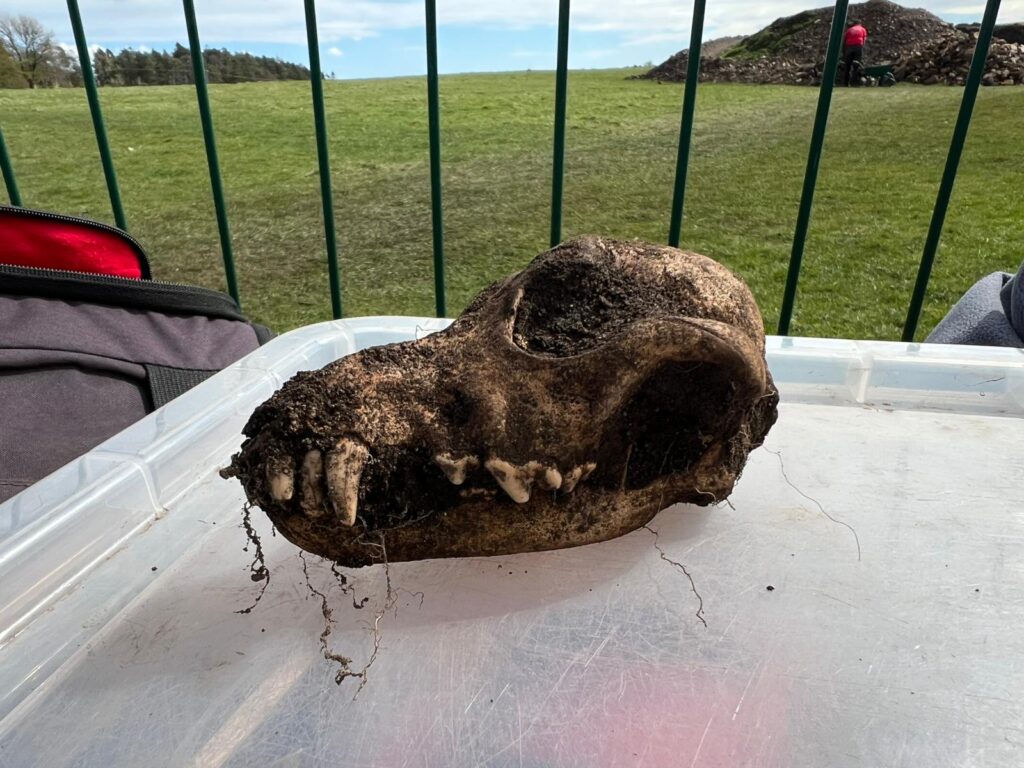
The finds tray has been looking particularly healthy this week, beyond a steady array of animal bone and some truly stunning glass beads. We have also been gifted with two scales from Lorica Squamata (scale armour ) , a remarkably intact dog skull (much to the fascination of the team and the delight of Rachel) , and a beautiful bone hairpin that was found within the compounds of the Commanders house. Surely a misplaced or lost item at the time but deeply treasured by us now.
It’s been a big week for ceramics too. We have unearthed more Samian ware, several larger fragments of mortaria (grinding bowls) and a large sherd of amphora. We are also making steady progress through the antiquarian backfill. While archaeologists of the past were enthusiastic, their standards weren’t quite the same as ours today. We are meticulously checking their “leftovers” to ensure that anything they missed is properly collected, recorded and given its proper place within the site’s history. We have even started sampling the drainage soil; so far , it seems the Romans were flushing away an awful lot of chicken and duck bones.
Thanks to everyone’s collective hard work, from superb cleaning and trowelling to heavy lifting of rocks and turfs, we are getting a clearer image of the site’s layout one scrape at a time. Let’s hope that the final two days of the week, the sun decides to bless us once more! Tommy
17th April
The second week of period 1 has flown by and there has been great progress made across the site. The focus for most of the team this week has been walls, and we’ve certainly got plenty of them in all shapes and sizes!
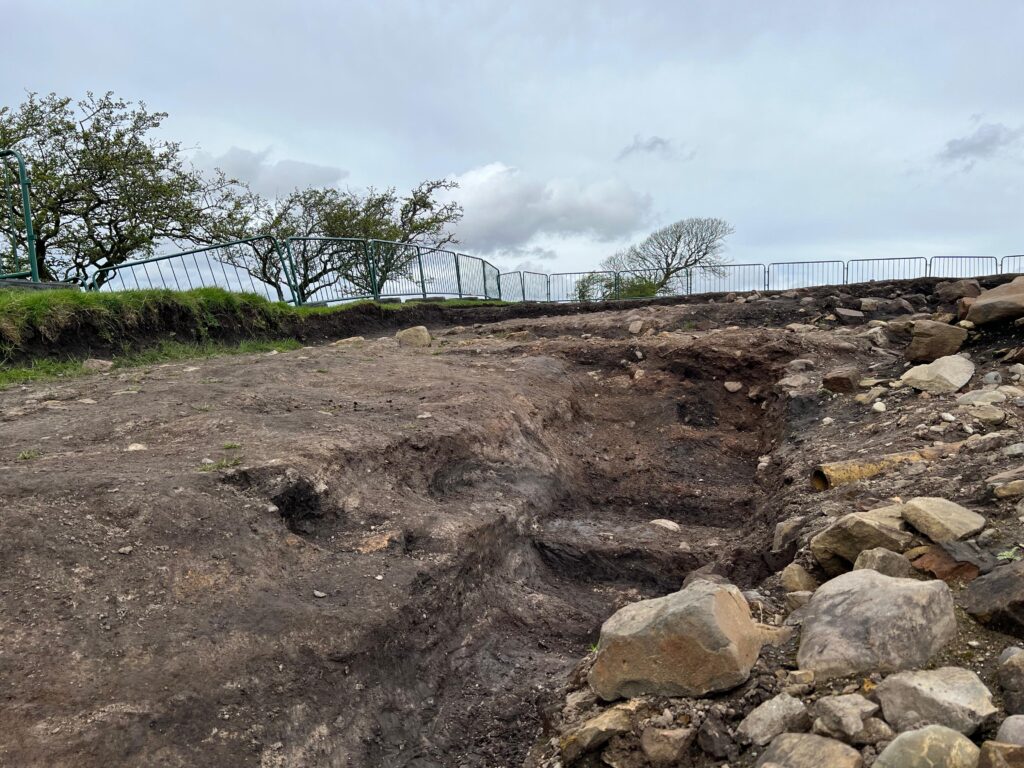
In the newly deturfed area the team have been investigating some of the latest activity on the site, uncovering more of a stone and earth rampart associated with the post-Roman period. This feature was found last year but it is great to see it continuing – hopefully we will be able to trace its route further and work out how much of the site continued to be occupied after the Romans left.
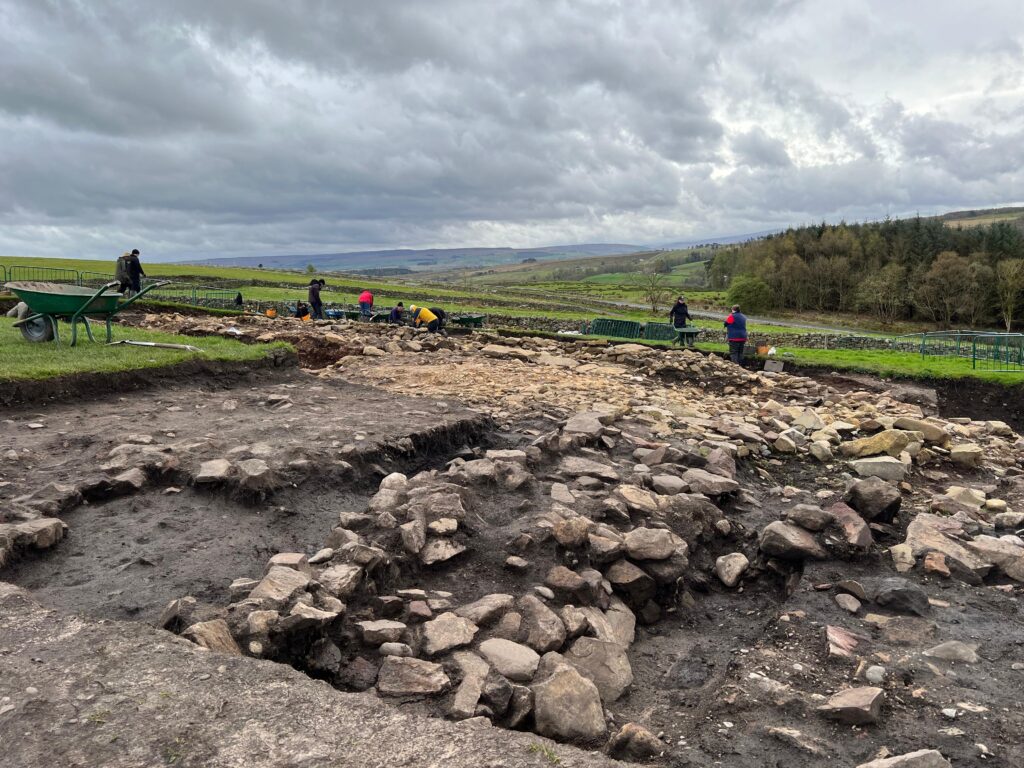
Within last year’s trench the hunt for the walls of the late Roman stone fort has resumed on both the south and west sides of the fort. Using the SW angle tower as a starting point, we have been able to estimate where the associated fort walls should be positioned and start excavating in those areas to see what survives. On the southern trench edge stones from the inner face of the wall, along with the clay and rubble core, have been successfully located in situ although only one course survives in many places. While we haven’t been able to find any surviving stonework on the western edge of the trench, a clear vertical cut through an earlier clay rampart for the wall’s foundation marks out where it would have once stood.
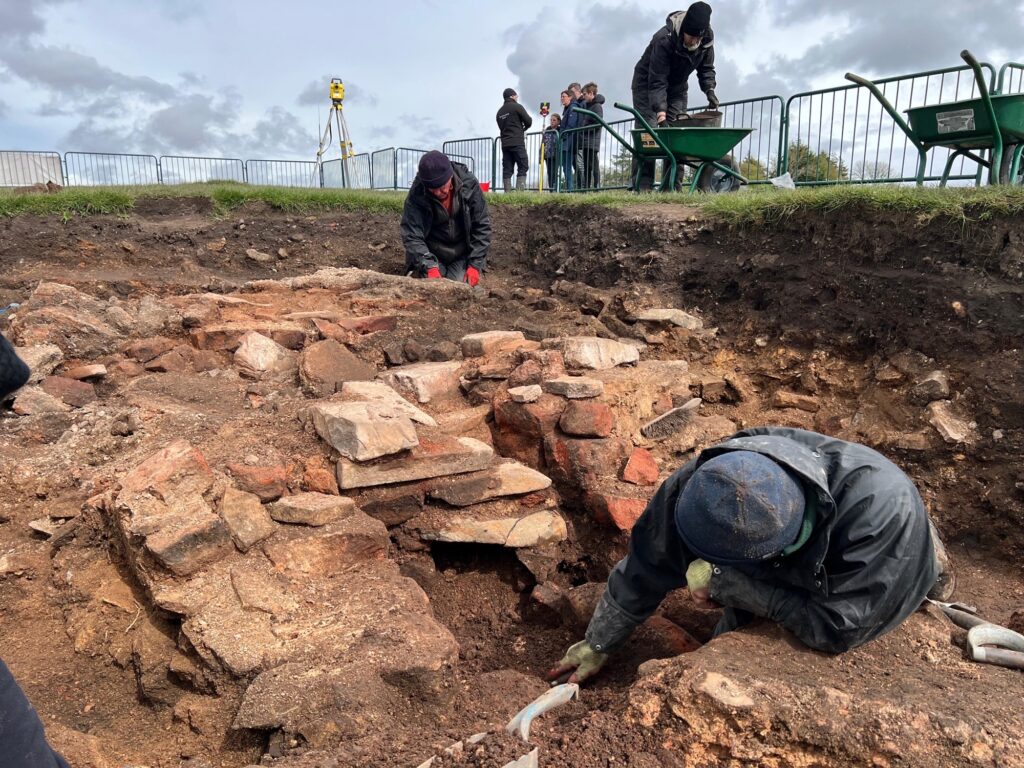
Lastly, some of the group have moved back into the commanding officer’s house to tackle more of the antiquarian backfill. Lots of rubble and historic topsoil have been removed and we are starting to uncover more remains of walls and potential sections of the underfloor heating system. It’s still a very disjointed jigsaw puzzle at this stage, but it’s been really rewarding to start seeing some surviving sections of walls and big sheets of opus signinum, the waterproof concrete the Romans used to line their baths.
Overall, our volunteers have got the season off to a flying start and I can’t wait to see how it all develops! Rachel