

Period 10
August 10th
Despite having to soldier through grey clouds and relentless rain, our previous group worked their socks off to get the site in tip-top condition for our incoming volunteers! Happily, the weather gods have smiled upon us: Sol has blessed us with a few gloriously clear days before he gets too big for his boots and really cranks up the heat.
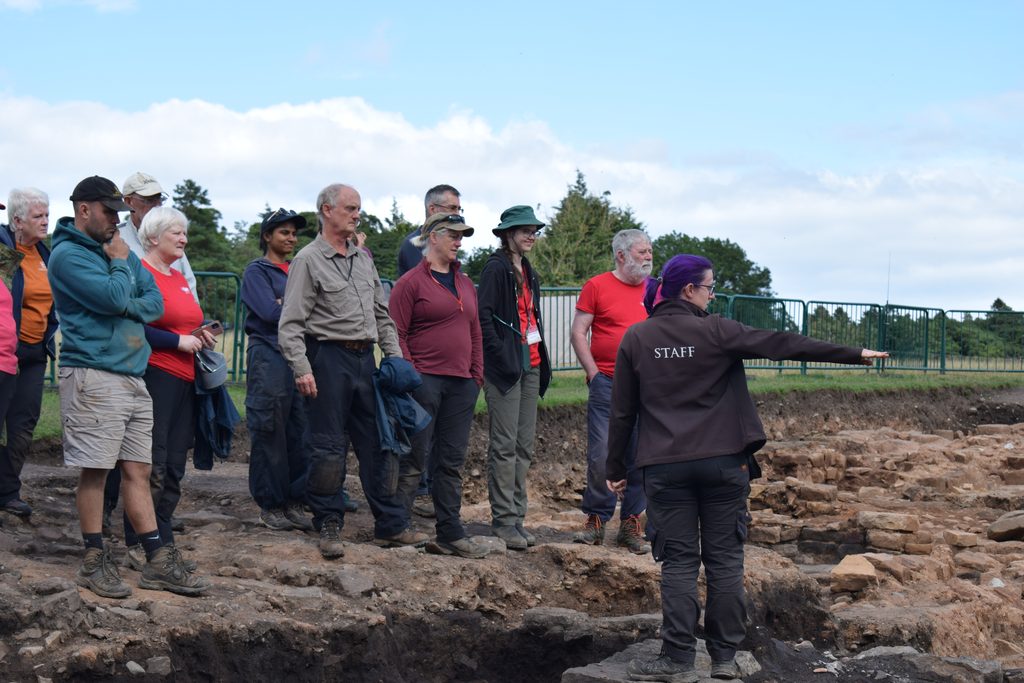
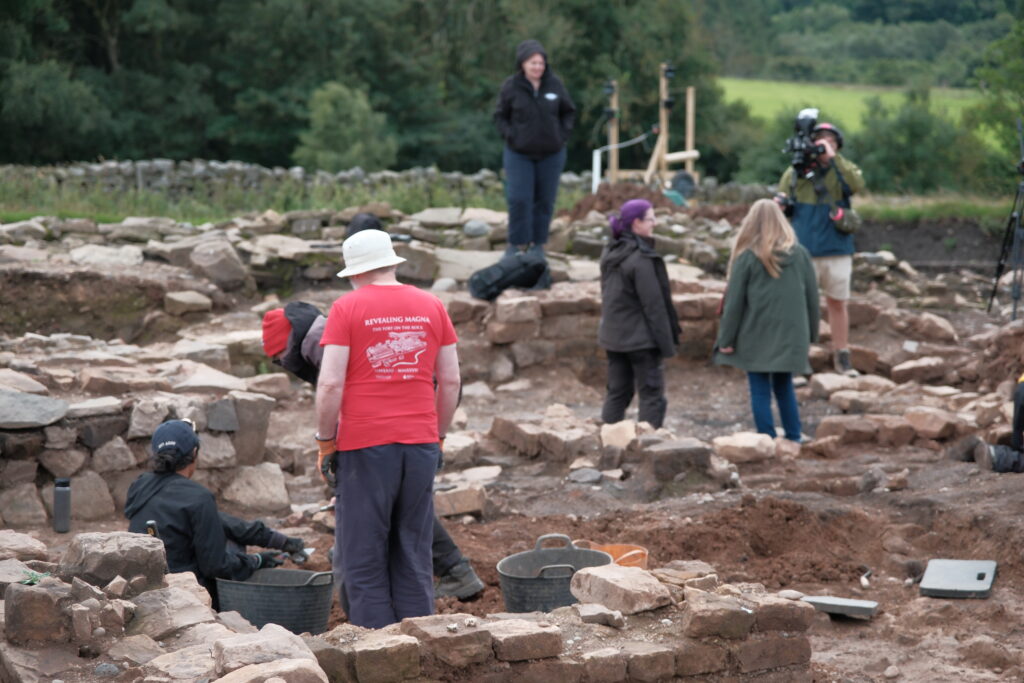
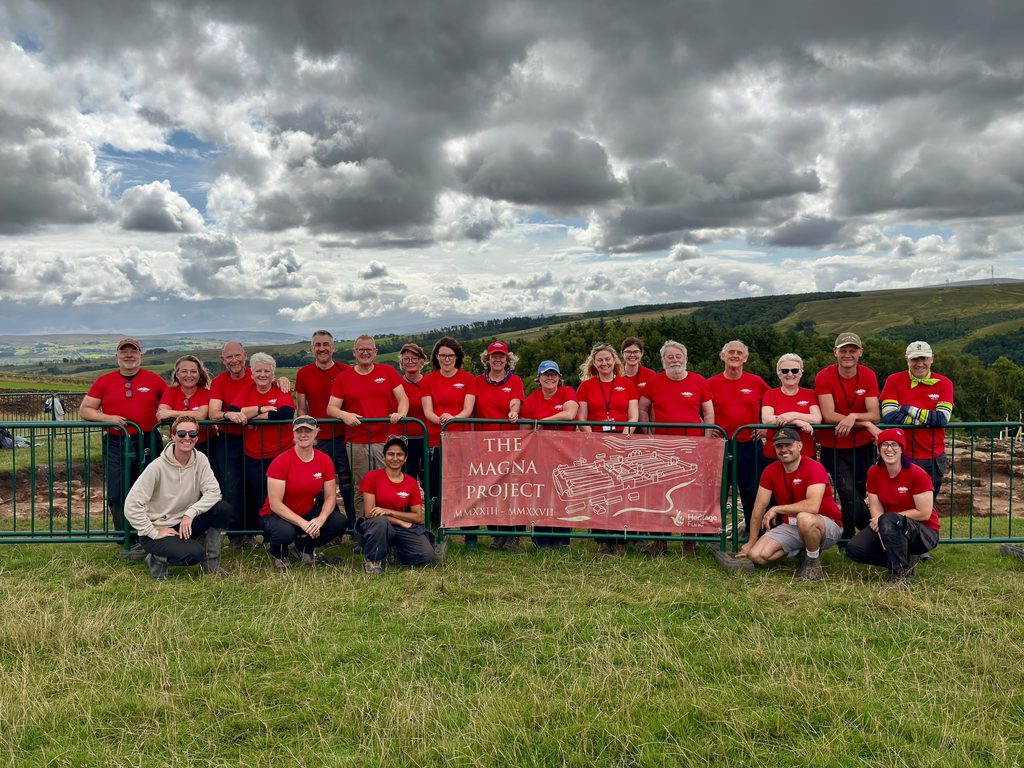
As is tradition, our lovely new arrivals were treated to an excellent site tour by the team before rolling up their sleeves and cracking straight on from where our last superb crew left off.
And there is still so much exciting work to be done! We are still on the hunt for the elusive eastern edge of the praetorium. Will we uncover another hypocaust under one of the larger rooms in the south west section? Only time and digging through mountains of opus signinum (that sturdy Roman concrete!) will tell. Over in the western section, we’re itching to see what lies beneath that heavy Post-Roman rubble, especially since tantalising glimpses of flooring started peeking through late last week. And, as Rachel previously mentioned… we’ve got more drains than you can shake a stick at!
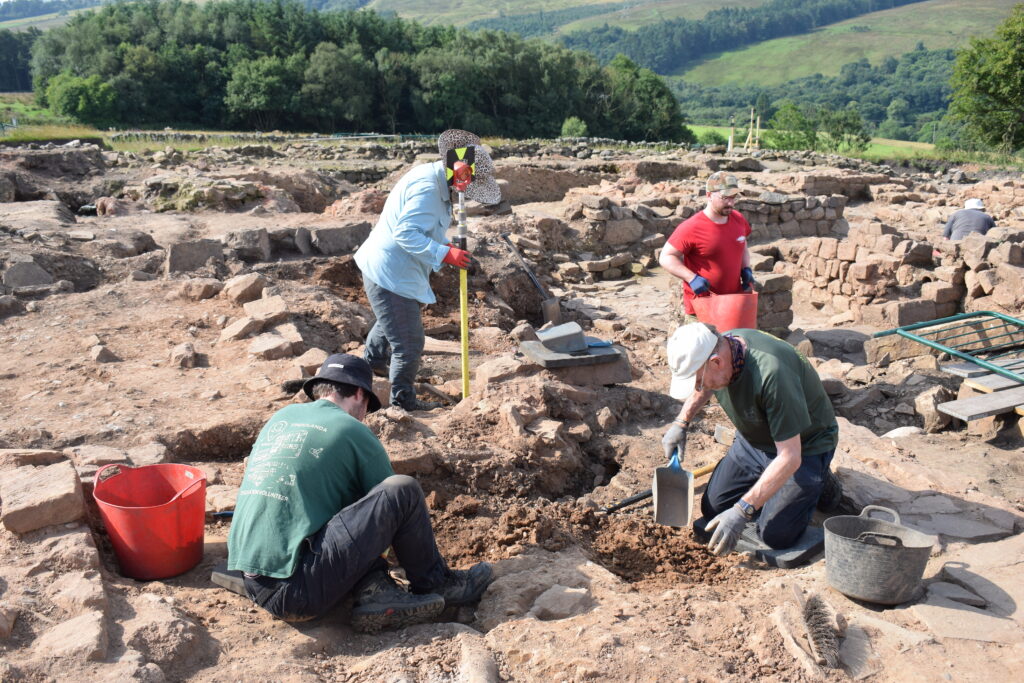
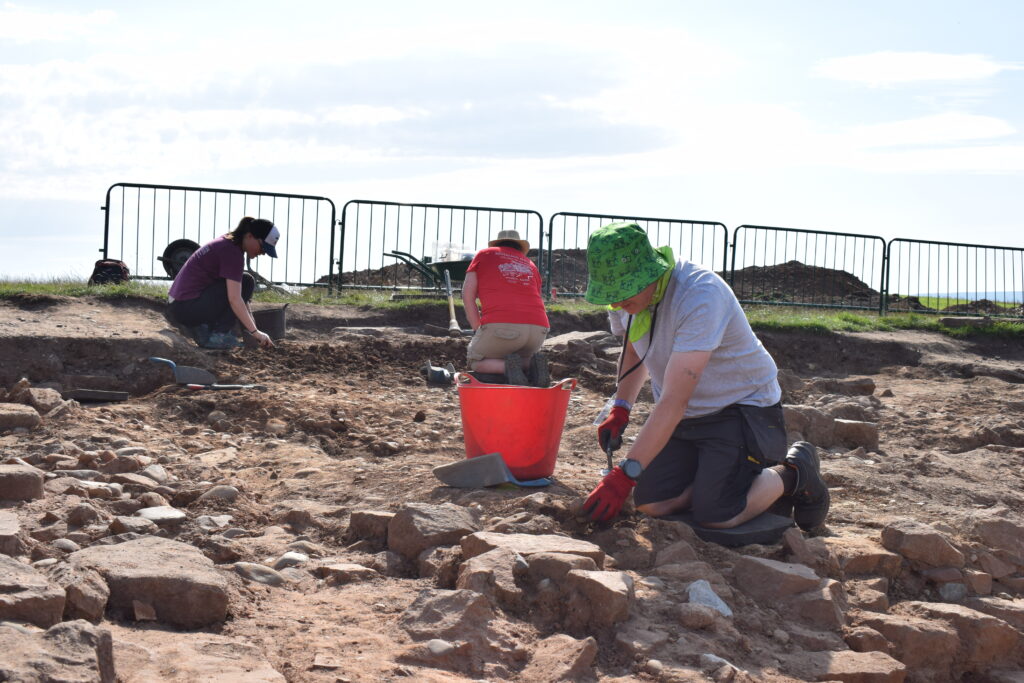
Over in the eastern section of the praetorium, the team today did a power of work excavating to try and locate that missing eastern wall and hopefully the entrance. We will find it eventually! Plenty of meticulous cleaning went into detailing the rooms and clearing out those endless drains. The crew in the western section had a proper workout, removing layers upon layers of Late Roman stone and filling barrows by the bucketload. Just north of the western stone clearance, the team got stuck into some fine cleaning to track the intriguing colour changes in the soil and reveal the layers waiting beneath the excess fill.
To top it all off, the site delivered some lovely finds today predominantly some fantastic sherds of Black Burnished Ware pottery and, of course, plenty of animal bone to keep our finds desk busy!
A massive welcome to our new team, what a brilliant start to the week! – Tommy
August 13th
Unsurprising to most of us residing in the UK, the Met Office has predicted that summer 2026 will be the warmest summer for average maximum temperatures, beating out the 50-year-old record set in the sweltering summer of 1976. This year is also likely to have the warmest average annual temperature, beating out previous records set in 2025, 2022, 2023, 2014, and 2024. It’s no coincidence that the top five annual temperature records have been set in the 21st century – this speaks to the rapid change in our global climate as a direct result of climate change and human intervention. With new climate records being set year after year, our research into the impact of climate change on archaeological preservation becomes even more pertinent. We are at risk of losing our shared global heritage along with precious and rare ecologies if the climate continues to change at such a swift pace.
Here at Magna, we still haven’t beat our maximum summer temperature set on July 19, 2022 with 34.5°C; however, on June 25 of this year, we hit our second highest maximum with 30.9°C. We’ll have to see if that is surpassed today on what is supposed to be the hottest day of the year. If you’re interested in looking at our climate data further, check out this online application where you can interact with our climate data from your own laptop. You can also take a survey to give feedback on the application design and output. Franki
August 16th
As always our volunteers have wasted no time in getting stuck in during their first week with us, searching more remains of the praetorium and clues to what life was like here centuries ago. In the centre of the building we have continued to remove the infill from the late Roman rooms, while in the eastern wing we have uncovered cobbled flooring along with new sections of the walls and even more drains.
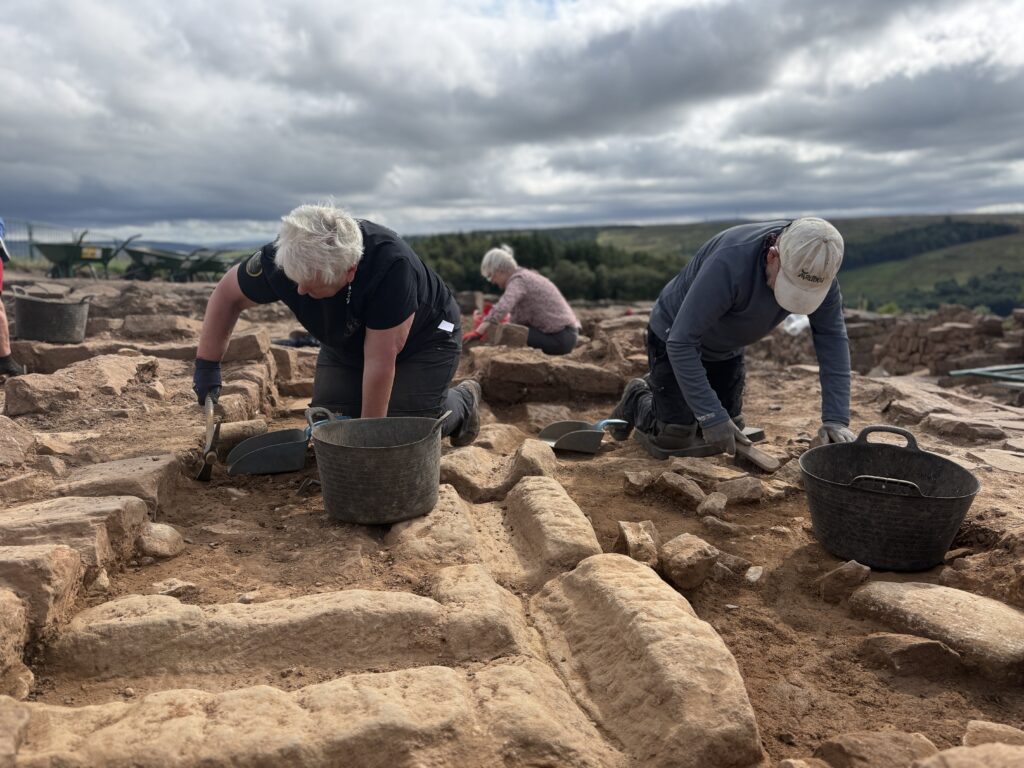
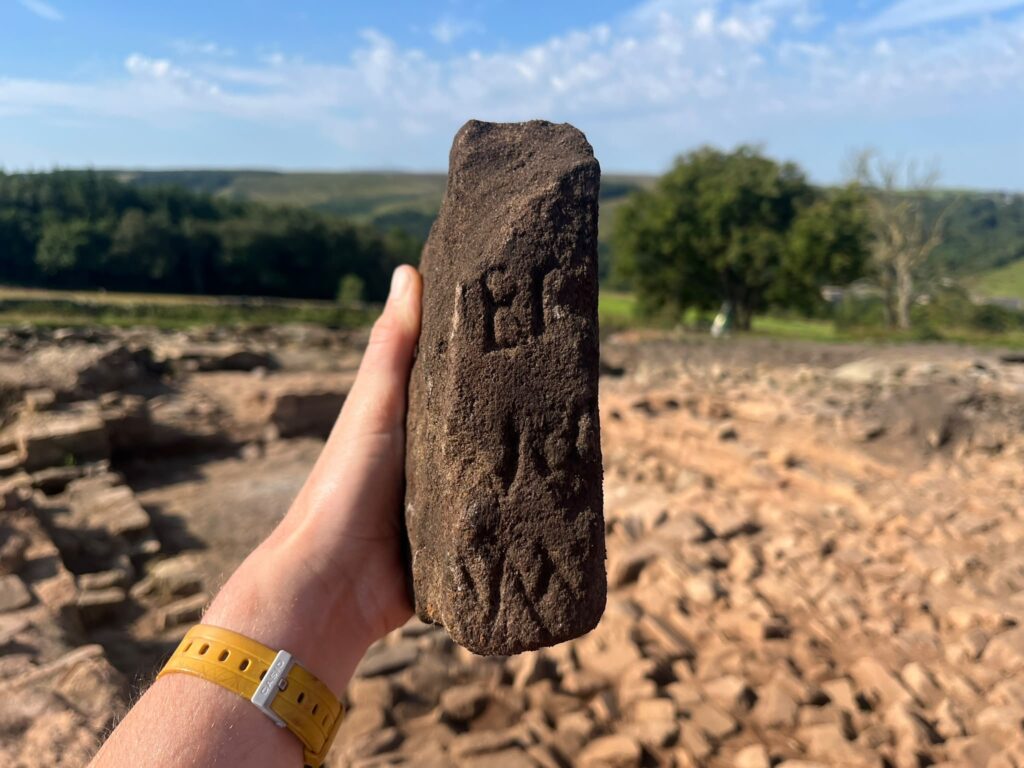
However, the biggest news of the week has not come from the structure of the praetorium (that pesky east wall is still evading us) but from the large stone terraces built over the western wing of the building in the post-Roman period. While clearing the rubble to reach the rooms below one of our volunteers discovered a fragment of a Roman inscription!
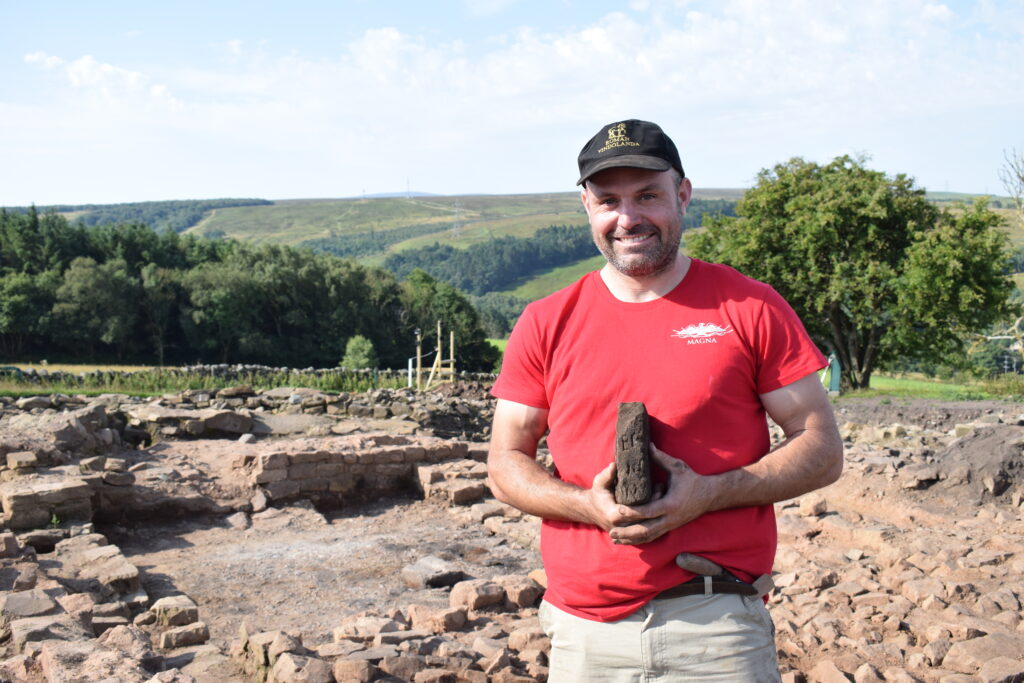
Period 10 volunteer Eelyn had the following reaction to his discovery:
“Finding an inscription on a Roman site would be a great find for anyone, but what makes this find that little bit more special for me is the fact I had joked that morning I would find an inscribed stone. A fellow volunteer had asked me what I was going to find that morning, given my recent luck with finds. I replied, “An inscription, first thing.” Within twenty minutes of the start of digging, I found it. The excitement took over. I am absolutely thrilled with this find, which is my first ever inscribed stone. This is my fifth time digging with the Vindolanda Trust, and the experience just keeps getting better.”
Despite Magna having produced the most inscriptions of all the Hadrian’s Wall forts, this is one of the first pieces we have found during the Magna project. Although its sadly not intact, and we’ll likely never know what it originally said, this artefact has had an interesting life. Sometime after the inscription was first carved the stone has been cut down and reshaped to form a much smaller block, similar to a voussoir, leaving us with only one or two letters in each of the three rows of text. Eventually whatever structure this masonry was used in fell into disuse and the fragmentary inscription ended up inside the stone core of the post-Roman terraces, where it remained for the next 1500 years or so just waiting to be discovered. Rachel
19th August
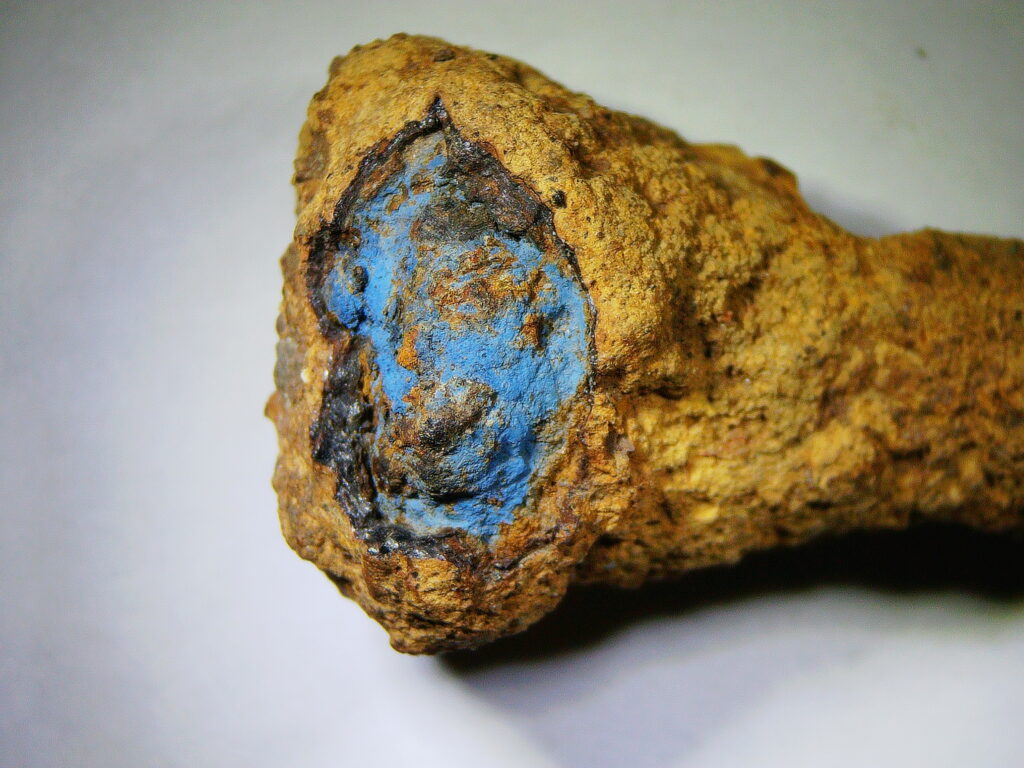
While perusing the bulk finds which were cleaned by our superb post-excavation crew last week, I came upon two nails which contain vivianite! I was quite surprised to see these nails in our drying racks since we are currently digging only aerobic contexts, and vivianite is an iron phosphate mineral formed in anaerobic conditions; we found this mineral on numerous bones in the northern fort ditch during last year’s excavations. Therefore, finding vivianite on a nail from this year’s excavation is quite a treat and tells us about the history of the depositional environment in our western praetorium rooms.
In the close-up photo of the nail, it seems that the rust has grown around the vivianite. This suggests that the nail once sat in an anaerobic context, allowing the vivianite to form. The soil environment later became aerobic, thus allowing the rust to form. It’s difficult to determine when this change occurred, but it shows a changing underground environment, likely due to our changing climate. Franki
If you’ve visited us over the past couple of days, you may have also spotted a film crew alongside our regular diggers. We’ve been delighted to welcome History Hit to Magna, filming for a brand-new programme all about the Fort and our ongoing excavations here.
History Hit produces history documentaries and podcasts, bringing archaeology and the ancient world to audiences worldwide. We’re thrilled that Magna’s story, and the incredible discoveries our team has been making this season, are about to reach a whole new audience. None of this would be possible without our amazing team of volunteers, whose hard work day after day to help us piece together the story of life at Magna almost 2,000 years ago.
We’ll share more details as soon as we have a broadcast date, so keep an eye on our Facebook page and other socials for updates on when and where you’ll be able to watch it! Sophie
21st August
Everyone’s valiant efforts exposing and removing the Roman stone capping of the western wing has paid off and we now have a much clearer picture of the next room on this side of the building. The main feature currently visible in this space is a well-crafted stone-cut drain running round the inside faces of the walls. This style of drain is often used as ground level guttering to catch water running off the edges of a roof, suggesting that this may have once been an outdoor area such as a private courtyard for the commander and his family.
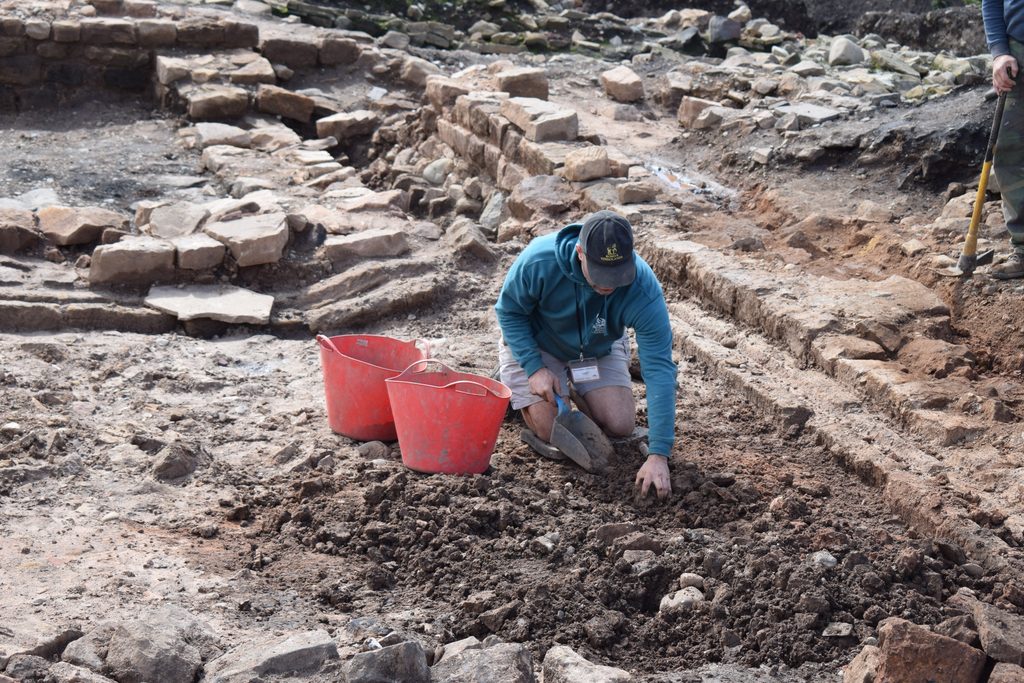
Meanwhile, on the eastern side of the trench the team have successfully discovered several more walls of the praetorium although not all of them are where we expected! A series of short wall segments, none of which align into clear room patterns, have started to emerge in the rooms along the northern wing of the building – further investigation will be needed in the coming weeks to try and make sense of them. What we do now know for certain is that the eastern wall of the building is definitely beyond the current limits of the trench, as the volunteers have proved one of the major E-W walls disappears below the grass at the edge of the excavated area. This wall is particularly significant as it also separates the northern rooms of the building from the much larger open space of the internal courtyard, another area of the building we had been struggling to locate.
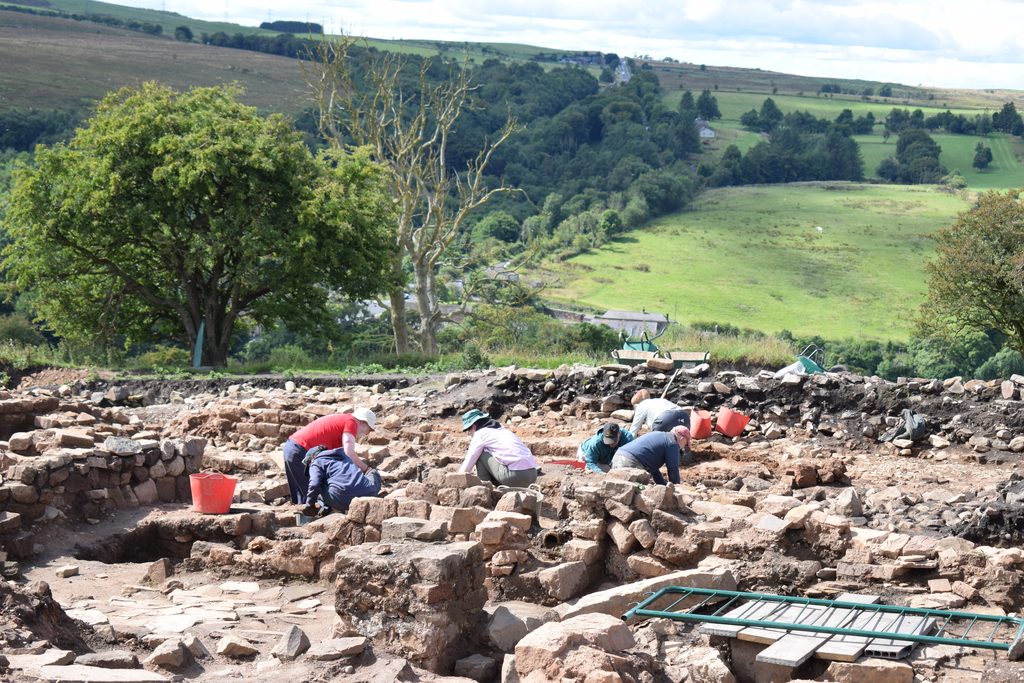
We’ve also managed to excavate a few more of the drains in the bathing suit and have continued to remove the later infills of these rooms to try and find the original floors and walls – while we don’t have the original layout just yet more and more details are revealing themselves so hopefully all will become clear soon! Rachel