

Period 3
Here we will post regular updates on the current excavations and post excavation taking place on site here at Magna Roman Fort during Period 3 of the 2026 excavation season.
You will hear from our archaeologists and volunteers as they share news and thoughts about what is being uncovered, the challenges and the highlights of the excavation season.
4th May
We’ve officially kicked off another new period, as today we welcomed our Period 3 crew to Magna. We were also joined by the post-excavation crew, who have already spent a week at Vindolanda processing the bulk finds from the excavations there.
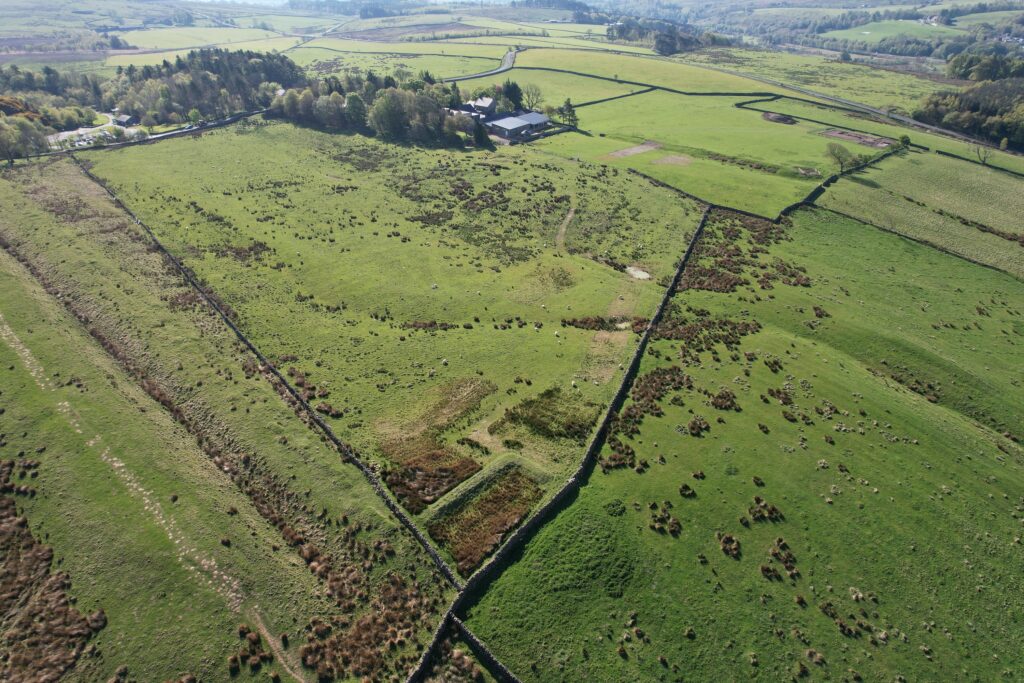
Rachel took us on a great site tour from Milecastle 46 and the 2023 excavations down to the southwest quadrant of Magna Fort where the crew will be working over the next two weeks. The weather gods have been on our side, as we enjoyed walking across the site in the glorious sunshine before lunch!
This afternoon was spent working to remove the topsoil from the southern ditches and expanding the trench northwards – with some exciting archaeology having been uncovered over the past month, we can’t wait to see what Period 3 discover over the next two weeks. Sophie
6th May
Post-excavation work is now underway at Magna, and this week we’ve been getting to grips with flotation, one of the key ways we uncover the hidden stories of the site.
The Magna Project is dedicated to telling the story on the environment, diet and other such practices of the Roman past. Much of this evidence is invisible to the naked eye, locked within the soil itself. That’s where flotation comes in: by carefully processing soil samples, we can recover tiny remains like seeds and plant fragments that reveal what people were growing, eating, and using.
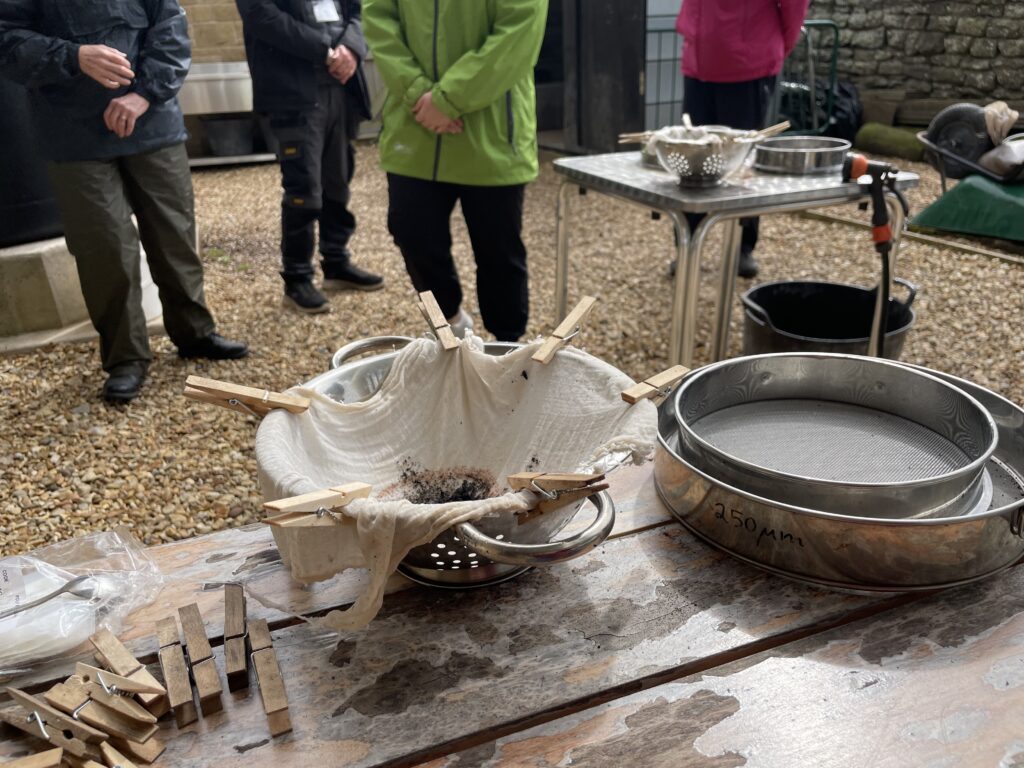
Our Period 3 team, Danka, Janet, Marion, and Paul received an introduction from our geoarchaeologist, learning why flotation is so essential and what it can tell us. We also brought out our “shiny new toy”: a microscope, which allowed us to take a closer (and fascinating) look at the seeds recovered. Seeing them close really brought the Roman landscape to life, from cultivated grains to traces of fungi.
Even better, this work isn’t happening behind closed doors. Visitors to the Roman Army Museum can watch the flotation process in action and discover how we piece together this ‘invisible’ evidence. Our team has been sharing their new knowledge with enthusiasm, helping bring Magna’s past into focus for everyone. Cristina
8th May
You may remember at the end of last week the team working in the northwest part of the trench had uncovered a mystery wall that didn’t seem to link up with any of the other structures onsite; well, this week the mysteries have continued!
Some of the team started the week in the southern extension of the trench, in search of the fort’s southern ditch. However it quickly became clear that this was going to require more detective work than we first thought, as the southern edge of the ditch was missing entirely. This left us with more questions than we’d started with: was the ditch larger than we’d expected? Did it extend even closer to the field wall and the Stanegate road beyond? Were there actually two ditches and we just hadn’t found the bank between them yet?
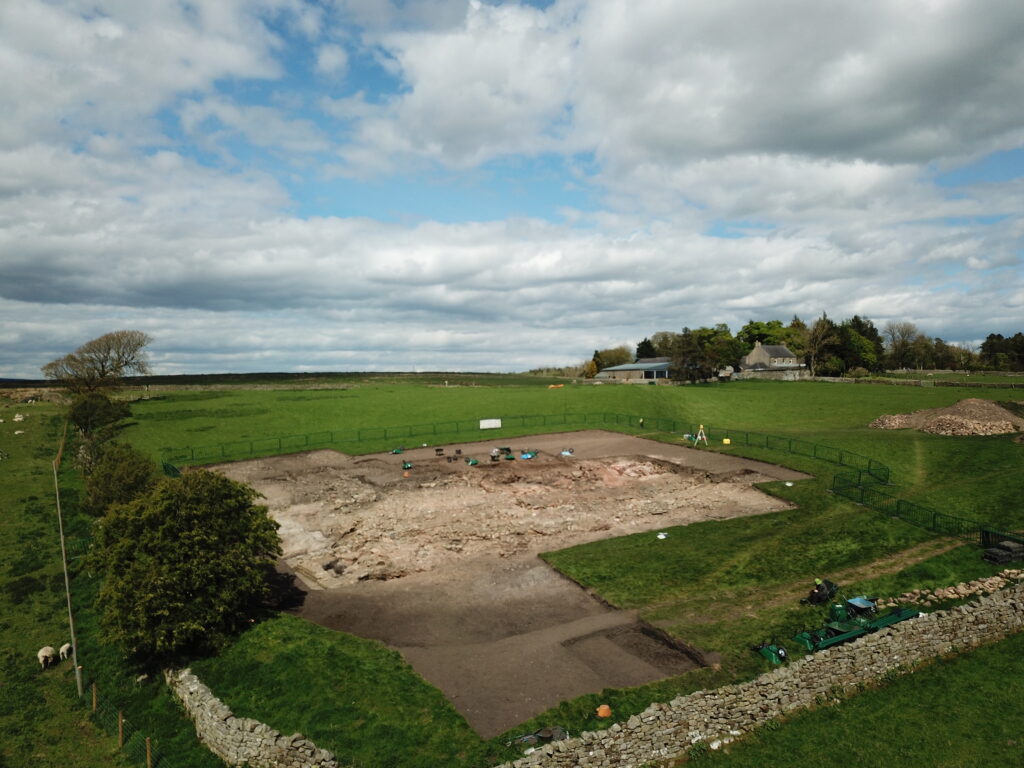
After a bit of further digging, literally, it became clear that what we actually have is a deep deposit of colluvial material lying over the top of the archaeology. This is material that has washed downslope over the centuries and built up in the lowest lying part of the site, obscuring the earlier features from the Roman period. Even though the ditch is still ‘missing’ for now, we do at least know why and how much further we have to dig down to find the upper layers of it.
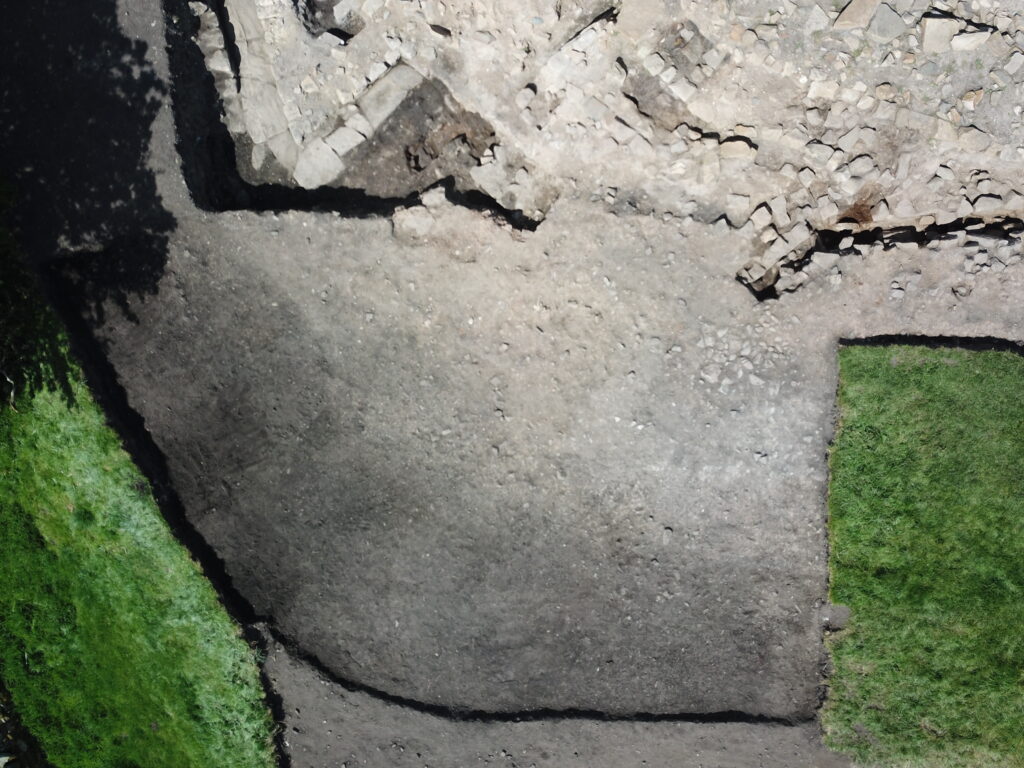
Meanwhile, in the northern part of the trench we have further mysteries emerging, linked to the later post-Roman occupation of the site. In the space between the praetorium and the western post-Roman wall, an interesting potential building is taking shape. So far, we have possible clay wall foundations, large spreads of charcoal and burnt deposits and small areas of stone surfaces. Exactly what kind of feature this is remains uncertain for now, but it is really exciting to be finding further evidence of life at Magna after the Romans, and I can’t wait to see what it turns into as work continues! Rachel
11th May
Our Period 3 volunteers are now fully settled into their final week, and the momentum on-site is palpable. While the familiar themes of animal bone and pottery continue, some really wonderful finds have finally come to the surface .
The finds tray is becoming a real treasure trove of Roman life some of the highlights from last week we have recovered an arrowhead, a possible brooch, a delicate ear scoop, one section of a small twisted copper bracelet, and several more glass beads to add to our collection. Only this Monday we have also discovered a decorated copper alloy plate to add to the list! A Roman curly wurly? You decide…
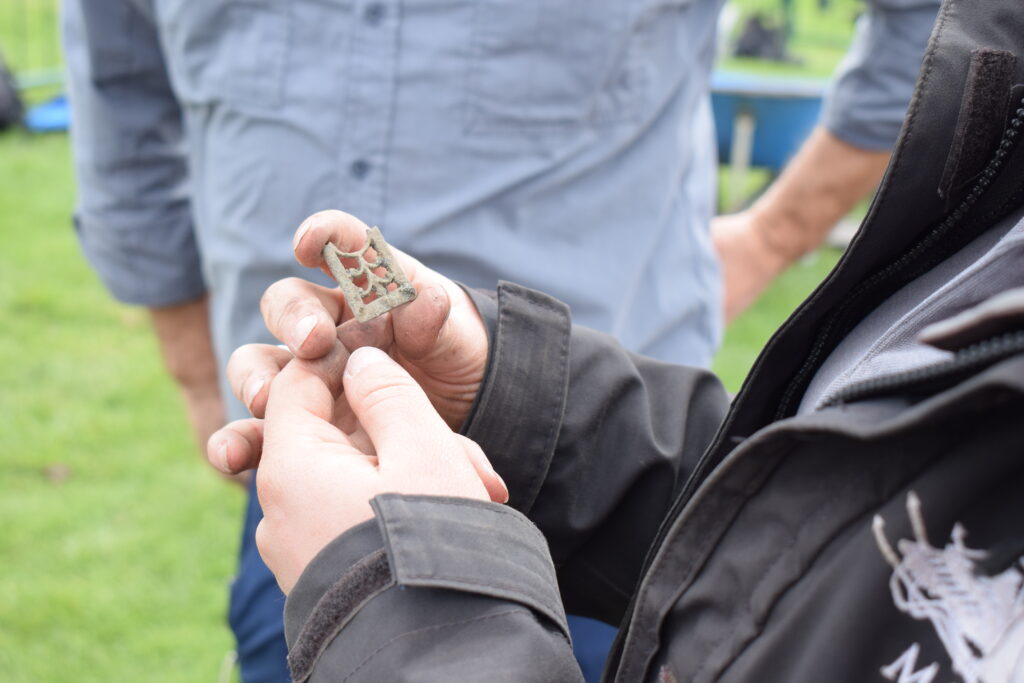
We have also unearthed plenty of copper-alloy and iron material. While their current condition makes them a bit of a mystery, we remain optimistic! Through careful conservation and preservation in the lab, we hope to identify exactly what these intriguing objects once were. Pottery is still making a strong appearance with the ceramics still coming up strong, with a steady flow of grey ware, Black-Burnished ware, and the occasional prized fragment of Samian.
Collectively, we’ve been focusing our efforts on the furnace within the Praetorium. The team has been clearing back the debris to help us get a better “big picture” understanding of how this space functioned.
It’s proving to be hefty work, but our volunteers are taking it all in their stride! Right next to the furnace, we are stripping back further antiquarian backfill. We’re keen to see what our Victorian predecessors might have overlooked and whether we can finally reach the undisturbed Roman layers beneath.
Towards the north, the cleaning continues as we get a clearer view of the stonework emerging from the soil. Our search for the ditches is proving to be a bit of a detective story; we have successfully located the northern edge of the ditch, but the southern edge is proving rather elusive! We shall, of course, persevere.
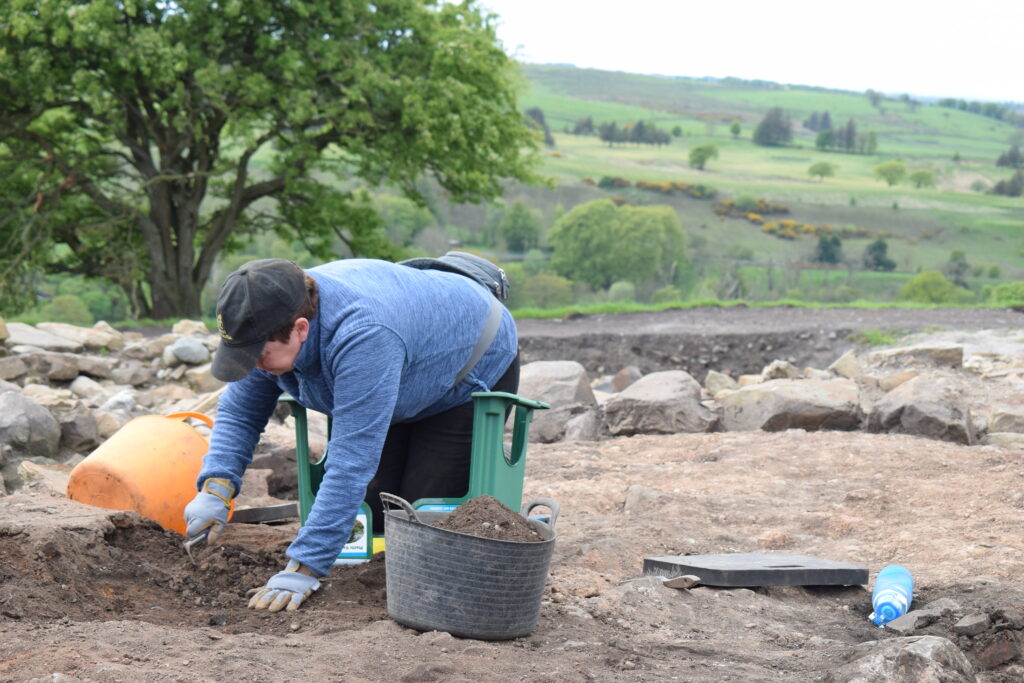
Morale remains high and the finds are arriving at a steady pace. More importantly, that primary goal, achieving a crystal-clear image of the site, is coming together section by section, spade by spade.
Here’s to a productive final few days. We’ll keep you updated as we continue our journey through this fantastic site! Tommy
15th May
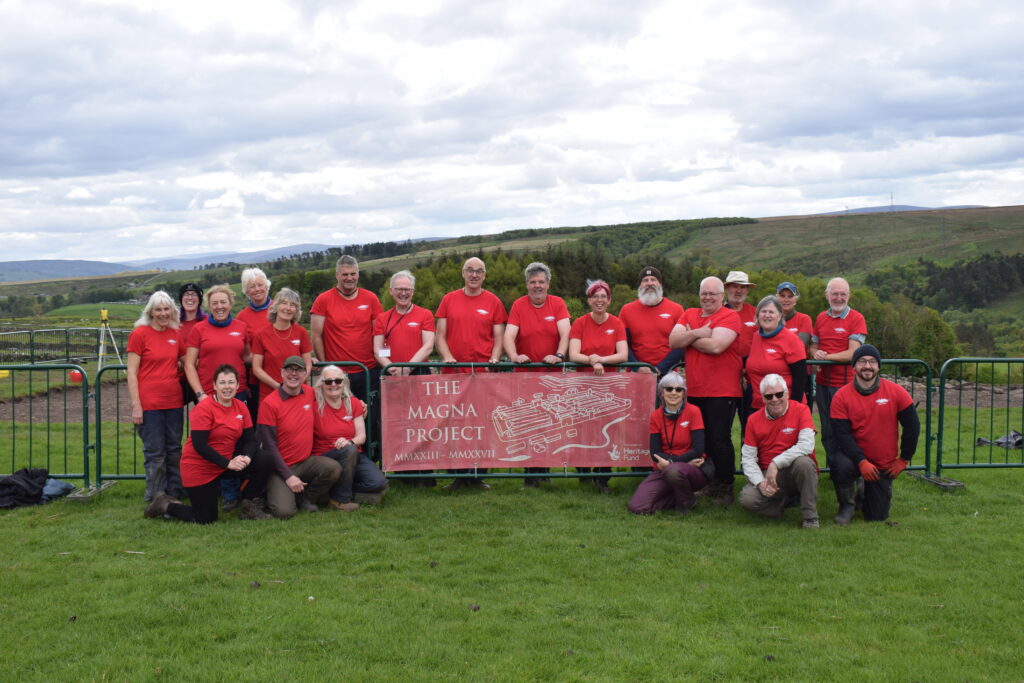
Despite the weather trying to dampen out spirits in the last couple of days, it’s been another exciting week onsite here at Magna. Great progress has been made across the site, uncovering more of the praetorium as well as figuring out why our southern ditch was proving so difficult to locate!
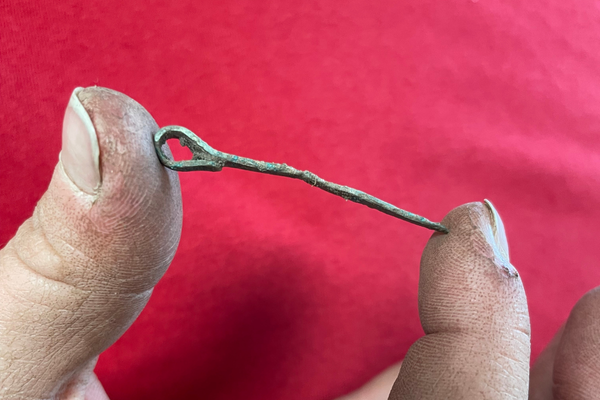
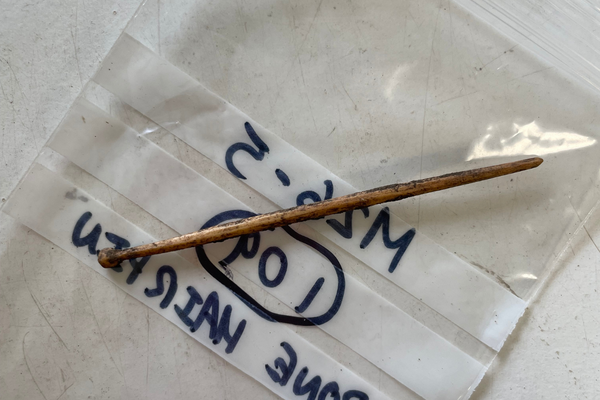
After much trial and error, the northern edge of the antiquarian trench has finally been revealed. While it is further north than I had originally anticipated, this means we now have an accurate idea of how much backfill there is left to remove. Underneath the backfill, more walls and floor surfaces have started to emerge, which is always reassuring to see. While we’re not certain exactly how they relate to some of the other internal structures just yet, they are quite high up in the site stratigraphy suggesting they date to the final phases of occupation in the building. A wide variety of finds have also continued to come from the backfill; huge amounts of animal bone but also a nice collection of small finds. These have included bone hairpins, a copper alloy toiletry instrument and a piece of antler that may have been used to make dice.
Meanwhile on the southern edge of the trench, the volunteers’ perseverance in digging through the deep topsoil has paid off and we now have a much clearer idea of the archaeology in this area. the biggest headline here has been the discovery of a second stone fort wall located further to the south than the one uncovered last period. This would have been for an earlier, slightly larger, version of Magna which was probably the first phase of the fort to be built in stone. Behind this is a turf and clay rampart which corresponds to the turf rampart previously uncovered on the western edge of the trench. The fact that this has been cut through to build the angle tower latrine block and drains is how we can tell which wall is for the earlier fort. All this means that the fort’s ditch is further to the south than we had thought and the volunteers next period can take up the mantle of its excavation! Rachel