

Period 5
Here we will post regular updates on the current excavations and post excavation taking place on site here at Magna Roman Fort during Period 5 of the 2026 excavation season.
You will hear from our archaeologists and volunteers as they share news and thoughts about what is being uncovered, the challenges and the highlights of the excavation season.
1st June
As our new team of volunteers get settled in onsite tackling the southern ditch and northern half of the praetorium, we have some lovely finds from the end of last period to cheer us up through the very damp weather.
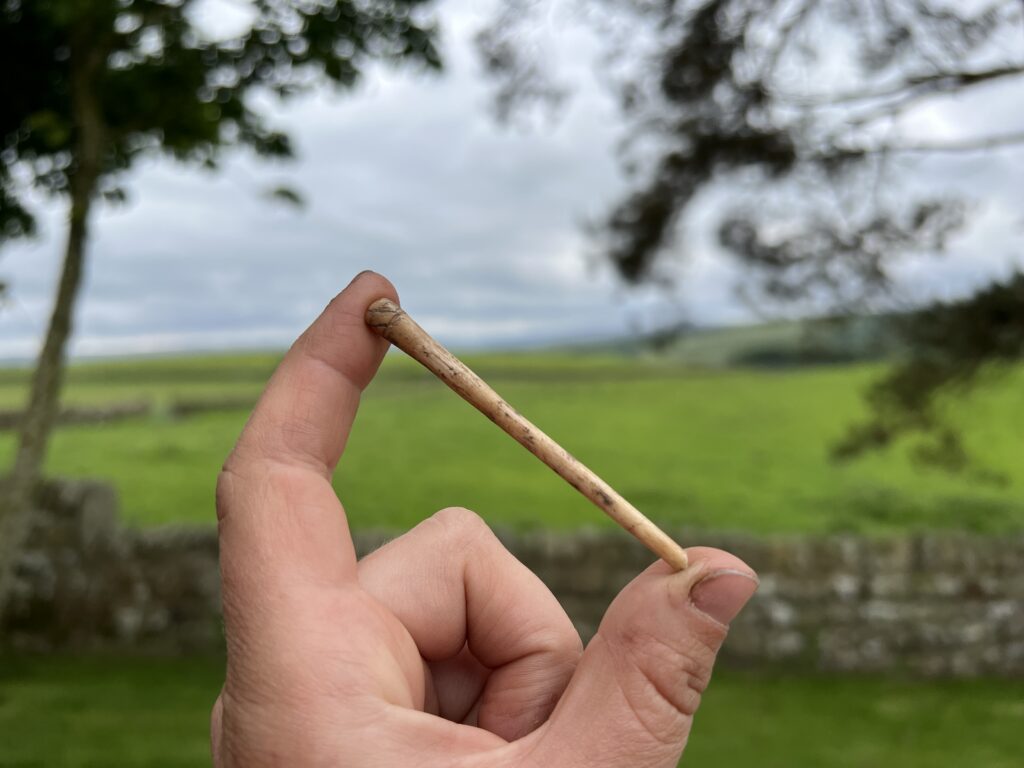
First is the end of a hairpin found in the antiquarian backfill. Although not complete what makes this a particularly interesting example is it appears to be made of tusk rather than the typical bone we have found previously in this area.
Our second find is a fragment of stamped ceramic building material (CBM), also from within the commanding officer’s house. The letters ‘COH’ can clearly be seen, telling us the tile was produced by the military.
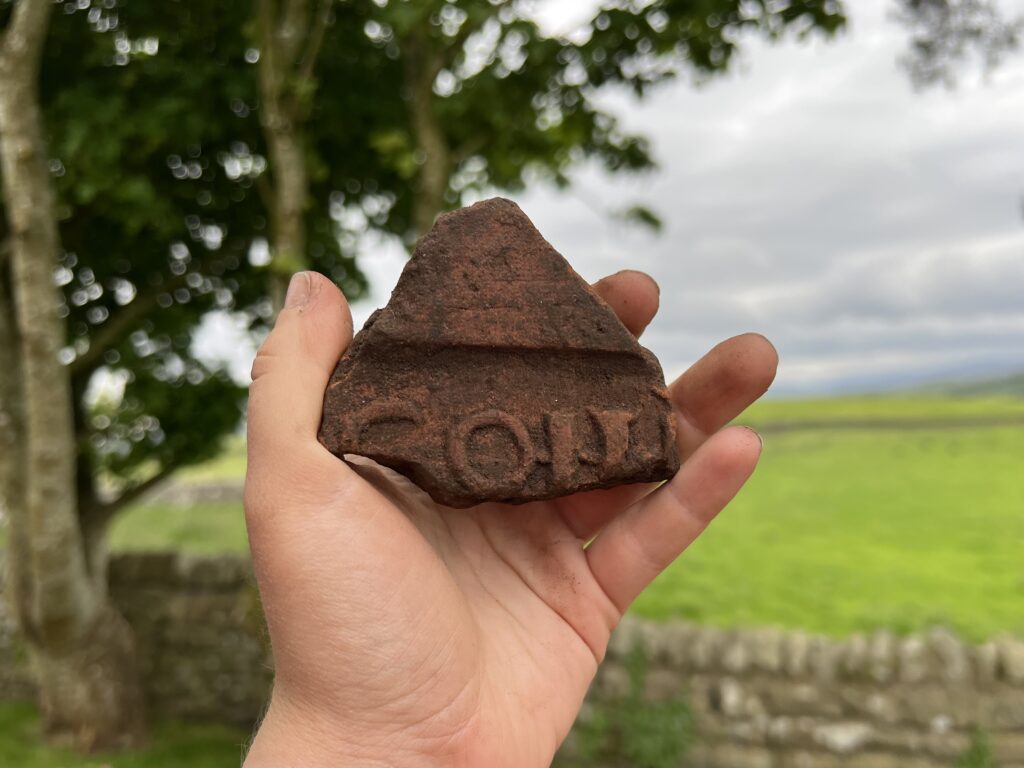
Sadly, the rest of the stamp is broken off, meaning we can’t say which cohort was making these but I’m hopeful we might find the other half this week! Rachel
3rd June – Celebrating Volunteer Week
It’s Marta writing to you, the Deputy Director of Excavations for the Vindolanda Trust. Although I am very fond of the Vindolanda Excavations, I never miss an opportunity to spend some time at Magna Roman fort, admiring the progress the team has made.
I am always amazed at the incredible community that the Magna project has managed to create. From excavation to post-excavation and environmental processing, to guiding and activities, there is something special about offering your time and skills at the forefront of Roman excavations on the Wall. The cast of characters is varied- see if you can identify yourself!
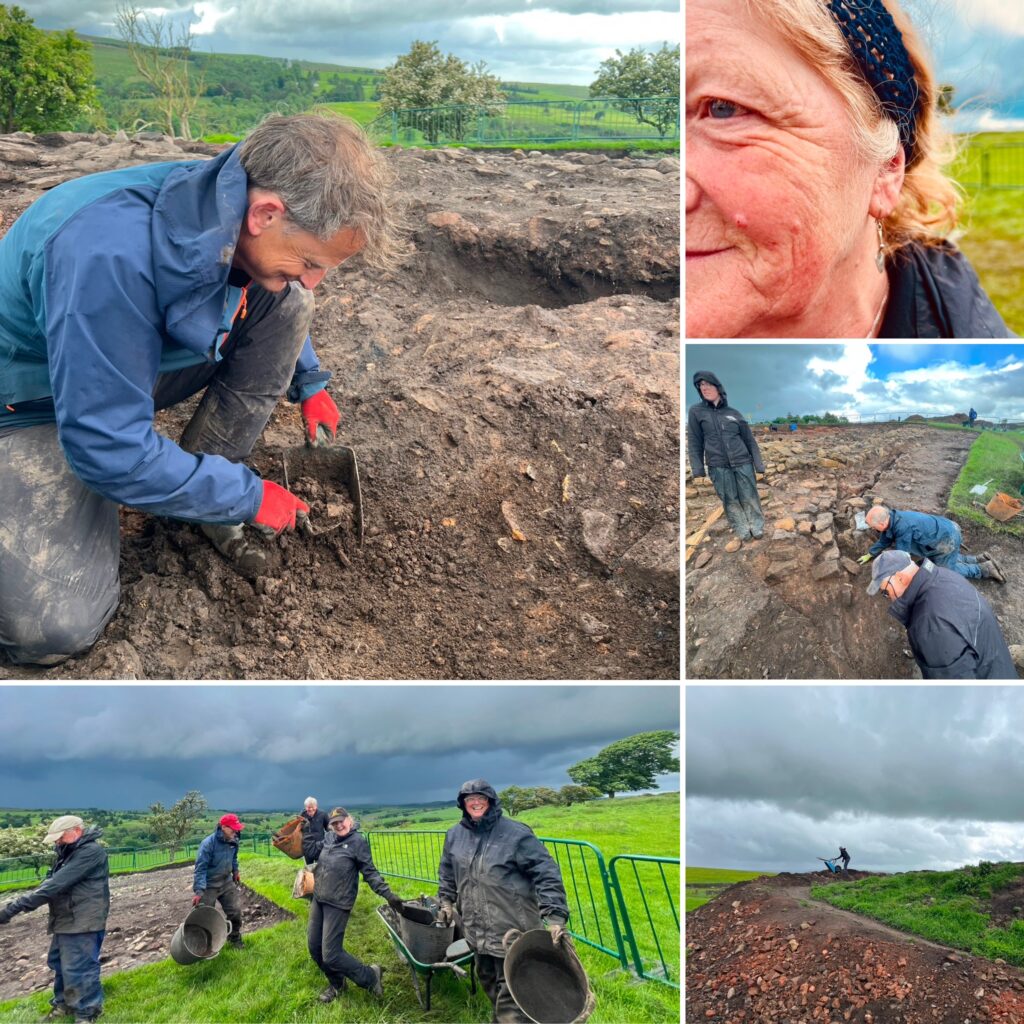
The mud monster: perennially engulfed in waterproofs, can expertly estimate the arrival time of a storm from a combination of air pressure, wind direction and smell of grass. Their trowel is, however, spotless.
The Trustee: while usually an indoor species, a trustee or former trustee is a volunteer of many competences. They generously gift their time and their skills to the organisation and are not averse to a wheelbarrow where needed. Their strongest asset is their mind, but they like to also flex their muscles.
The collector: This volunteer has decided that they will take part in every season of the Magna project, in any capacity, come rain or shine. They are profoundly loyal to the cause, and bring gifts of cake, waterproof, knitted goods…
The Cicero: Weather inside in post- ex, or outside with a guided tour, or even at the trenches’ edge, this volunteer is a fountain of knowledge. Their special skill is translating complex information into useful tid-bits for all ages. The public engagement hero!
The cheerleader: Never spotted without a smile, this is the ‘personality hire’ of volunteering. Everyone wants to be in their trench, and those who are not like to excavate or wash finds in their general directions. This species can also manifest itself as ‘The podcast’: they always have a story, it’s never twice the same one, and it’s always quite funny.
The lone wolf: This pack of one joins the programme to enjoy some peace and quiet. It thrives in remote trenches that need a deep clean, or in rainy days in the archaeological centre with earphones, a bowl of muddy water and a pile of neatly labelled finds.
The local hero: This team members trundles up from just down the road, knows a farmer who can fix anything and has all the tips for the best pub. Because they are only a few steps away from home, the local hero pays frequent visits, just to keep up with things.
Whatever type they might be, and we certainly have missed some, volunteers are at the heart of what we do at the Vindolanda Trust, and particularly at the core of our Magna Project. Volunteers do not only get involved in hands-on activities – we also rely on them as our research partners too. For example, we recently completed some work on the role volunteers play in communicating the impact of climate change on heritage. You can download the toolkit we created here: Climate Change and Volunteering: A Toolkit – Roman Army Museum
In this national volunteer week, we wanted to celebrate everyone who has volunteered for the Magna project, and for the Vindolanda Trust in general. Your time, skills and company are appreciated by all the team. Marta
4th June
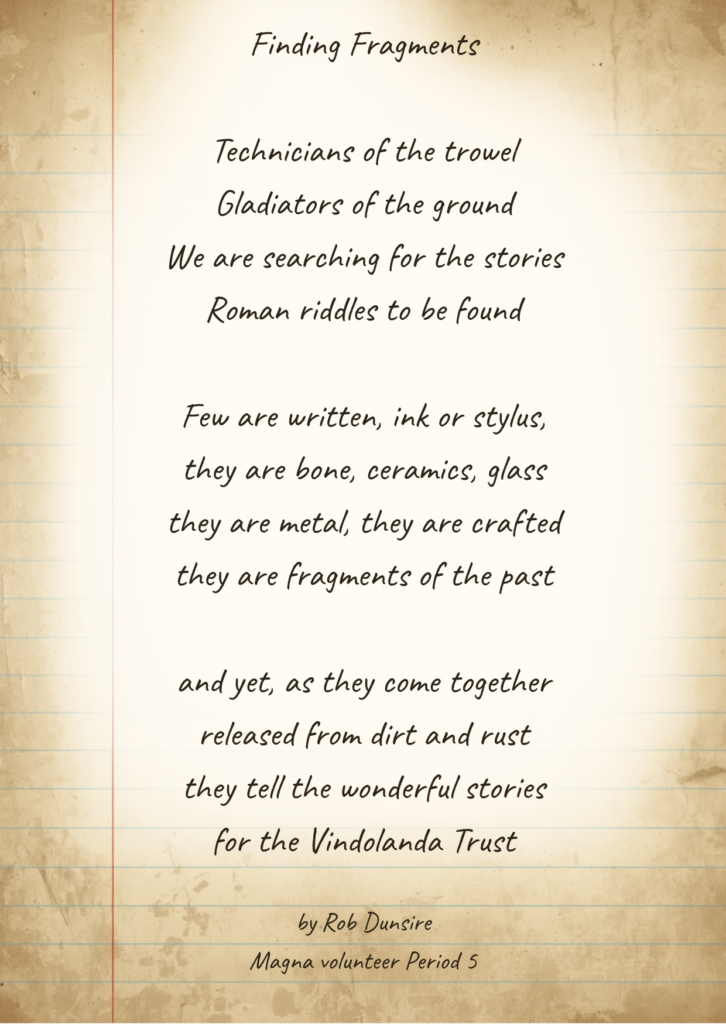
Few things are more rewarding than hearing firsthand from our volunteers about their time in the trenches, the friendships forged along the way, and the thrill of discovery. Below is Finding Fragments, a wonderful poem written by Rob from our Period 5 team.
5th June
After the heatwave of last week, normal Northumbrian weather service has resumed on site with much cooler conditions and plenty of rain showers to rehydrate both the site and the excavators! While wet weather may not seem like an archaeologist’s favourite working conditions it has been helpful this week in softening up the hardened ground and making the colour changes between different layers of the archaeology more visible.
We have continued on the work of period 4 in both the southern ditch area and the northern half of the praetorium, taking on the mysteries and challenges they left for their successors. In the ditch almost all of the colluvial hillwash is now gone, and the upper fill of the ditch can be clearly seen. More of the later fort wall has also been uncovered along with more of the wall for a potential secondary angle tower built into the corner of the fort. The team are rapidly converging on the junction point of these two walls and I’m really hoping they link up!
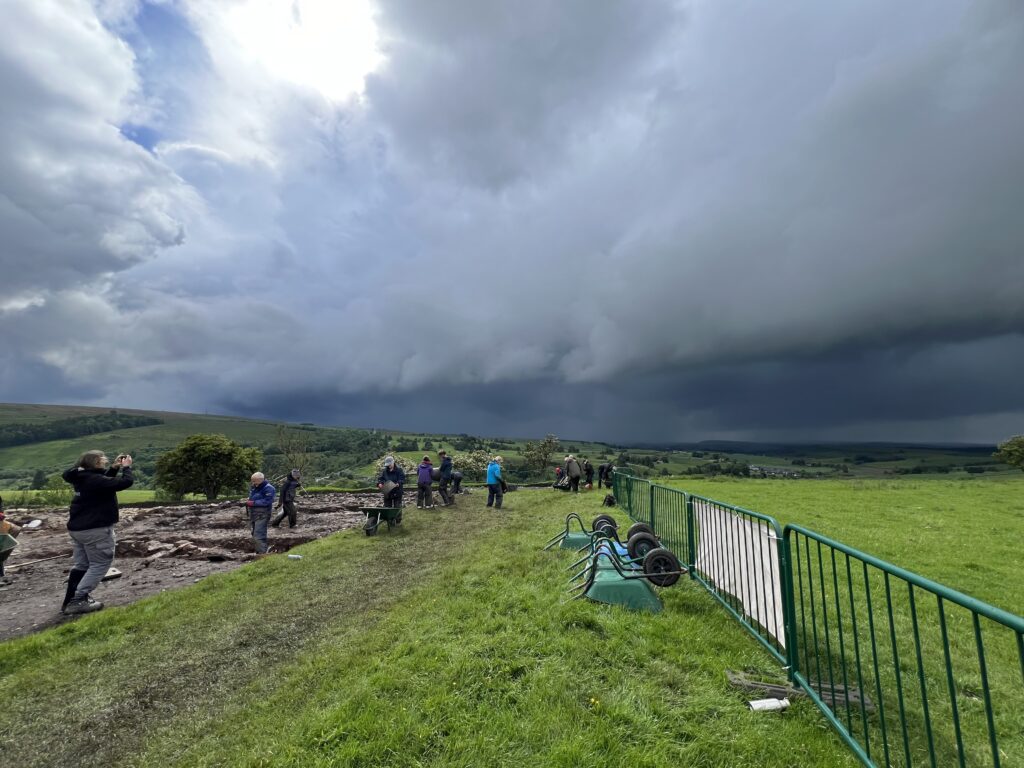
In the northern part of the praetorium the quest for walls continues as we try to “join-the-dots” between all the surviving sections of building in and outside of the antiquarian trench. So far the walls are remaining elusive but we have uncovered a small hearth, sections of floor and potentially another new drain or earlier structure underlying the post-Roman deposits. Amongst the post-Roman remains in this part of the site, our most intriguing is a large, curved feature cut through the infill over where we expect the praetorium courtyard. While the exact purpose of this feature is uncertain there is a similar apsidal building inserted into the praetorium at Vindolanda which could help with answers; we shall have to wait and see if we find stone wall foundations in the base before making any final judgments on what we’ve uncovered but I’m praying its something exciting! Rachel
8th June
It’s the new Monday of the 2nd week for our wonderful period 5 group and what a superb 1st week they’ve had! Let’s look back at the week that started rough battling some classic Northumbrian weather, mostly rain coming at us sideways, the team has made fantastic progress.
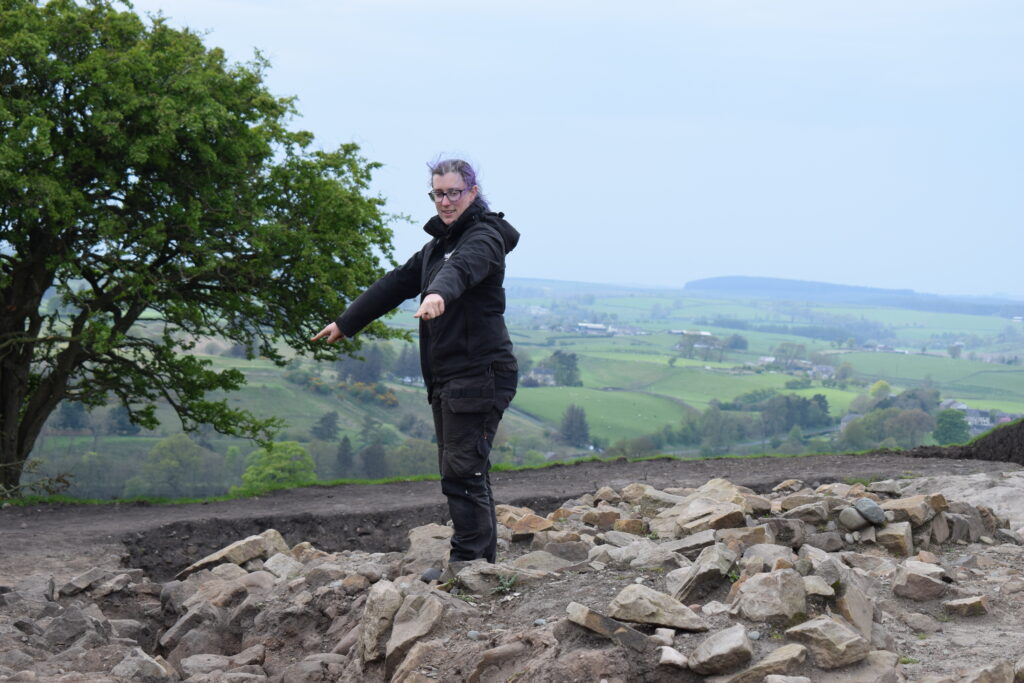
Up in the northern quarter, further cleaning of the post-Roman structures is helping us understand how they relate to the Praetorium. Meanwhile, the southern quarter is looking sharper than ever, with the Hadrianic wall beautifully defined. We also revisited the ‘courtyard’ area. In true archaeological fashion, it kept us on our toes, revealing new features that have completely changed our interpretation and remains more of a work in progress. The finds have been spectacular too, including a beautiful bone gaming token, an iron arrowhead, an intriguing belt fitting, and even more Roman scale armour! When Thursday’s weather made the site too slippery to dig, we turned it into a exciting endeavour. We swapped our team with the Vindolanda team, giving both crews a brilliant chance to visit each other’s sites and see what amazing progress had been made. Friday proved to be productive day with the weather playing to our favour (finally!) we had some further great finds helping us slowly piecing more of the site together. I’m certainly looking forward to what next week brings.
A huge well done to the team for their brilliant but muddy first week! Tommy
10th June
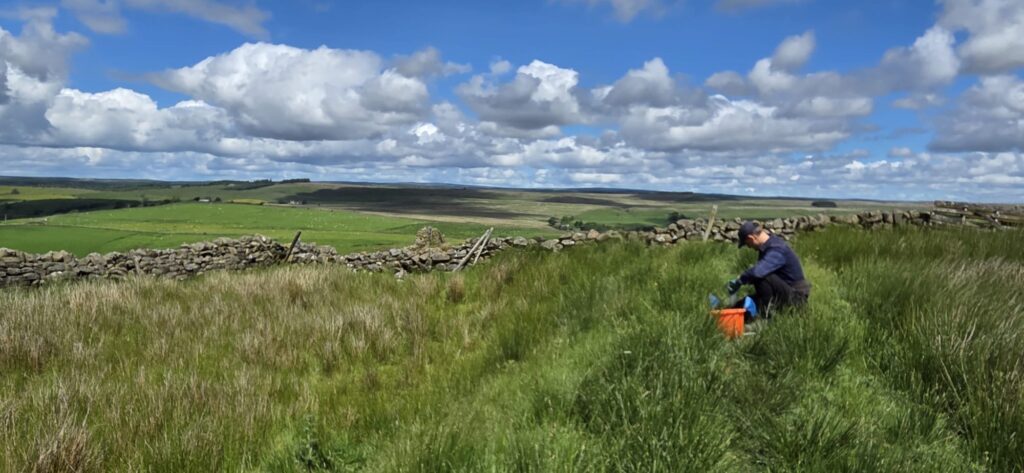
This past week our current vice chair and former chairman of the board of Trustees helped resample the milecastle 46 area for pXRF analysis. We initially took pXRF samples way back in 2023 before we even broke ground at Magna in order to see if this minimally invasive survey method could be used to help map features on site. pXRF, which stands for portable X-Ray Fluorescence, is scientific machine which establishes the elemental make up of a subject. Certain elements, such as phosphorus and iron, are indicative of human activity. Following these lines, areas with high phosphorus concentrations, for instance, are likely areas with significant human activity. Specific elements can also indicate specific activities. For example, a high magnesium concentration indicates a waste area or ash-tipping.
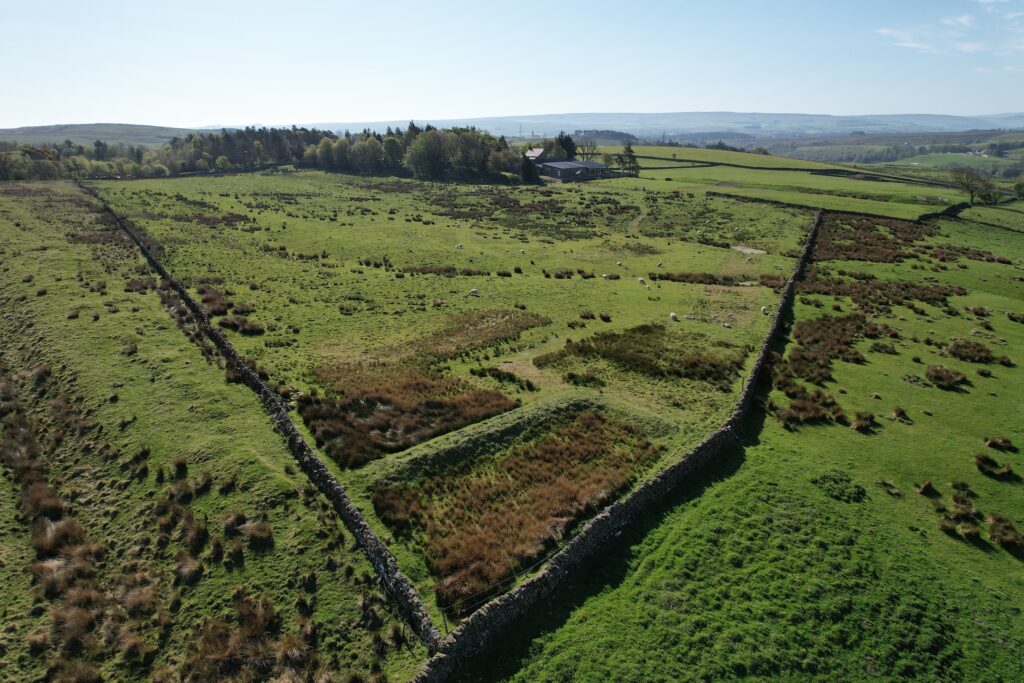
Resampling the soil in and around milecastle 46 will test how the geochemistry has changed since we excavated the area, backfilled it, and nature has once again taken over the fortlet. As you can see from the photos, lots of lush reed beds have grown in that area since our excavations of the milecastle and its exterior areas in 2023 and 2024. It will be intriguing to see the results from this survey! For now, the samples have been sent off to Teesside University for prep and processing. If you’d like to read more about pXRF and its application in archaeology, this article from Trust colleagues is available online and open-access. Franki
pXRF method development for elemental analysis of archaeological soil
https://onlinelibrary.wiley.com/doi/full/10.1111/arcm.12583
12th June
This week has been all about walls here at Magna, as we focus our attention on trying to confirm the layout of the commanding officer’s house. Unfortunately, the continuing wet conditions up here have pushed us out of the southern ditch for now; working at the bottom of a slope in such a deep feature means waterlogging and flooding quickly become a safety issue.
Within the former antiquarian trench, the volunteers have continued to clear out the backfill from the robbed out west wall of the building, eventually reaching intact masonry over one metre below the surrounding undisturbed archaeology! Hopefully this means the northern half of this wall, beyond the old excavations, will survive to a much greater extent and we might even get some surviving wall plaster if we’re lucky.
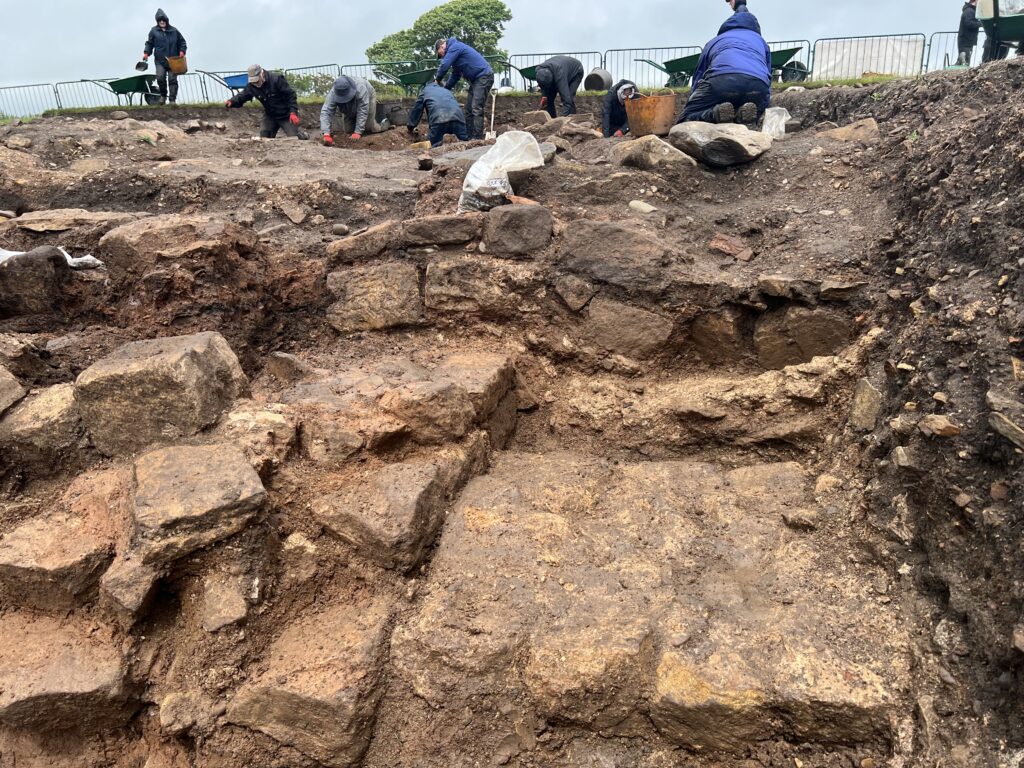
Inside the southern range of the building we have also revealed more walls surviving below the backfill and we can now see at least three different phases of construction. The earliest wall runs E-W and can be identified by its creamy coloured mortar and good quality masonry. A N-S wall has then been added on to the end – while this still uses dressed stone, they are not quite as uniform as the earlier wall and have been bonded together using a pink clay instead of the mortar used previously. Lastly, another E-W was built over the top of everything, including the material that had filled in the space between the two preceding walls. We can now see how the underlying structures have affected the stability of the latest wall as it has sunk where it sits over the infill but remains solid where it crosses the earlier wall.
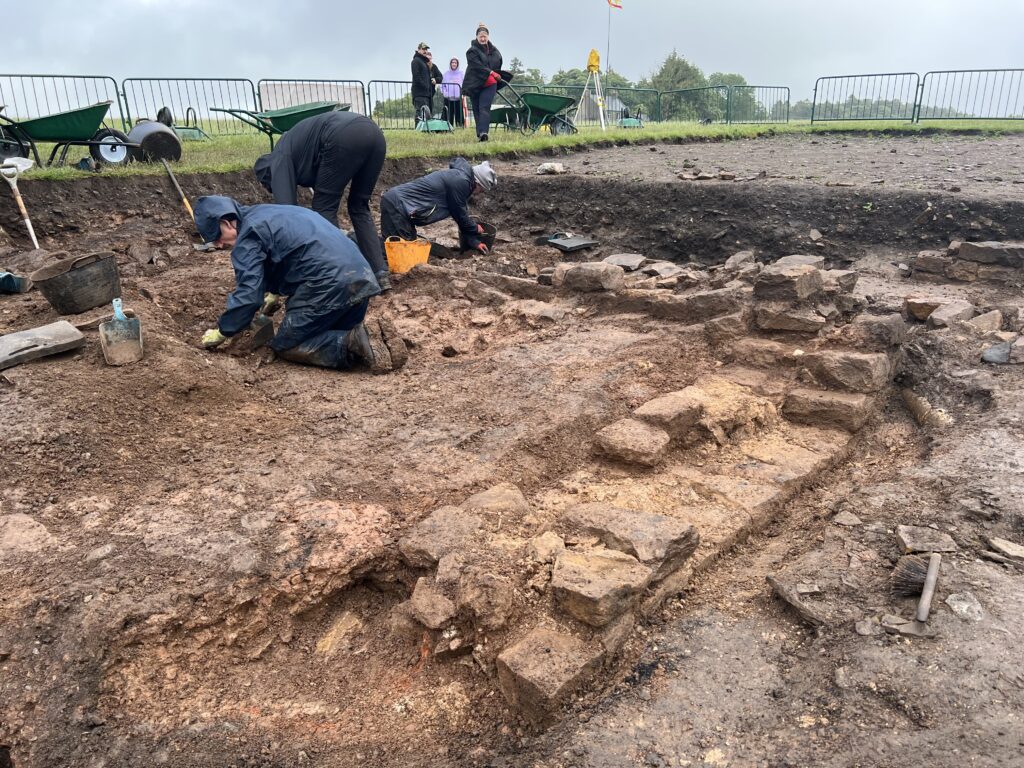
Further north we also have multiple walls emerging from below the post-Roman layers; here we can already identify at least two phases with the E-W wall once again proving to be the earlier, replaced by a later N-S wall. It’s great to be able to start building the floor plan for the praetorium and I’m looking forward to adding more walls and rooms as we continue! Rachel
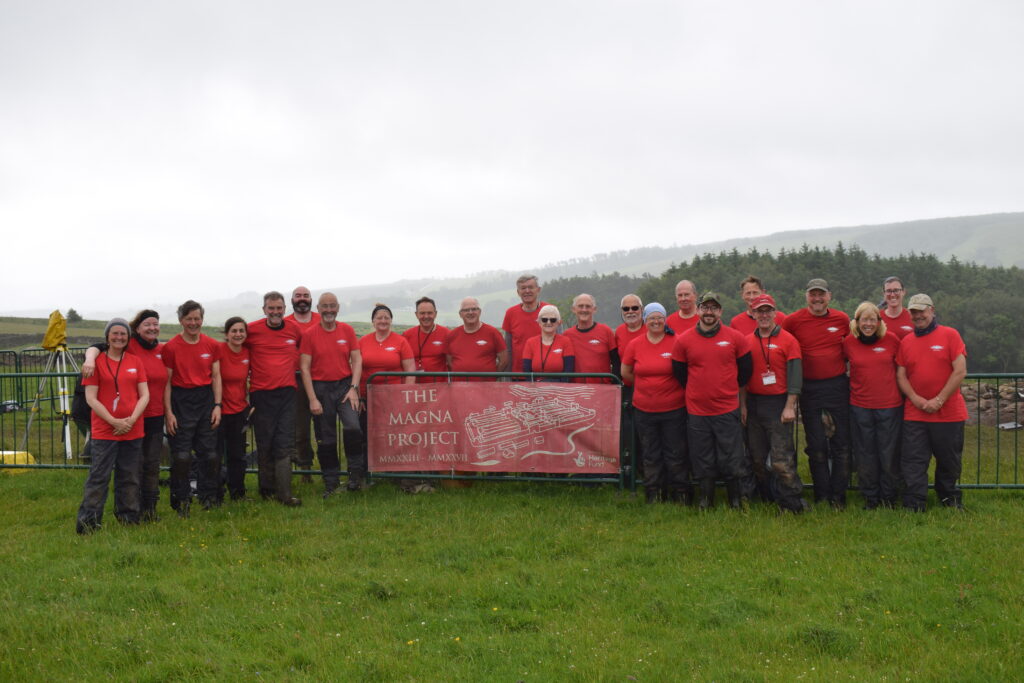
Tim, one of our Period 5 excavators has written a beautiful poem about his time in the trenches here at Magna.