

Period 6
15th June
We’re ten weeks into the 2026 excavation season and we’ve welcome another crew onto site! This period, alongside our usual cohort of volunteers, we are delighted to be joined by a field school of students from Newcastle University and Northwest University, Xi’an. As always, it’s great to welcome so many international volunteers onto the site here at Magna!
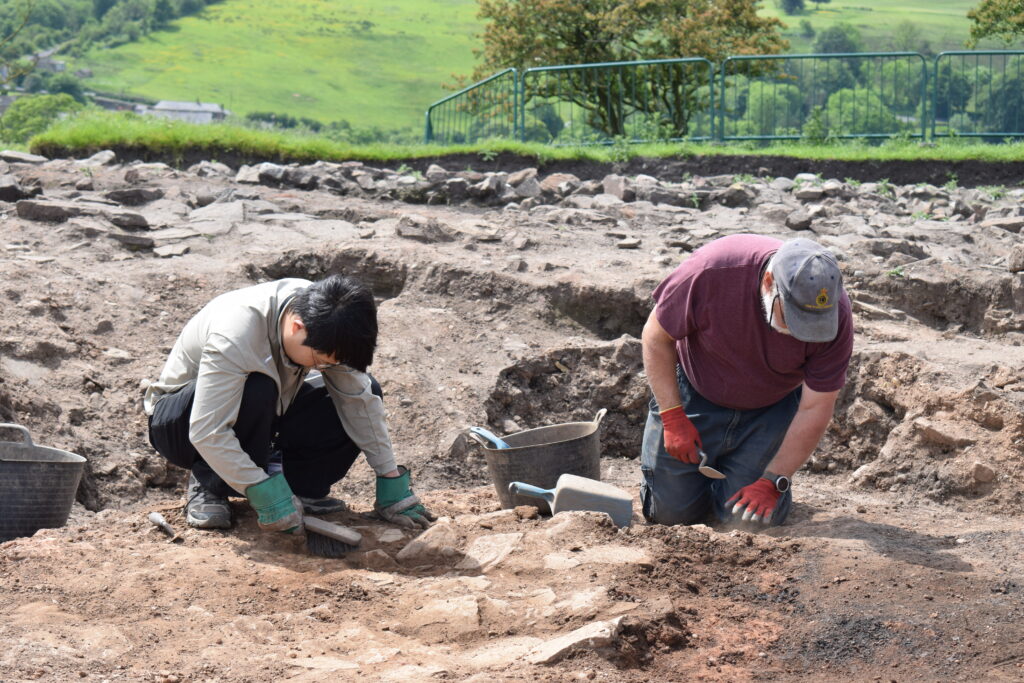
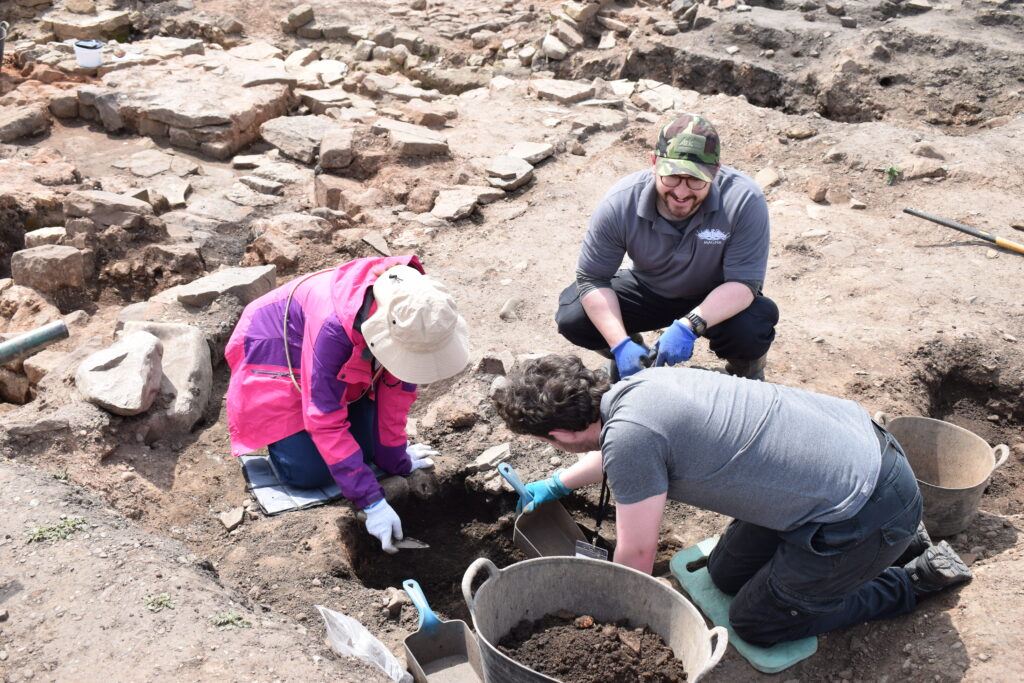
This afternoon the crew continued working in the southern ditches, where we have identified the northern edges and are continuing to work further south in the trench to remove the colluvial deposits. It’s very encouraging to begin to define this feature, thanks to the hard work of the teams who came before this season.
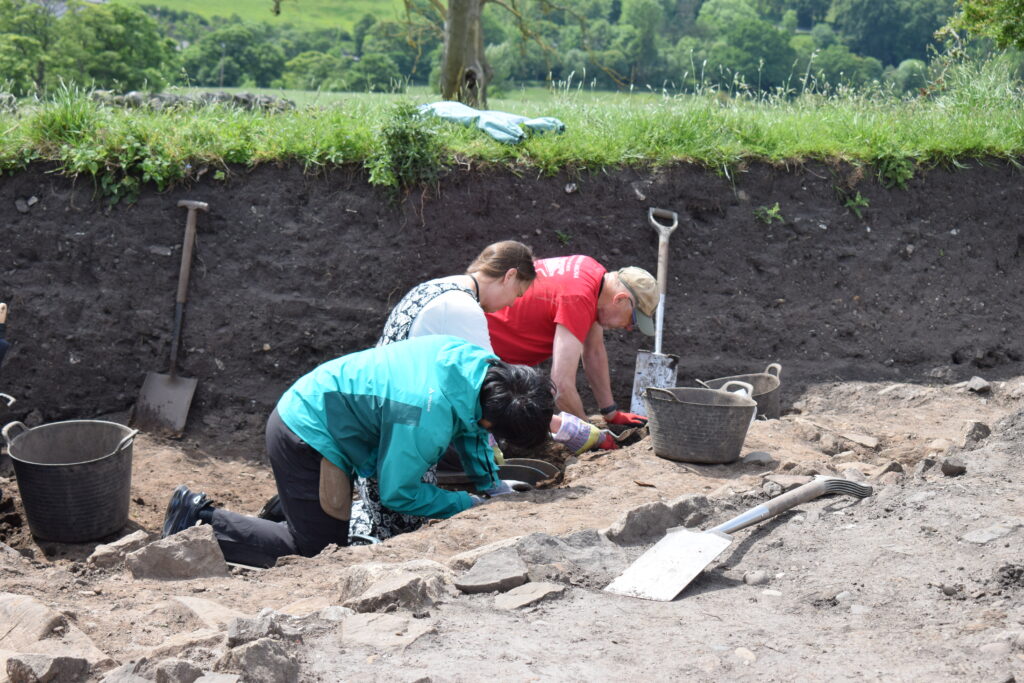
The other half of the team have been taking up the mantle in the northern part of the trenches, and we are excited to see what the crew uncover throughout the next two weeks! Make sure to come out to visit us at the trenches to see this archaeology being uncovered in real time. Sophie
17th June
Period 6 has had a fantastic run at Magna, and a new record has been broken! We have officially raised the bar from 35 litres to an impressive 45 litres of soil processed in a single day through flotation. What an achievement and also what a difference it has made to tackling our 2025 backlog.
We started the season with 540 litres waiting to be processed and, two and a half months later, 377 litres have been completed, leaving just 163 litres to go. The dedication and hard work of our volunteers have been truly inspiring.
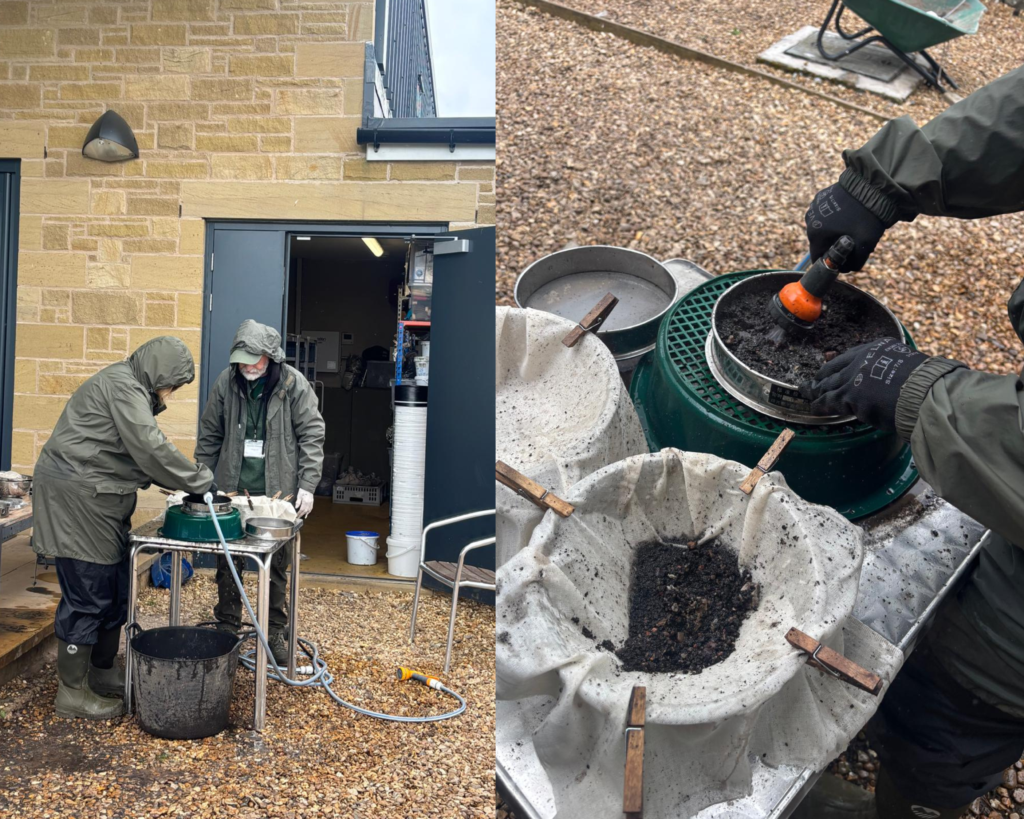
Period 7 now has a new target to aim for. If you’re joining us and reading this, pack your waterproofs and let’s see if we can do it again as we are all eager to finally reward ourselves with some 2026 samples from the praetorium!
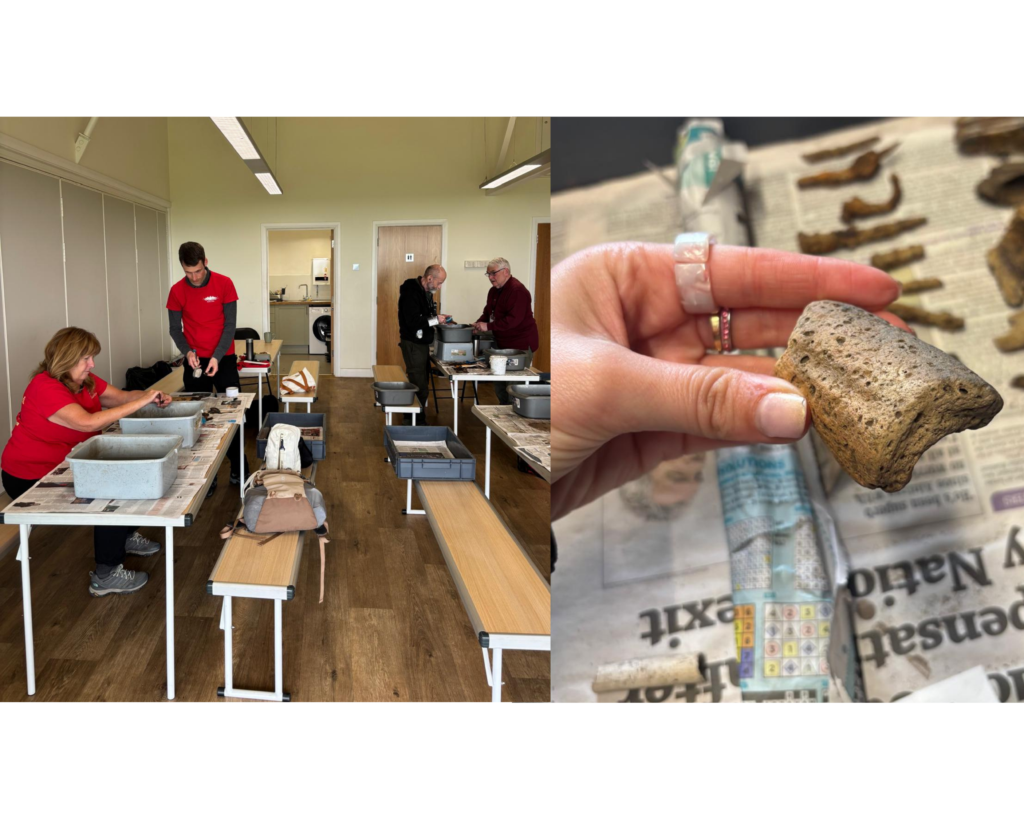
On the bulk finds front, we are finally beginning to work through Roman stratified contexts, providing our first insights into pottery consumption during the very late Roman period. A late Roman floor has produced a calcite-gritted ware jar with an interior groove, dating to after AD 360. Similar vessels have been identified at other sites along Hadrian’s Wall, including at our sister site, Vindolanda. Magna is now beginning to add its own evidence to this wider story, helping us build a clearer picture of supply networks and pottery use across the region during this period.
With these exciting developments, I am looking forward to seeing what else we uncover and achieve at Magna over the coming weeks. Cristina
19th June
Another week onsite has flown by and as always there have been plenty of new developments across the site. As in previous periods we have been focussing on the southern ditch team with one half of the crew, while the other volunteers have been working in the praetorium.
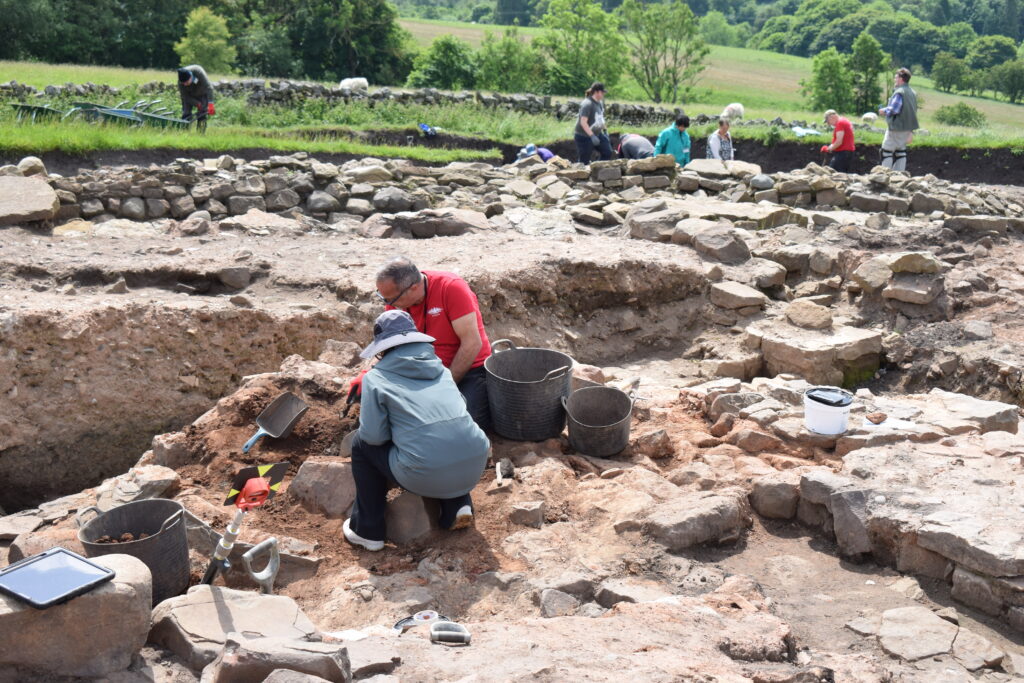
We now have a rough idea of where the north and south sides of the fort’s ditch are, and luckily we have both just inside the trench! While they have proven a little bit difficult to spot on the top edge due to all the fallen wall stones, they should be easier to find as we continue to remove the fill of the ditch, meaning we’ll get an accurate picture of the original size and scale of the ditch. The deposits are getting increasingly wet as we go down (and not just from the rain this week), which is a promising sign that we will get organic preservation in the lower deposits.
The quest for walls continues in the praetorium, with a new wall appearing at the north edge of the trench. One end of it has been cut off but we are following it through to try and work out if it is the north wall of the praetorium. If so, this will be a big help in our mission to map the floorplan of the building, so I have high hopes for this wall and what it may tell us! More walls are starting to come through to the west of the building, where the volunteers are looking for an additional wing of the commanding officer’s house that was buried in the Roman period. We have also continued to remove the post-Roman modifications in the southern range of the building, which has revealed earlier walls and a well-built oven. The soil samples we’ve taken from this should tell us more about what fuels were being used and maybe what the inhabitants were eating as well. Rachel
22nd June
The new week has kicked off in the absolute best way possible, bathed in glorious British sunshine! And if the forecasts are right, it’s only going to get hotter.
It has been an absolute joy to welcome and work alongside a brilliant group of students from both Newcastle University and Northwest University, Xi’an. They have been fantastic, getting properly stuck into the archaeology from day one with endless enthusiasm, plenty of barrowing, and lots of top-notch trowelling!
The sunny weather has provided the perfect backdrop for teaching the next generation of archaeologists the ropes. Beyond the traditional digging methodology, we’ve been taking full advantage of the dry conditions to train them up on our high-tech kit. From site photography to 3D scanning and mastering the Total Station, the students have been raring to learn. To absolutely no one’s surprise, they are a wonderfully bright bunch and picked it all up in a flash!
So, what have we been up to?
We’ve been focusing heavily on laser-scanning the northern section of the praetorium wall. This will allow us to create a fully interactive 3D model for our official reports and future digital analysis. Alongside this I’ve been taking Total Station masterclasses, learning the Total Station is always a bit of a learning curve , the students have been using the laser precision to map out the site’s topography and catalogue the exact, pinpoint coordinates of our most important finds. And of course they picked this up with no trouble at all.
It’s been a brilliant, high-energy start to the week, and we couldn’t ask for a better crew. Long may the sunshine last! Tommy
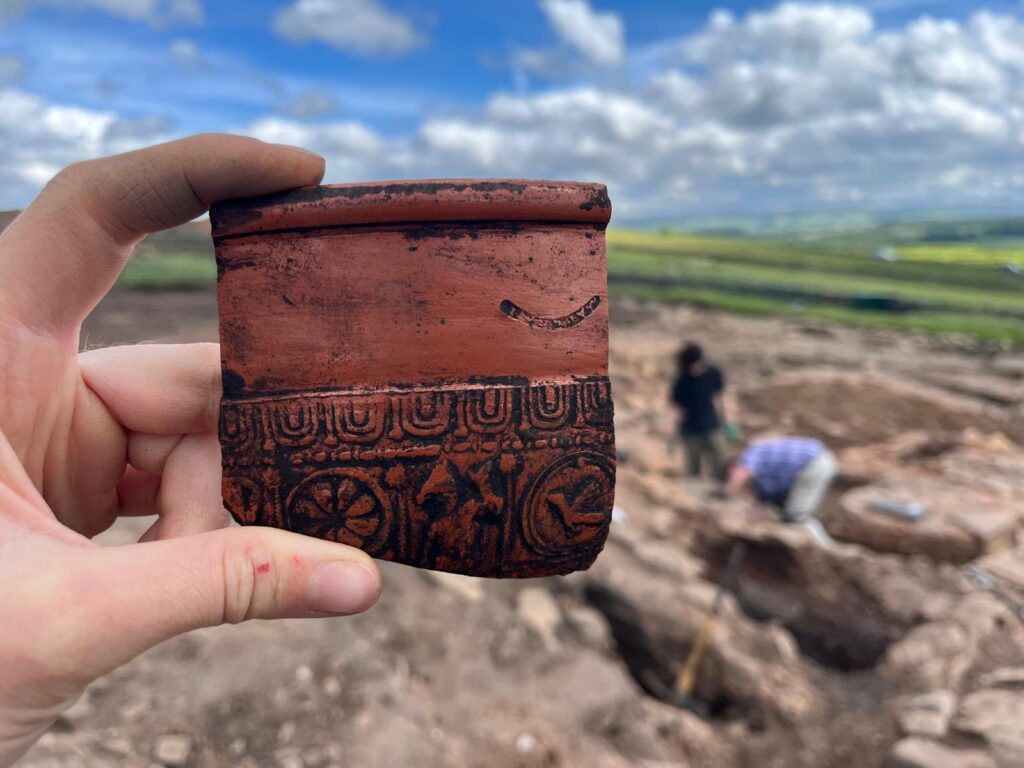
Our Pottery expert Cristina has given us information on this wonderful sherd of Samian. “It’s from a Dragendorff 37 bowl with a stamp of Maternus, the stamp is MATERNI which is genitive and shows possession of Maternus. He’s from Lezoux, so a central Gaulish product and was active likely between 160-190 AD. This sort of stamp was also found at Corbridge and Housesteads so quite a prominent supplier on the wall. These stamps are also found in other provinces such as Pannonia Inferior (Hungary) so his work travelled to very different parts of the empire” Cristina
24th June
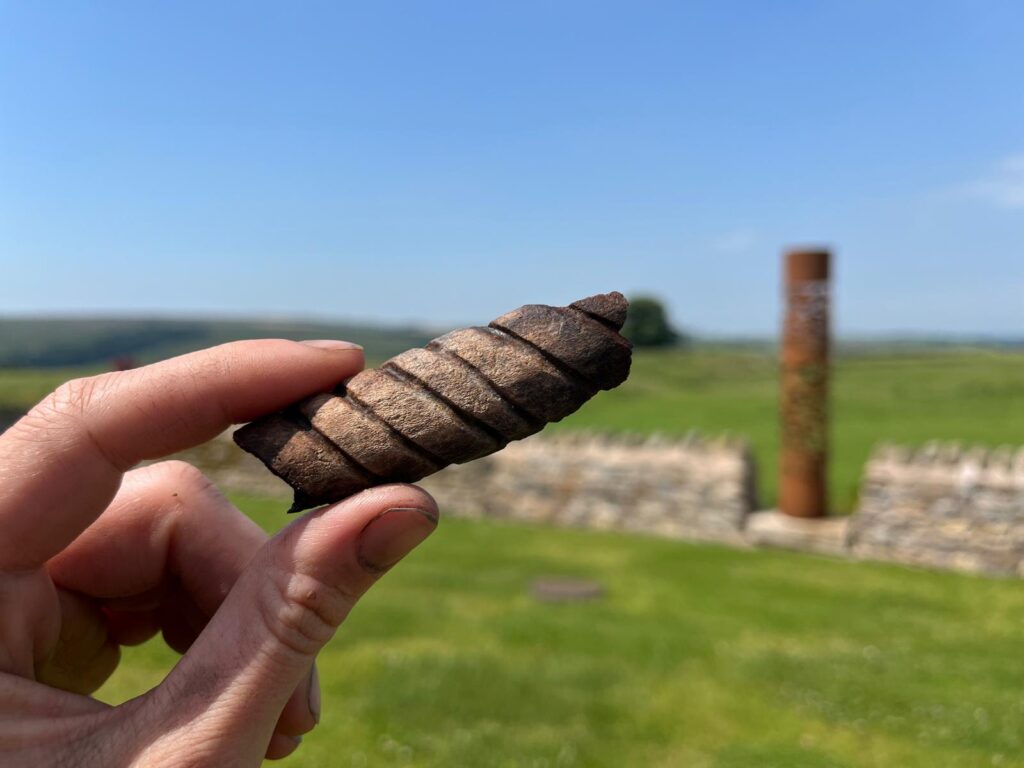
If you’ve visited the Roman Army Museum this year, hopefully you’ve seen the recent finds case which highlights our star finds from the past three years of excavation. My personal favorite in the case is the ox scapula which was used to create bone gaming counters, such as the one below that we found earlier in the season here at Magna, that the soldiers would use to play board games when not on duty. While perhaps not the shiniest of artifacts on display, it’s a unique look into the life of a Roman solider that not often seen.
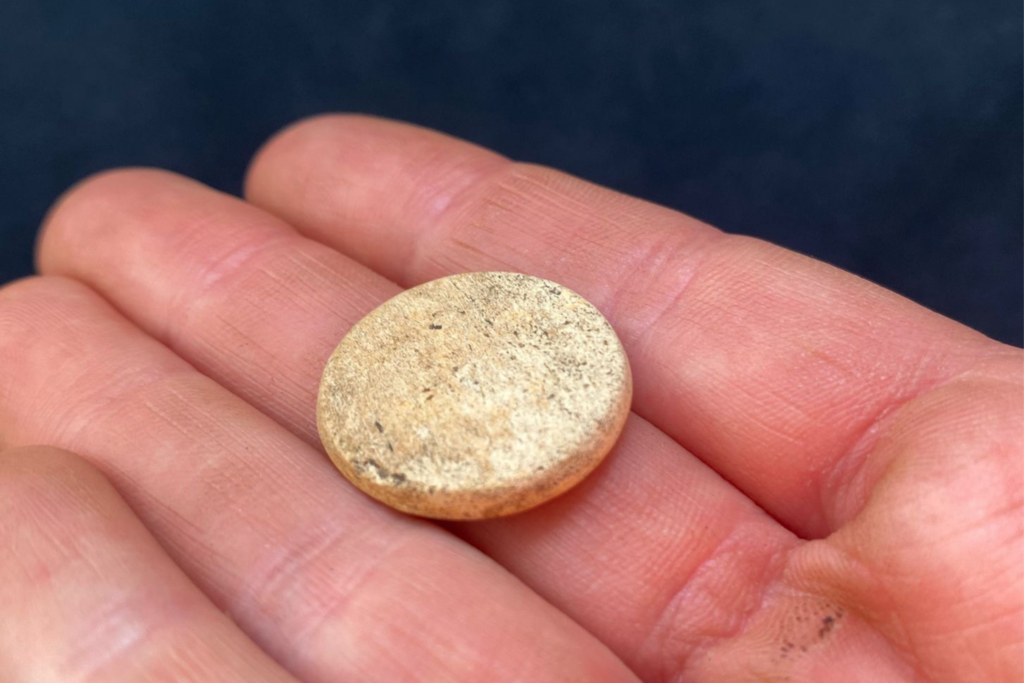
It’s important to remember that the people who lived on the frontier were not just citizens of the Empire or soldiers, but people who often came from wildly different places and wound up living and working on the Romano-British frontier. Beyond their work, they would have rich social lives and games played an important part of that. These two related finds are reminders of the individuals who lived at Magna fort Franki
The Vindolanda Trust holds the largest collection of Roman gaming boards that have been found in Britain (16 total, c. 15%) and so we know gaming was a favourite past time for those stationed here on Hadrian’s Wall. To bring these gaming boards to life, we have been working with Newcastle University to 3D print one of the gaming boards excavated at Vindolanda in 2019, and working with the University of Reading, have now learnt the rules to the ancient game of ludus latrunculorum so we can play this soldiers favourite game on the gaming board they would have been using! You can read more about the process here Sophie
26th June
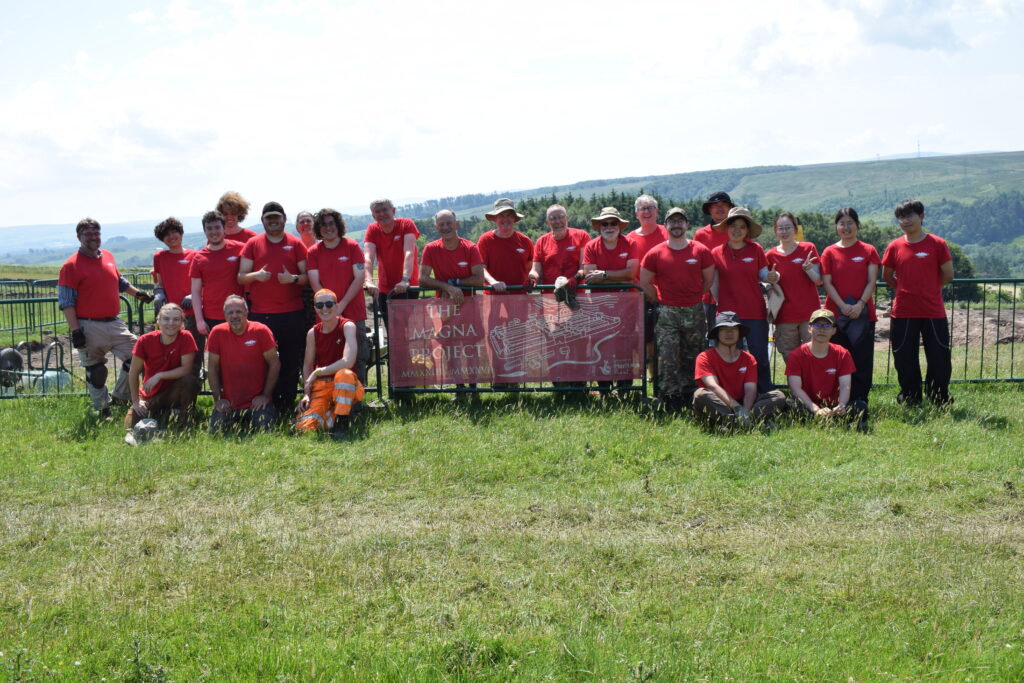
Great progress has been made this week in the sunshine, though I think we can all agree its got a bit too humid and hot in the last couple of days! As always though the volunteers have kept digging with great enthusiasm and added plenty of new information to our story of Magna.
It has come with advantages though as the dry weather has allowed us to make real progress in the southern ditch, and we now have identified both the north and south side as they slope down from the historic ground level. We can also now say exactly what happened to the early stone fort wall, as we have revealed most of it lying inside the ditch, as an extensive layer of large stone blocks. Despite this digging has continued and we have officially made it into the waterlogged deposits! The volunteers even spotted our first fragment of unworked wood this afternoon, proving that at least for now we still have anaerobic preservation in this part of the site.
Meanwhile, in the praetorium we have been investigating both the earlier and later phases of the building. We have uncovered a new western room on the south range, that was buried during the Roman occupation of the site. As the team have been clearing the rubble around the walls they have been uncovering large amounts of animal bone, including a lovely, worked piece that was likely part of a decorative handle. Elsewhere we have started to untangle the sequence of the later walls and floors, as well as revealing the north wall of the building. Rachel