


Period 8
Here we will post regular updates on the current excavations and post excavation taking place on site here at Magna Roman Fort during Period 8 of the 2026 excavation season.
You will hear from our archaeologists and volunteers as they share news and thoughts about what is being uncovered, the challenges and the highlights of the excavation season.
13th July
Can you believe we are already on to Week 14?! That means we are pretty much halfway through this year’s excavations wow, how time flies when you’re having fun in the trenches!
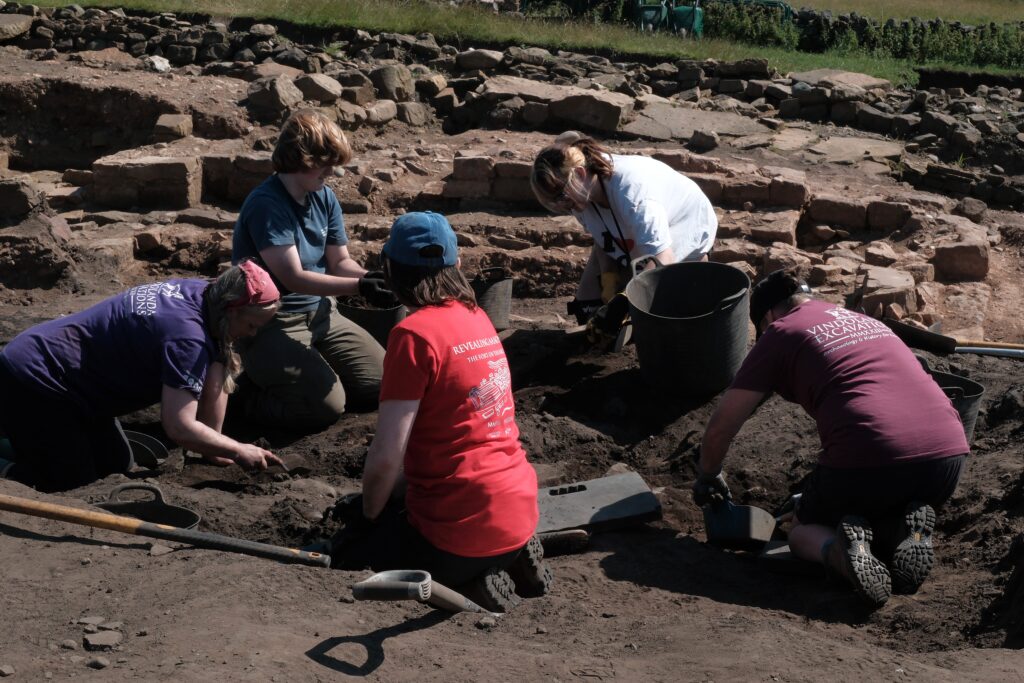
Our departing group did an absolutely fantastic job of clearing the decks and preparing a brilliant new pathway for our incoming volunteers. And my word, did last week deliver some spectacular breakthroughs! Over in the northern section of the praetorium, we were lucky enough to uncover what looks to be a surprise Roman kitchen , complete with part of a ladle! We found strong indications of burning and a very deliberate flue used to fuel the fire.
Right next to it, a larger mystery structure has appeared just to the north of the praetorium, boasting three massive foundations that could denote a granary or perhaps even a hospital. To top it all off, some lovely, large 4th-century street paving stones popped up right between this new mystery building and the praetorium, which was a truly pleasant surprise.
But now, the torch passes to our brand-new crew for their very first week! After a swift site tour from Franki and myself to get everyone orientated, it was straight into the digging for our eager new recruits.
Our main goals for the week ahead will be chasing the boundaries in the glorious sunshine which is forecast all week long (fingers crossed!), providing the perfect weather for the crew to extend the site eastwards and westwards. This will help us get a much clearer picture of where the boundaries of the praetorium and its walls actually lie.
A whole lot of sifting through the soot! Part of the team has been bravely working their way through what seems to be Late Roman furnace waste. Quite a few of the crew are coming out looking like chimney sweeps, covered in soot, but it’s all to get down to the pristine, earlier Roman layers waiting just underneath!
Ultimately, our grand goal is to complete the entire footprint of the praetorium and finally contextualise how the bath suite fits within it. It’s an incredibly exciting puzzle to solve, and we’ve got the perfect crew to do it. Welcome aboard, team! Tommy
15th July
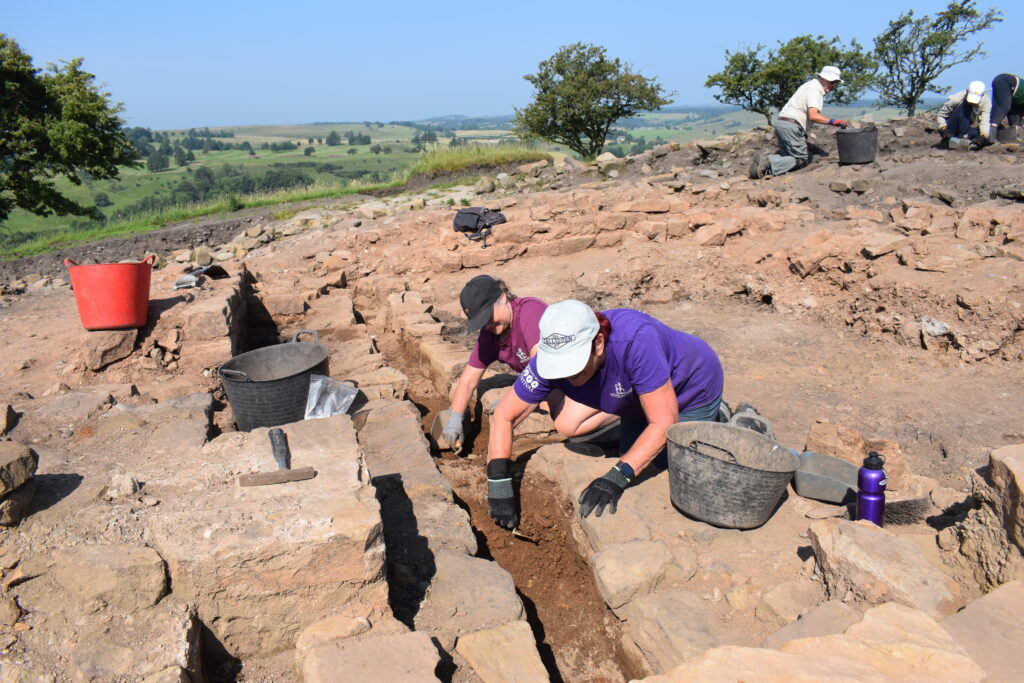
Magna is really starting to come to life and our excavations in the praetorium thus far have revealed four phases of stone construction! A large part of our goal as archaeologists is to try and piece together the many different walls, drains, and surfaces in order to form a comprehensive map of each phase of the building. In some cases it’s an easy solution, but often Magna feels like a giant jigsaw puzzle which needs solving when you’re missing half the pieces! These missing pieces can be attributed to later stone robbing, the 1830s antiquarian investigation, or even just the simple fact that a feature has not yet been found. Yet this puzzle is what so often intrigues archaeologists and site visitors alike. It’s an extremely rewarding feeling to finally put that last piece together, and that’s what we’re so diligently working towards, through rain and sunshine alike. Franki
If you haven’t already caught up with our third video update from the Trenches, make sure to check out the video below.
17th July
Having been set the challenge of expanding out to both the east and west of the exposed section praetorium’s north range, our period 8 volunteers have made great progress over the course of this week. Further layers of post-Roman occupation have been encountered overlying the praetorium, including a substantial drain, a rough cobbled surface and new walls to add to our 3D jigsaw puzzle.
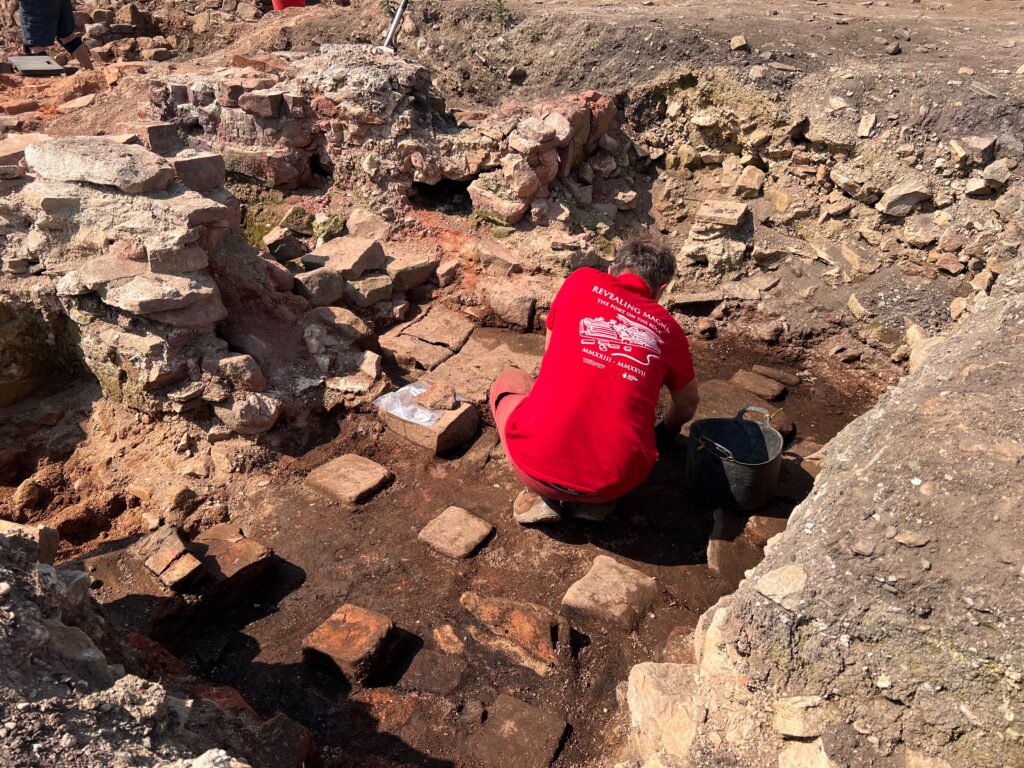
Work has also continued in the southern range of the praetorium where more of the heating and drainage systems for the commander’s private baths have been revealed. The first in situ tile stacks for the Hadrianic hypocaust have been revealed, along with drains inserted into the base of the flues. This is a regional variation to the traditional method of bathhouse construction that the Romans developed, in response to the much wetter environment in northern Britain. Without these drains, rainwater and groundwater would seep down into the underfloor heating and create a very humid environment which would then cause the brick and tile to rot and crumble. The earliest bathhouse excavated at our sister site Vindolanda doesn’t have these drains so we can clearly see how the Romans are learning from and adapting to life in the Northumbrian climate! Rachel
22nd July
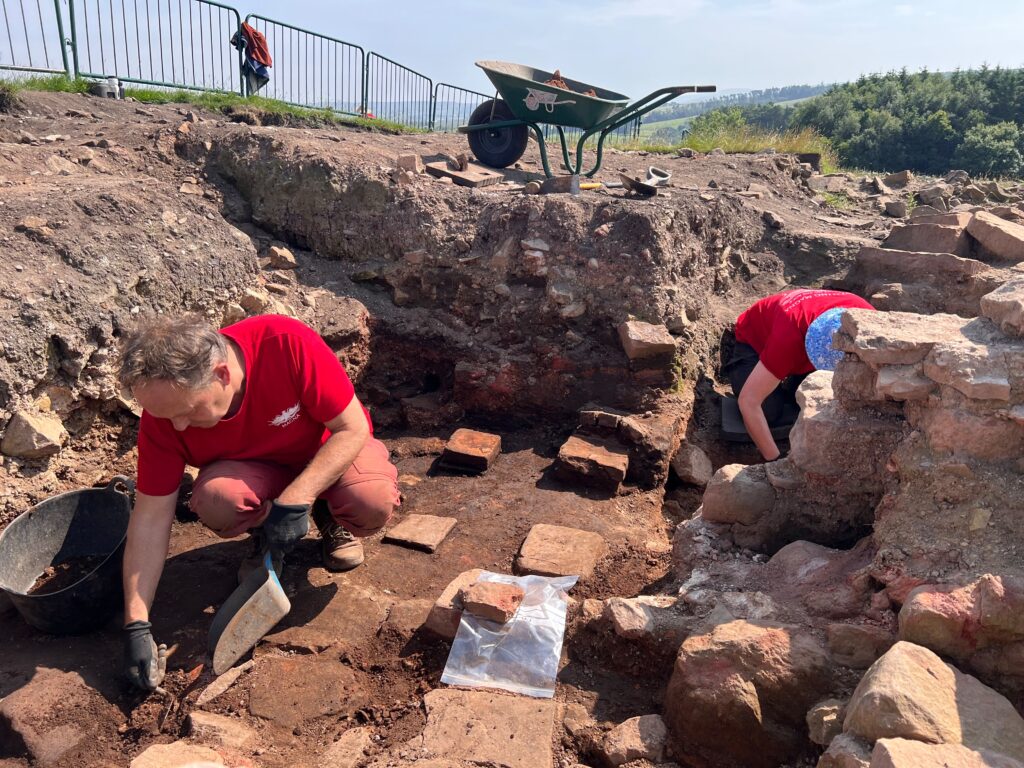
It’s been another fantastic day on the excavations here at Magna, where we’ve uncovered our first die from the site! The team has been excavating in the antiquarian backfill near the furnaces of the praetorium bathhouse, and unearthed a beautiful bone die.
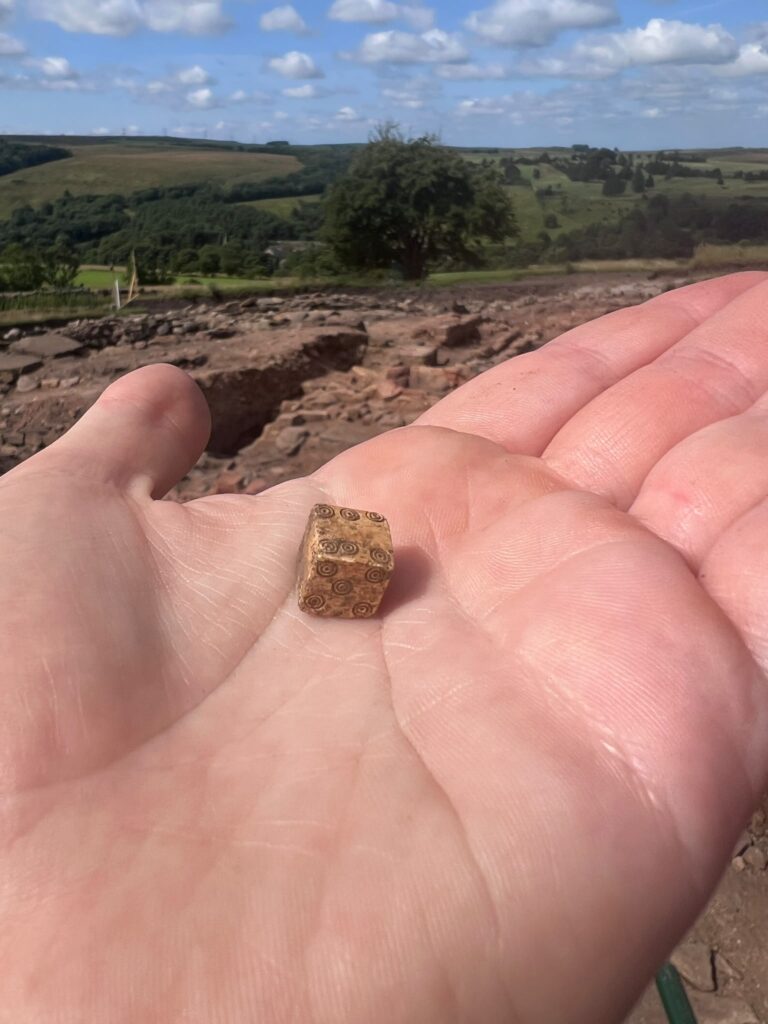
Sue, our Period 8 excavator, made the find. “When I saw it and the shape of it, I hoped it would be a die,” she said. “When I looked more closely, I was over the moon to see how delicate the markings were.”
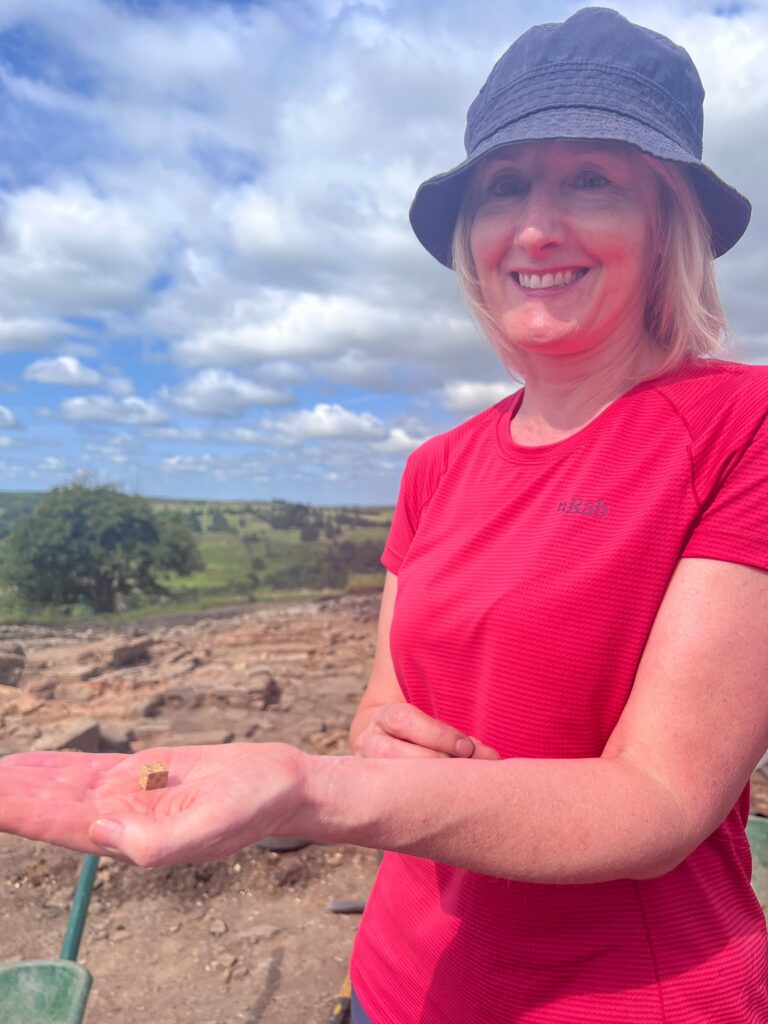
This is a fantastic addition to our growing collection of bone artefacts from the site. It follows further bone gaming counters uncovered this week, worked antler with evidence of a die cut from it, found earlier in the season, and a cow scapula from the 2025 excavations showing evidence of gaming counters carved from it. Together, these finds are building a richer picture of life at Magna, and we can’t wait to see what the rest of the season reveals! Sophie
24th July
Our final Friday of the period has provided us a flurry of nice finds, including a stamped samian base and copper alloy artefacts. The nicest of these was in fact the final find of the day; a buckle from a 4th century deposit, which is just missing the pin.
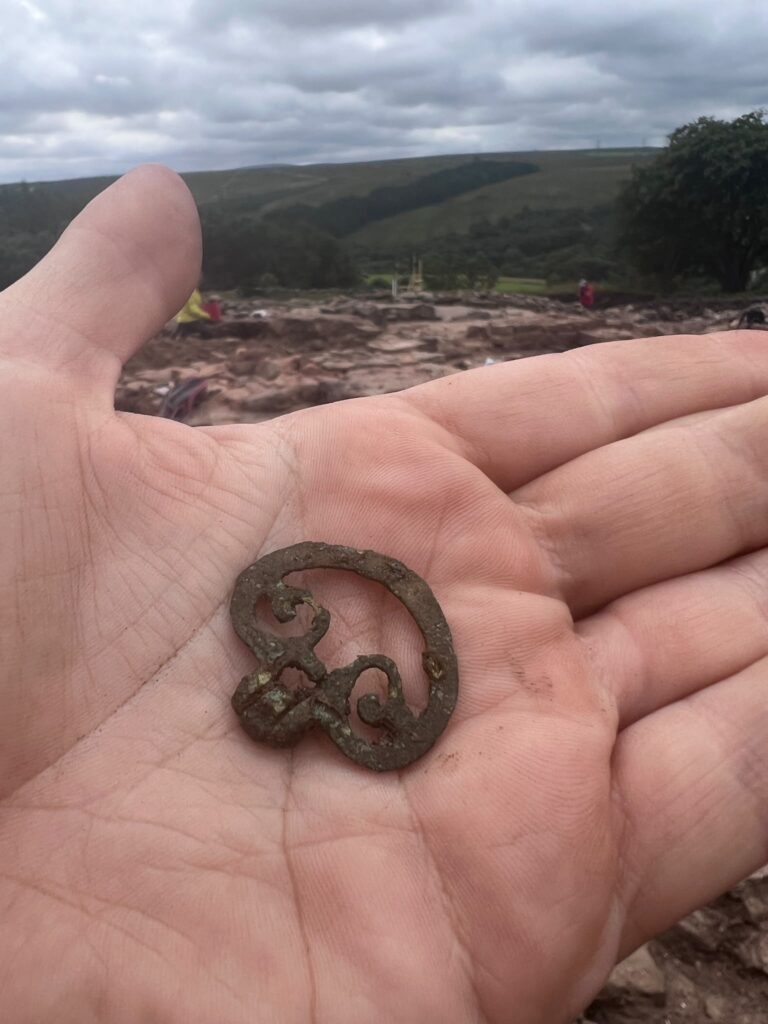
Across the rest of the site we have been able to add several more rooms to the floorplan of the praetorium. In the northern range the team have been expanding out to the east and defined an additional two rooms, with areas of flagstone floors, hearths and drains crossing through them. These rooms are especially promising as the later deposits are surviving at a much higher level than elsewhere, meaning that we might get deeper standing sections of walls as we excavate down to the earlier phases of the building.
In the western wing of the commander’s house much of the team’s effort was directed towards removing the large spreads of later rubble that have been packed in over the top of the demolished building. These have been far more substantial than I expected and required plenty of muscles and enthusiasm to get through! It was all worth it though as we have now reached the top of the Roman remains, which includes the north wall of the possible dining room in the southwest corner and some lovely stone cut drains in the room on the other side. Rachel
27th July
Although we are now technically in Period 9 in terms of the excavation chronology, I wanted to briefly return to the Period 8 update to share the first images of the tiny bone die after it has been cleaned. The die has certainly captured people’s imagination and has become one of the most talked-about discoveries of the 2026 excavation season at Magna so far.
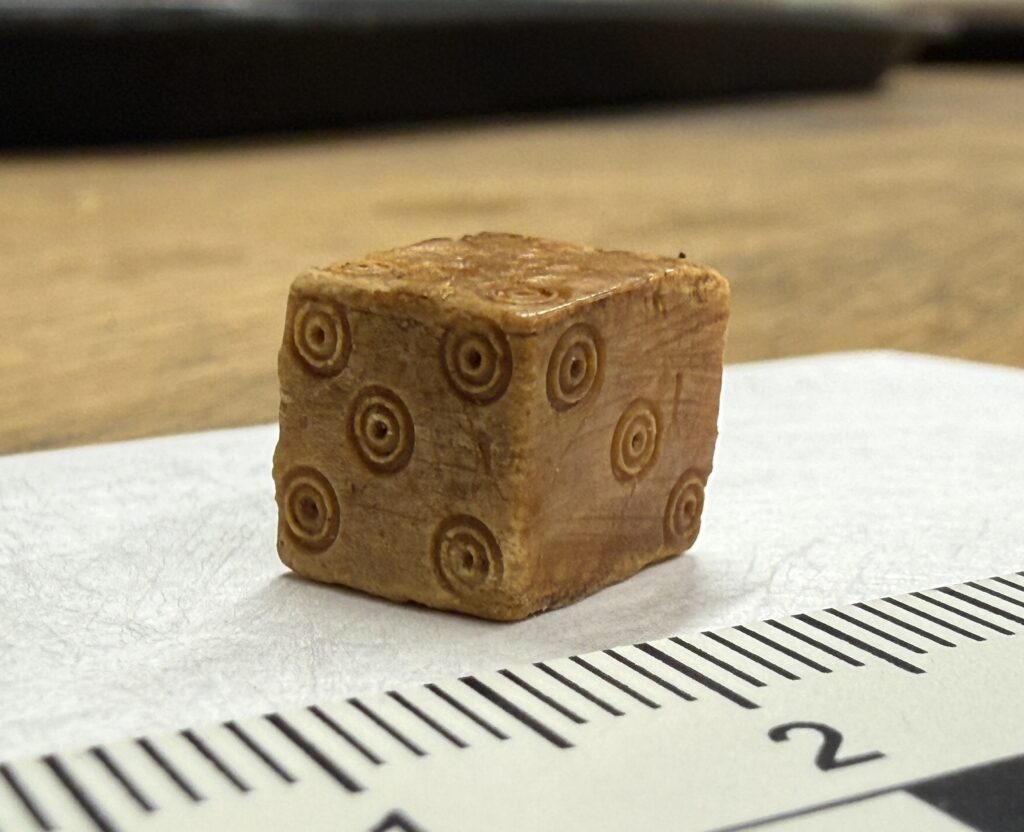
Measuring less than 1 cm across, smaller than a sugar cube, the die is beautifully crafted from animal bone, with neatly incised concentric-ring pips that remain remarkably clear after almost 1,700 years. For those who have asked on our social media post – yes the opposite sides of the die all add up to seven!
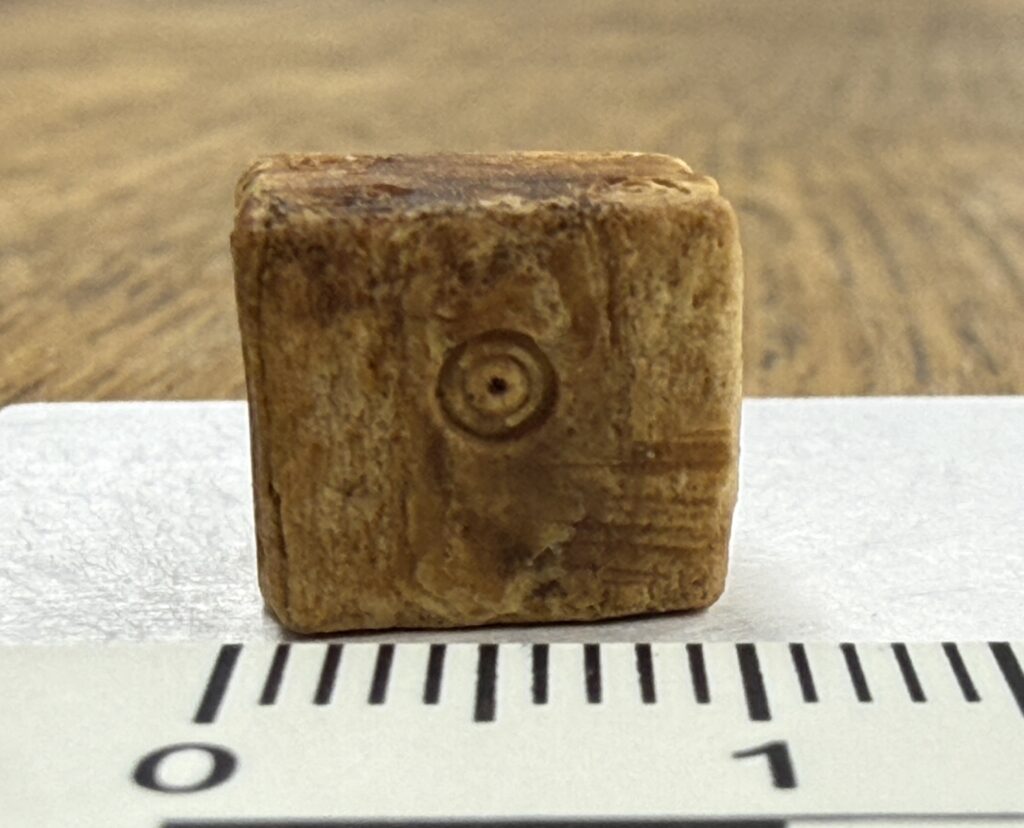
Finds like this offer a wonderfully personal connection to the people who once lived, worked and relaxed at Magna. Roman dice were used in a wide variety of games, much as they are today. The everyday nature of this artefact, combined with the fact that it lay hidden beneath the ground for so long, makes its discovery all the more extraordinary. We are delighted to welcome it into our collection and look forward to learning more about the story it has to tell as conservation and research continue. Sonya