

Period 9
Here we will post regular updates on the current excavations and post excavation taking place on site here at Magna Roman Fort during Period 9 of the 2026 excavation season.
You will hear from our archaeologists and volunteers as they share news and thoughts about what is being uncovered, the challenges and the highlights of the excavation season.
27th July
Despite a wet and windy start to the day, more typical for Magna weather than we’ve seen over the past few weeks, our brand-new group of volunteers have joined us on site for the start of Period 9. Following a welcome talk delivered by Rachel, the crew have taken up the task of continuing the excellent work done by the Period 8 team over the last two weeks.
Period 9 will continue our exploration of the northern and western ranges of the praetorium, adding to our understanding of the building’s phases. For a more detailed look at the current trench, catch up with our Magna Video Update #4 on our YouTube channel. Sophie
29th July
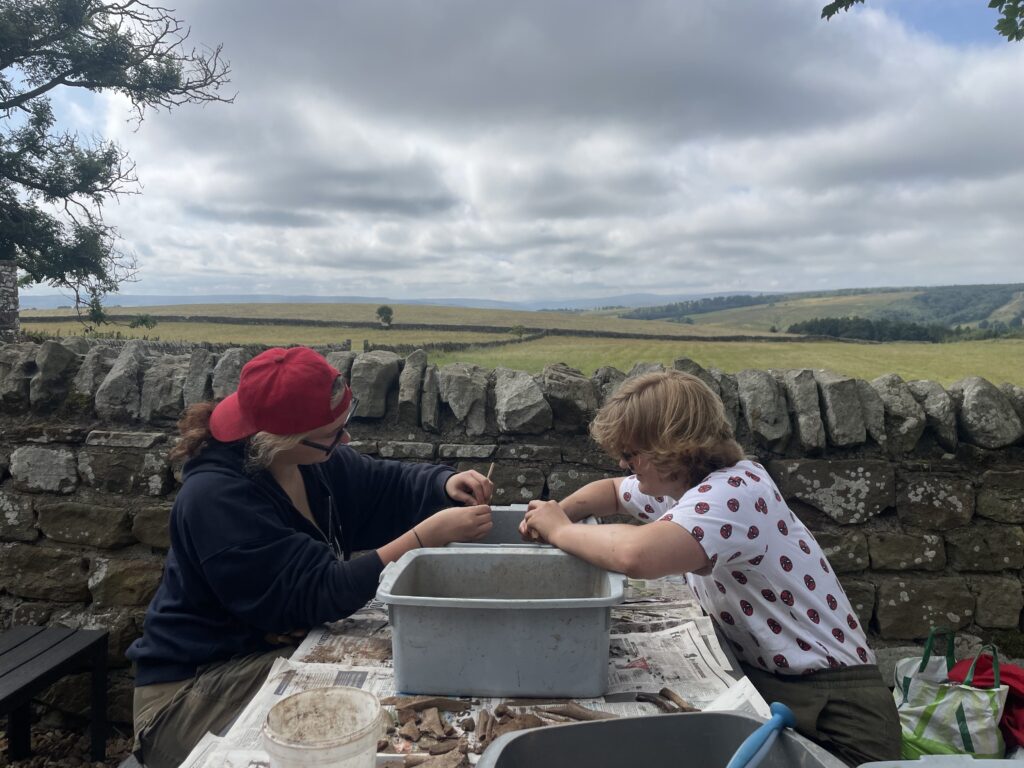
Although post-excavation work briefly paused during the month of July, the excavations at Magna continued to reveal finds, with more and more material emerging from the trench each day. As the backlog steadily grew, we organised an additional post-excavation session with some of our excavation volunteers, giving them the opportunity to experience what happens to the finds once they leave the ground.
Two students joined us to learn the fundamentals of finds processing. They carefully washed the material and were introduced to some of the characteristic pottery types commonly seen in northern Roman assemblages, including Nene Valley colour-coated fineware, black-burnished ware and Samian ware. Alongside pottery, they also gained hands-on experience sorting and identifying other common categories of finds, such as animal bone and glass.
It was a rewarding session that not only helped us keep pace with the growing volume of material, but also gave the students a valuable insight into the essential post-excavation work that underpins archaeological interpretation. Cristina
4th August
Period 9 has been flying past in a whirlwind of activity across the site, and I can’t believe we are already into the second week! As always lots has changed with some questions being answered while even more news ones have been uncovered.
In the western wing of the praetorium the team have revealed a beautifully preserved floor made of opus signinum (Roman waterproof concrete). This material was laid over the flagstone floor of the baths to seal it and means that we will have an intact hypocaust system from the original phase of the building. These types of sealed deposits are great for some of our environmental sampling as they won’t have any later contamination and can provide great insight into what fuels the Romans were using to heat the commmander’s house.
On the eastern side of the building yet more walls and drains are under excavation, spanning from the first stone phases to the latest occupation of the site. We shall have to wait a little longer to see exactly where all the walls are going but I have a feeling we’re close to the eastern edge of the building and finally having the full extent of the praetorium inside our trench! Rachel
6th August
A Tale of Two Tiles
Every archaeological find tells a story, but sometimes two objects discovered only metres apart can reveal completely different sides of life on Hadrian’s Wall.
These two fragments of Roman tile, uncovered during excavations at Magna Roman Fort by our period 9 Team, are a perfect example.
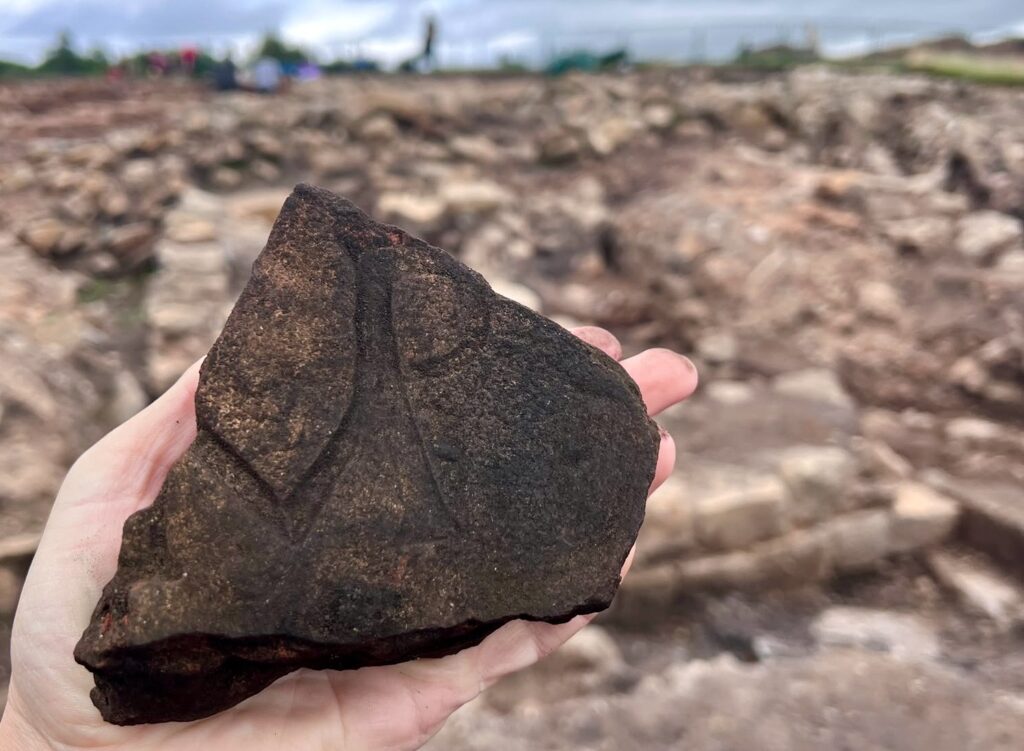
One, uncovered from the post Roman waste deposits of the buried praetorium west wing bears the partial stamp of neatly impressed letters (IMP) – an official stamp applied before the tile was fired. Such marks are thought to denote imperial ownership or production, reminding us that the Roman army was part of a vast, highly organised system. Even something as ordinary as a tile carried the authority of the Empire.
The second tile was found in the late Roman infill in the centre of the praetorium tells a much more personal story.
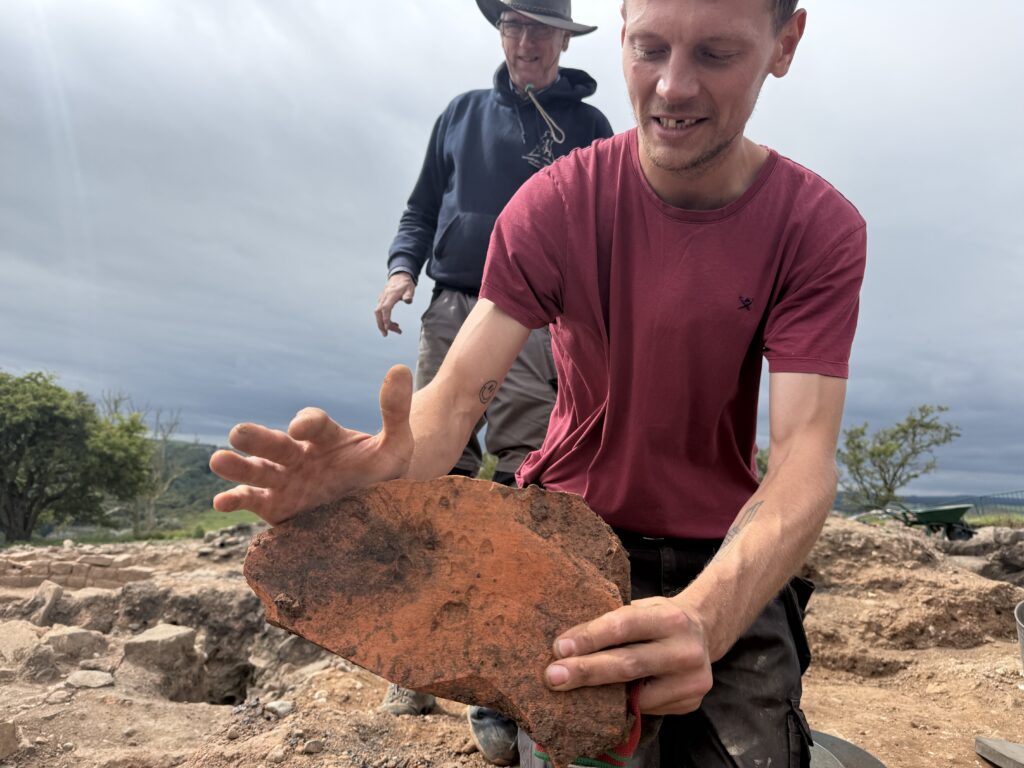
Before it was fired almost 1,900 years ago, a dog wandered across the drying clay, leaving behind a series of tiny paw prints. The tile was fired with those prints still in place, preserving a fleeting moment that was never intended to last.
Together, these tiles capture two very different aspects of Roman Britain. One speaks of bureaucracy, military organisation and imperial control. The other offers a glimpse of everyday life, a curious dog padding across a worksite while craftsmen went about their business.
It’s these contrasts that make archaeology so fascinating. Alongside evidence of soldiers and official administration, we uncover traces of ordinary lives and chance moments that connect us directly with the people – and animals – who once lived and worked here. – Sonya
7th August
After a rather damp and windy few days onsite interrupted our progress in parts of the trench, we have ended the period on high with plenty of sunshine and archaeological discoveries.
Perhaps in sympathy with all the wet weather, the theme of this week has definitely been drains, which have been popping up all over the site! Some of them have been in locations you would expect, such as in the baths, however we have several overlapping very late drains crossing through and over the remains of the eastern rooms of the praetorium. These are almost certainly post-Roman and provide some idea of the ongoing water management issues the inhabitants of the site faced in the past.
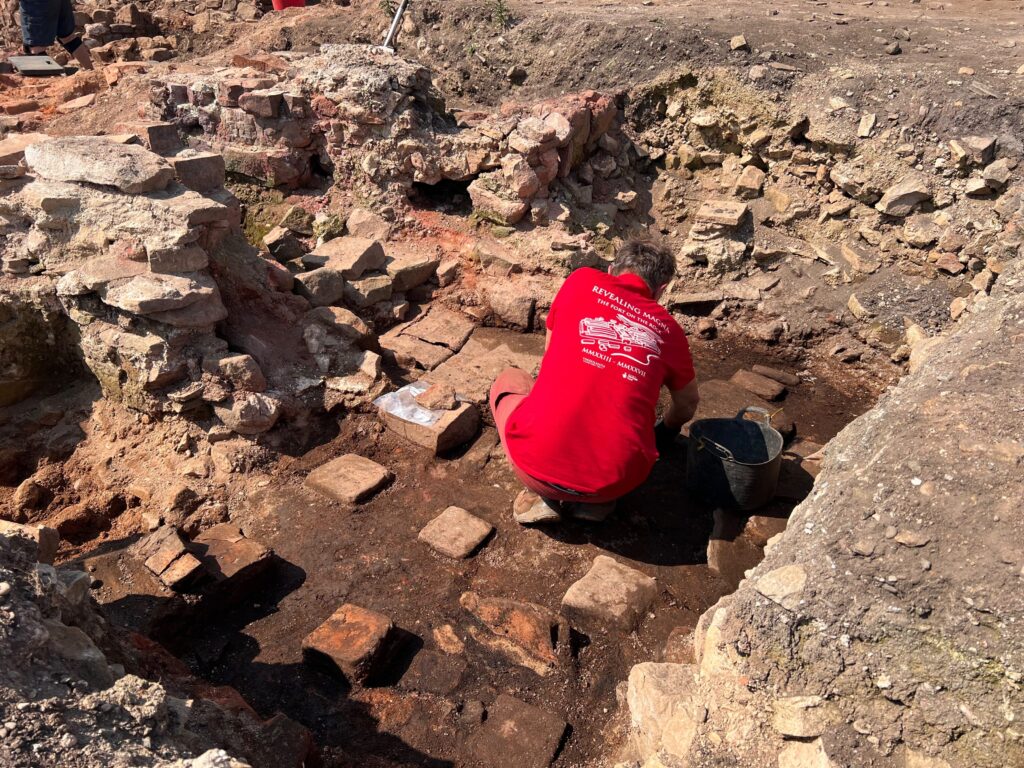
However, the nicest drain of the week was found in the northern range of the praetorium, appropriately crossing under both a post-Roman stone lined drain and a 19th century field drain. The Roman example is formed of a narrow channel, carved out of the middle of neatly dressed stone blocks. These types of drains are most commonly used as ground level gutters for overhanging roofs or in wet indoor spaces such as bathhouses, suggesting that this area may once have been either outside or had a more specific function. We’ve only uncovered a short section of this drain so far so we will have to wait and see where the rest of it goes before we can work out exactly what it was being used for. Rachel