

Period 12
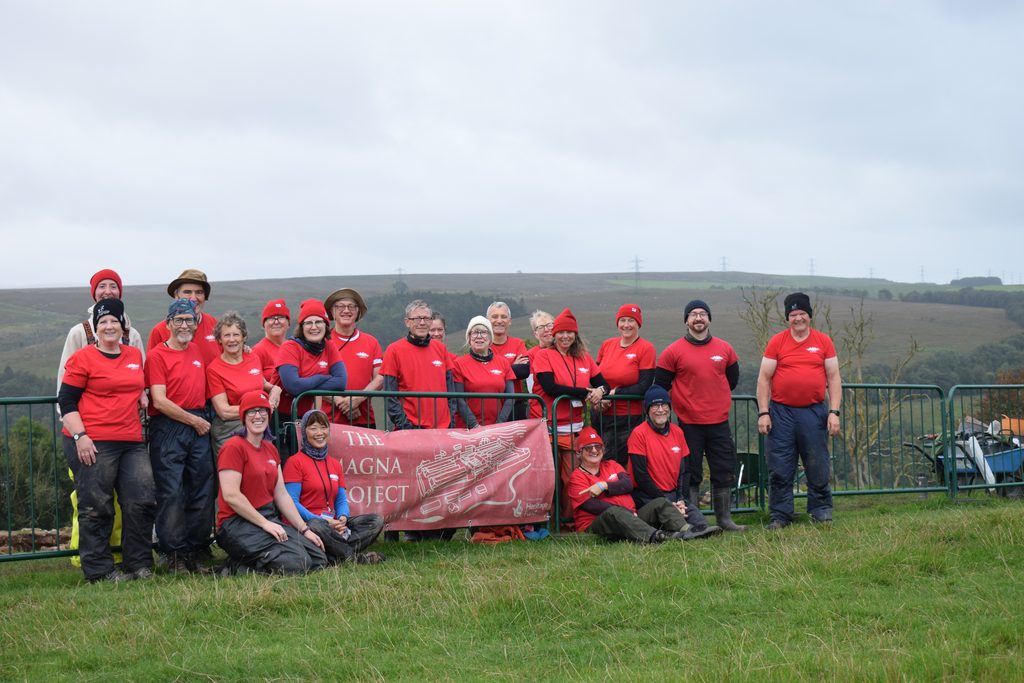
Here we will post regular updates on the current excavations and post excavation taking place on site here at Magna Roman Fort during Period 12 of the 2026 excavation season.
You will hear from our archaeologists and volunteers as they share news and thoughts about what is being uncovered, the challenges and the highlights of the excavation season.
7th September
And just like that we are on our final Period of the 2026 excavation season here at Magna! It’s been such a wonderful season this year, with both some stunning finds and, even more excitingly, getting a better understanding of what is happening under the ground in the southwestern corner of the site. The spoil heap has grown enormously, and we’ve endured both the intense sunshine, gale force winds, and sideways rain! We can’t wait to see what the final two weeks has in store for us here at Magna.
As always, please do come down to visit us trench side and see what we are uncovering. If you are a Friend of Vindolanda, why not join us on Friday 11th September for our annual Friends Day! More information on the day and our Friends Membership can be found here. Sophie
9th September
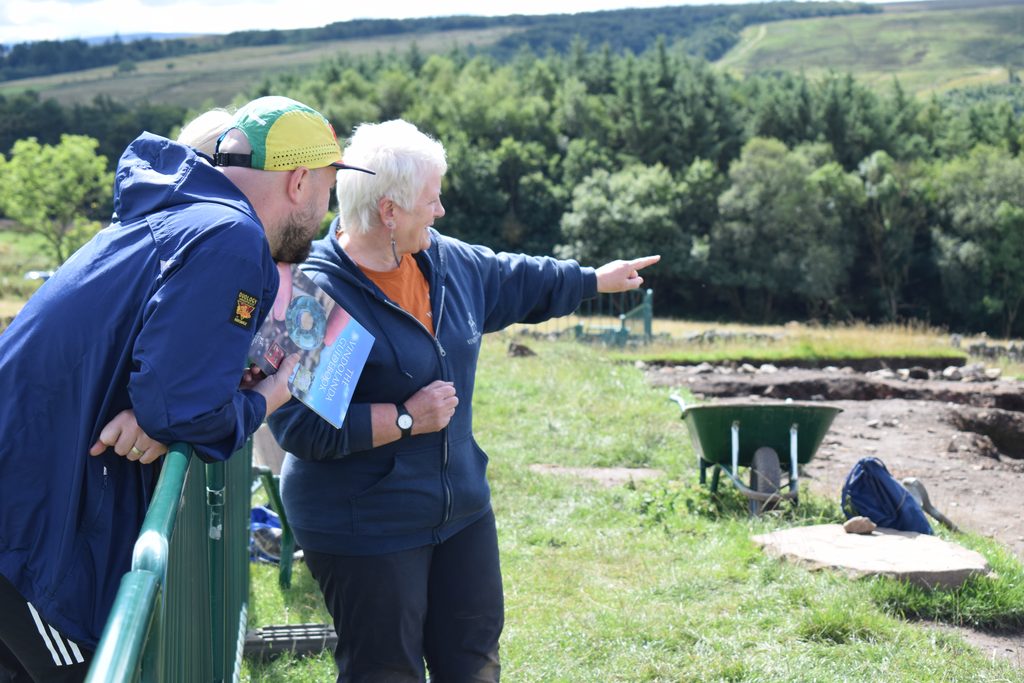
Well, we may be drawing towards the end of our season, but that certainly doesn’t mean the archaeology is slowing down anytime soon! This week, our fabulous team quickly acclimatised to a classic spot of Northumbrian rain, which managed to stop play for only half a day before we were all straight back out in the trenches with trowels in hand.
And goodness, what an action packed week it has been on site so far! Over in the northern quadrant of the praetorium, we’ve uncovered a surprise possible kiln or large oven, which was altogether unexpected.
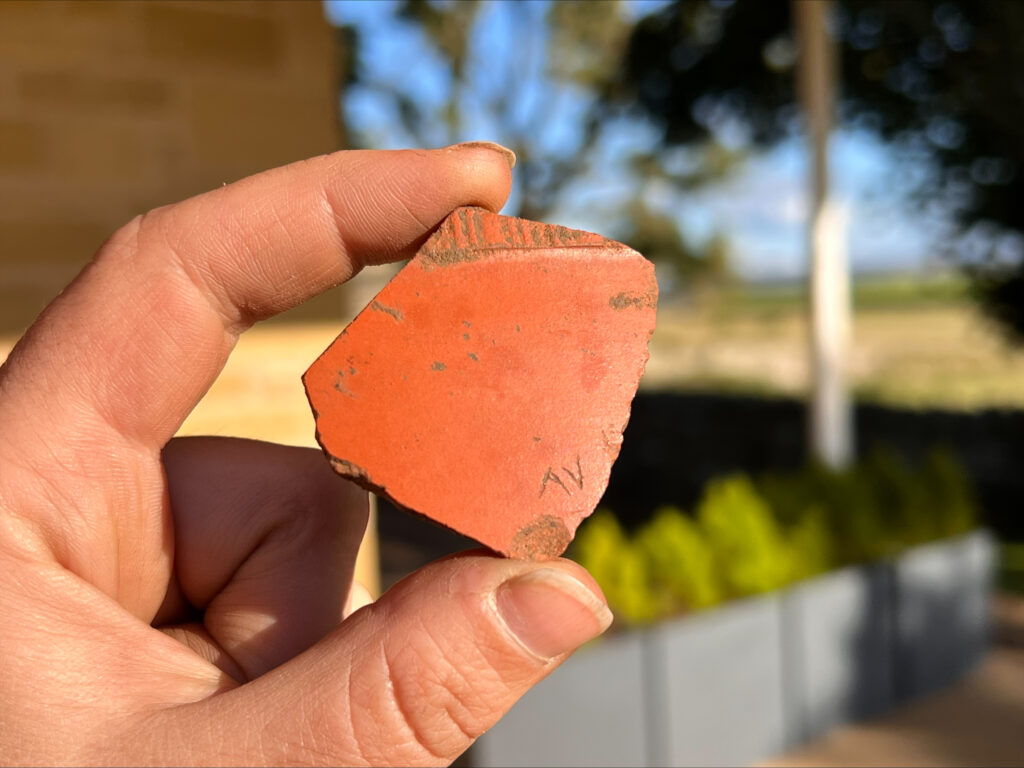
As meticulous cleaning and recording continue, we are hoping to get a much bigger picture of what was actually going on in this space, though whether it turns out to be a communal baking oven is something only time and careful trowel work will tell. Along with these architectural twists, we’ve enjoyed a steady stream of wonderful finds coming through, including lead objects, lovely copper items, a piece of Samian pottery with graffito, even more of that brilliant lorica squamata scale armour, and some beautifully moulded structural stone.
Meanwhile, our focus remains firmly on the eastern section of the praetorium, where the team has been bringing to light some gorgeous rooms, intricate drainage networks, and even more plinth column bases! Of course, as always, there are mountains of animal bone and pottery to process. Speaking of which, a truly massive thank you must go to our incredible post excavation team from each and every period. They have been working tirelessly through the heaps of material our excavators dutifully bring up, and without their meticulous hard work and eagle eyes, our archives wouldn’t be half as bountiful or brilliant as they are today! Tommy
11th September
It’s the penultimate week of the excavations and there’s been a definite shift in the weather to herald the start of autumn here in Northumberland. That hasn’t slowed down our volunteers though who have been getting stuck in clearing out more of the rooms of the praetorium.
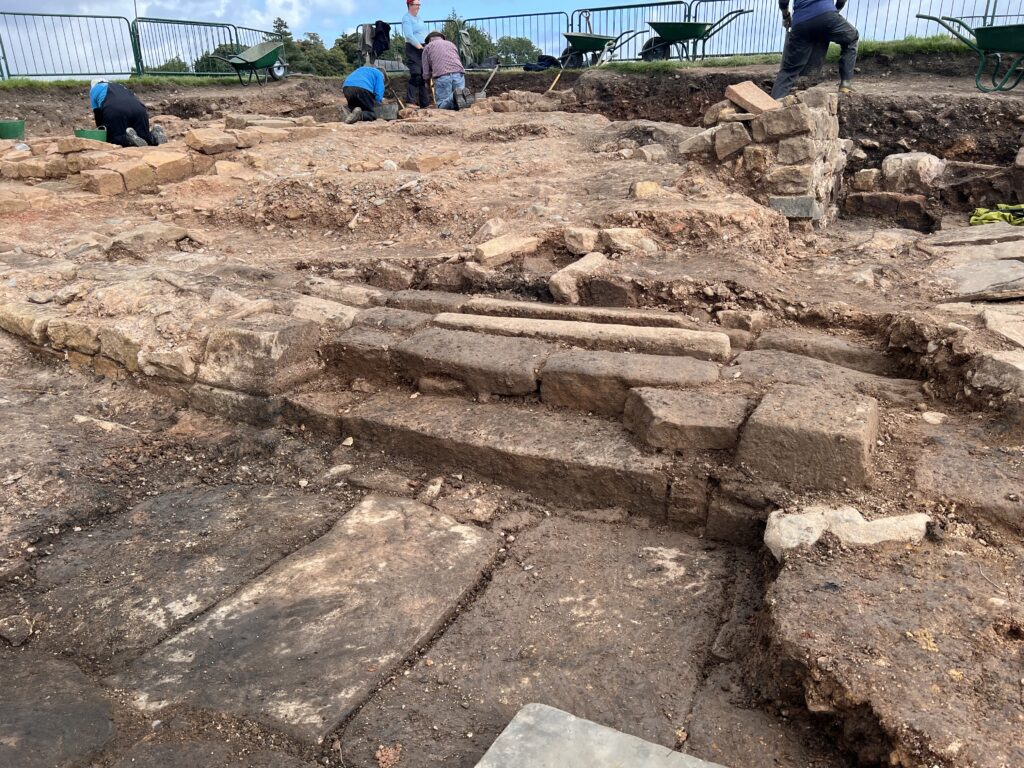
In the courtyard area we have now finished excavating the smelting area, exposing more of the wall that it was set up against. Further south along this wall we have continued to remove the infill of the rooms to reveal a beautiful, stepped entrance from the courtyard down into the building. This likely dates to the second or third stone phase of the building and features well-dressed stone steps, a fine flagstone floor and two column bases on either side of the doorway.
In the eastern rooms of the building, we have been continuing to find more surviving wall sections on the edge of the antiquarian trench as well as even more section of drains, some built directly one on top of the other! Hopefully more remains of these features will appear as we continue to excavate an we will be able to tie them into the other exposed remains and complete our 3D jigsaw of the commander’s private baths.
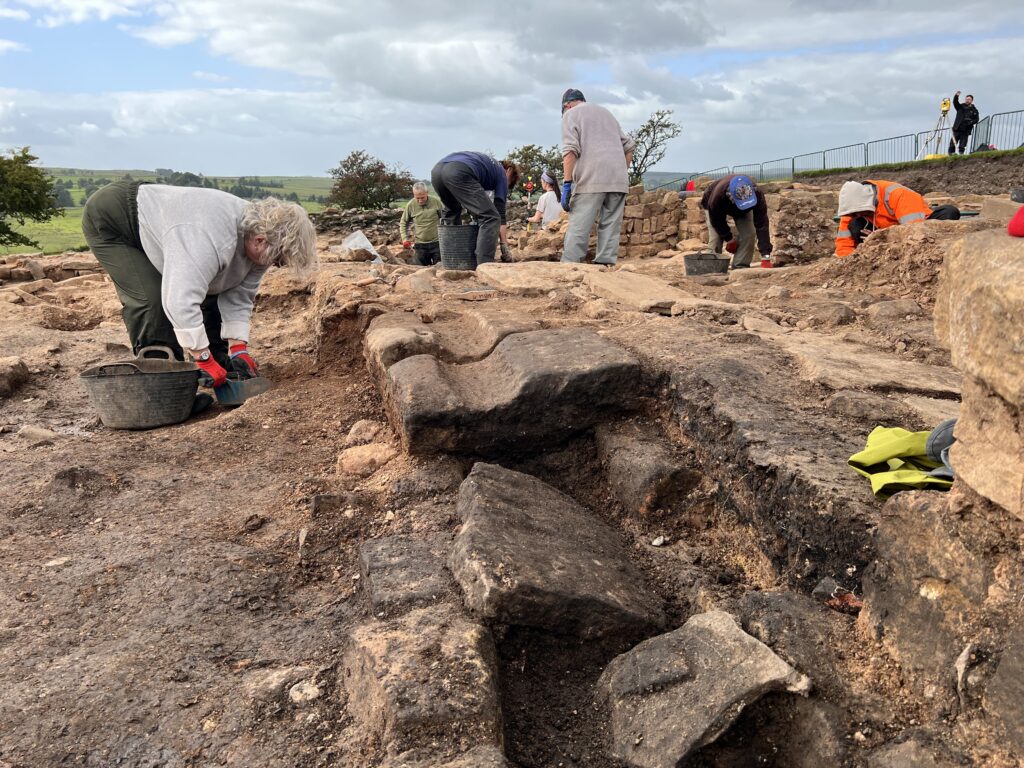
Meanwhile, in the northern rooms, the quest continues for surviving floor levels in the storeroom. So far it continue to elude us but several nice finds have been coming out, including some very large amphora sherds and painted plaster pieces which appears to have slid off the wall and are now laid out in the fill of the room.
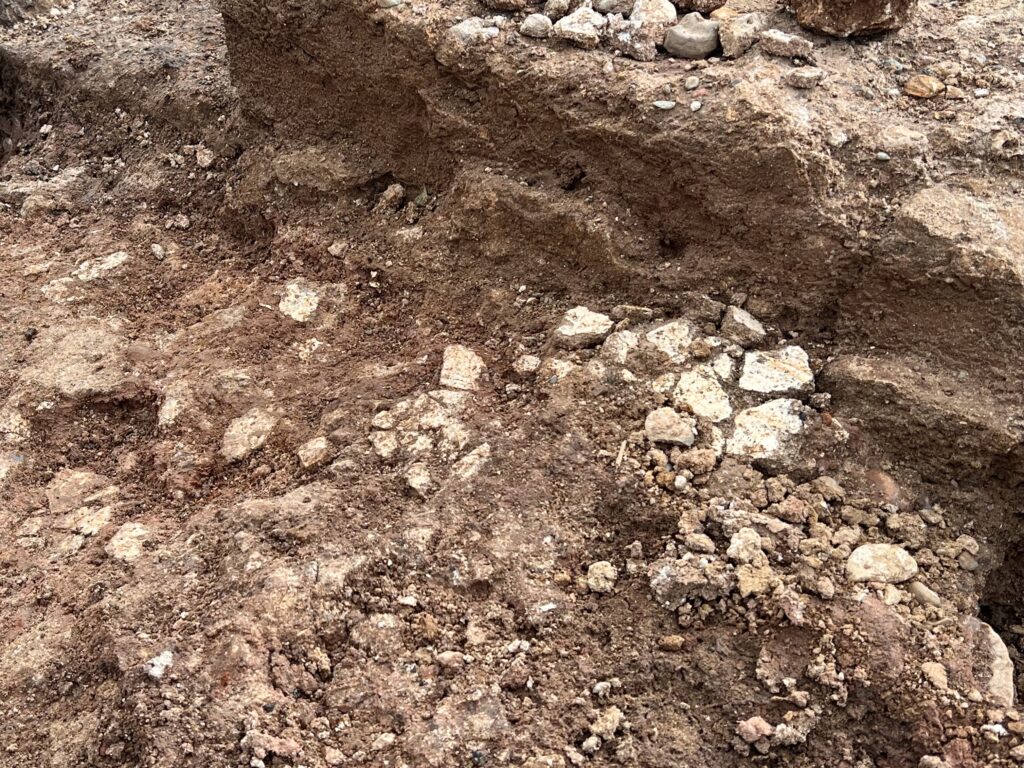
There’s plenty still to do in our last week onsite and I can’t wait to see what final discoveries we make before the winter! Rachel
Today has been our annual Friends of Vindolanda Day, and it has been fantastic to see so many of our Friends coming together for a special gathering at the Roman Army Museum.
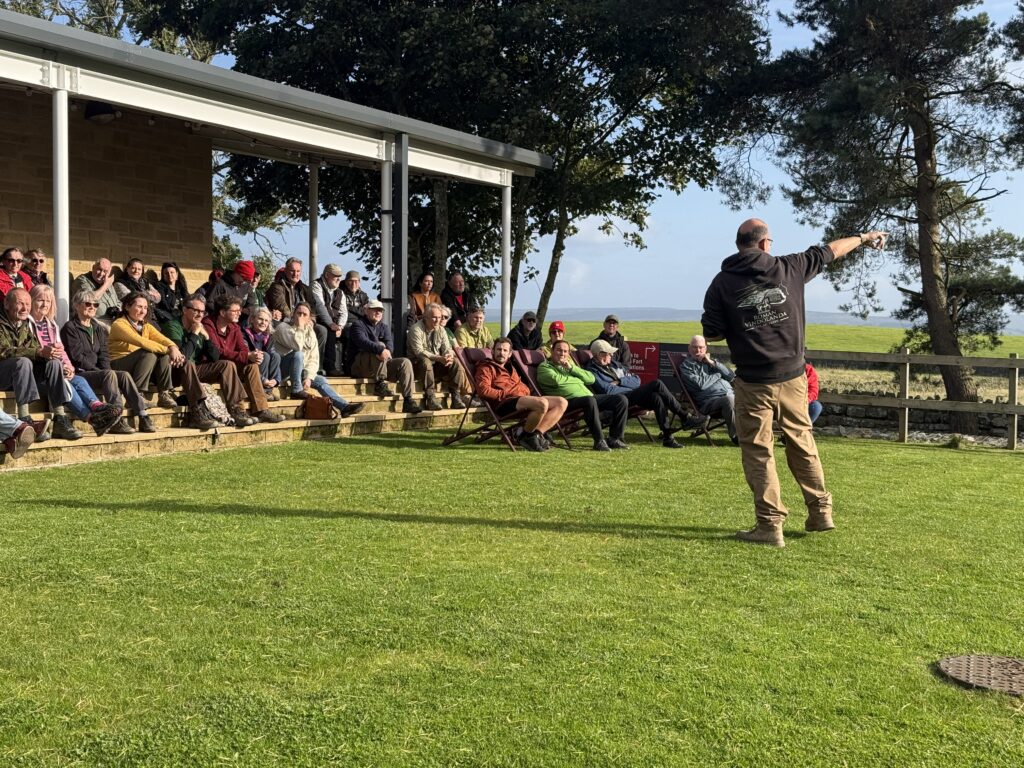
We began with an introduction and talk from Dr Andrew Birley, followed by a very special moment when Friend of Vindolanda and long-standing volunteer Pete Dunn was presented with a Gold Friends Card.
These very special Gold Cards cannot be purchased, they are gifted by the Trust to those who have shown an exceptional level of commitment and dedication to Vindolanda.
The Friends then made their way to the trenches for a talk from Rachel and the chance to see all the latest developments taking place on site.
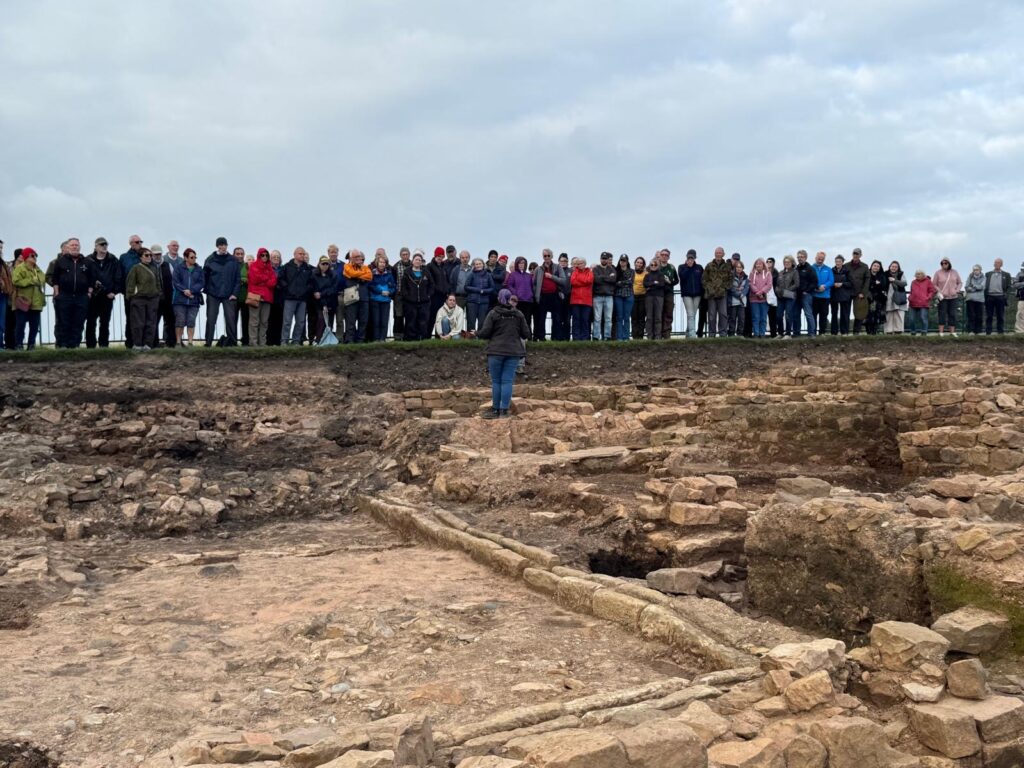
If you’re reading this and would like to support Vindolanda by becoming a Friend of Vindolanda, you can find out more about membership, including all the benefits, here: Friend of Vindolanda.
A huge thank you to all our Friends for your continued support, we couldn’t do what we do without you! Sonya
14th September
As we come into the final week of the Magna Excavations 2026, one of our wonderful post-excavation volunteers Wendy reflects on her time on site last week.
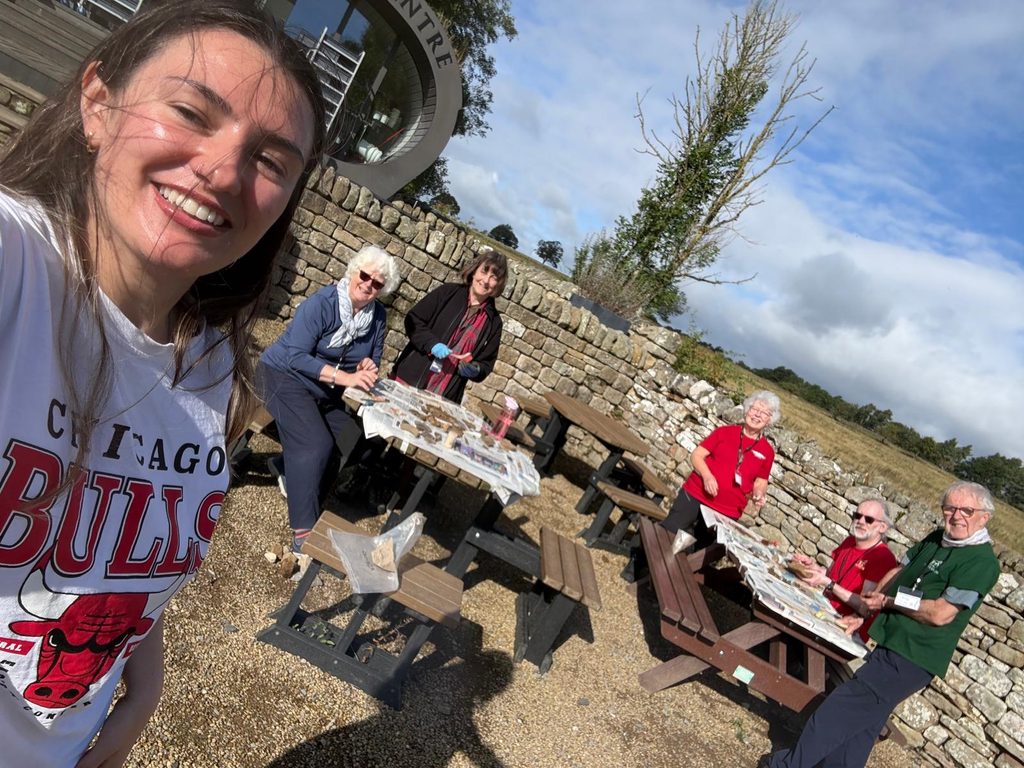
It’s September and the season for volunteer excavators is drawing rapidly to a close. It’s becoming a bit desperate out on the excavation sites at Vindolanda and Magna as various projects are near to completion, yet still a few feet from that wall or this flat surface, as defined by Marta or Rachel.
However, the team of five enthusiastic post-ex volunteers are calmly beavering away in the background under the tutelage of Cristina. Our first week was spent at Vindolanda, cleaning two thousand years of dirt from pottery, bones, iron and other exciting finds trowelled out of the ground by our colleagues outdoors. We were lucky in that we have a cozy room in the Robin Birley Centre in which to work, yet the opportunity to transfer our workstations outside if the weather or inclination allows and speak to visitors. After identifying, recording and weighing our objects, they are bagged up and sent to specialists for further recording. It’s a very satisfying task.
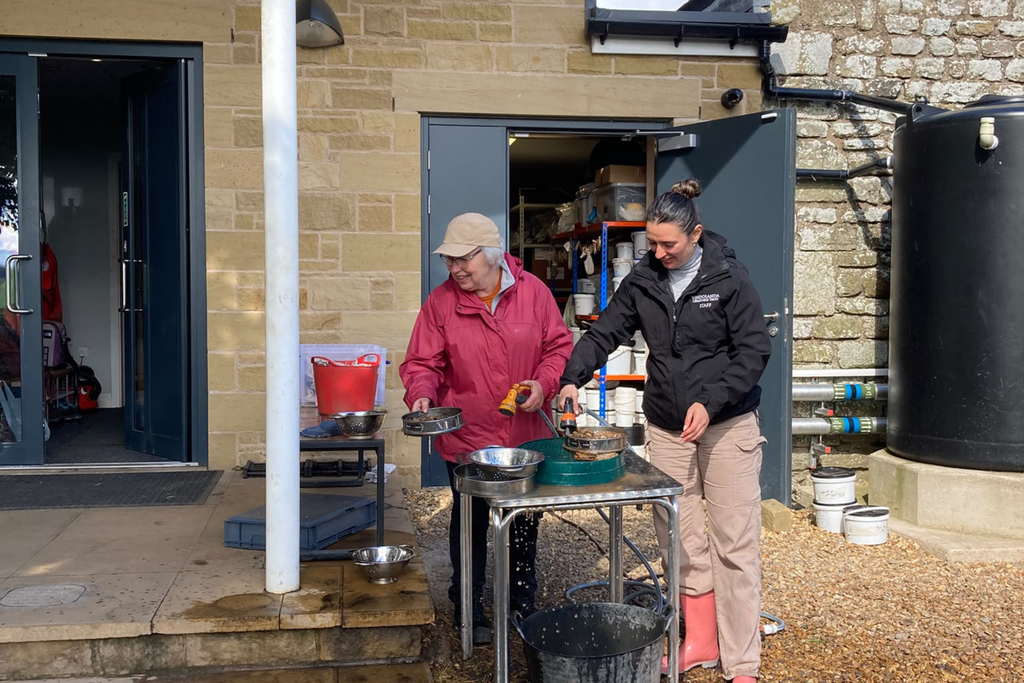
For our second week we transferred to Magna, where the finds have been piling up in anticipation of our arrival. After a couple of days of work similar to that at Vindolanda, we started flotation cleaning. Franki explained the process and off we went, into the sunny backyard with Cristina to rinse, spray and record soil samples. It’s a great experience being part of a small, like-minded team, knowing you’re contributing towards the whole history project, yet having fun, too! Wendy, Post-Excavation Volunteer
16th September
With only three more days left of the 2026 season, one of our great volunteers Anne reflects on her time with us at Magna.
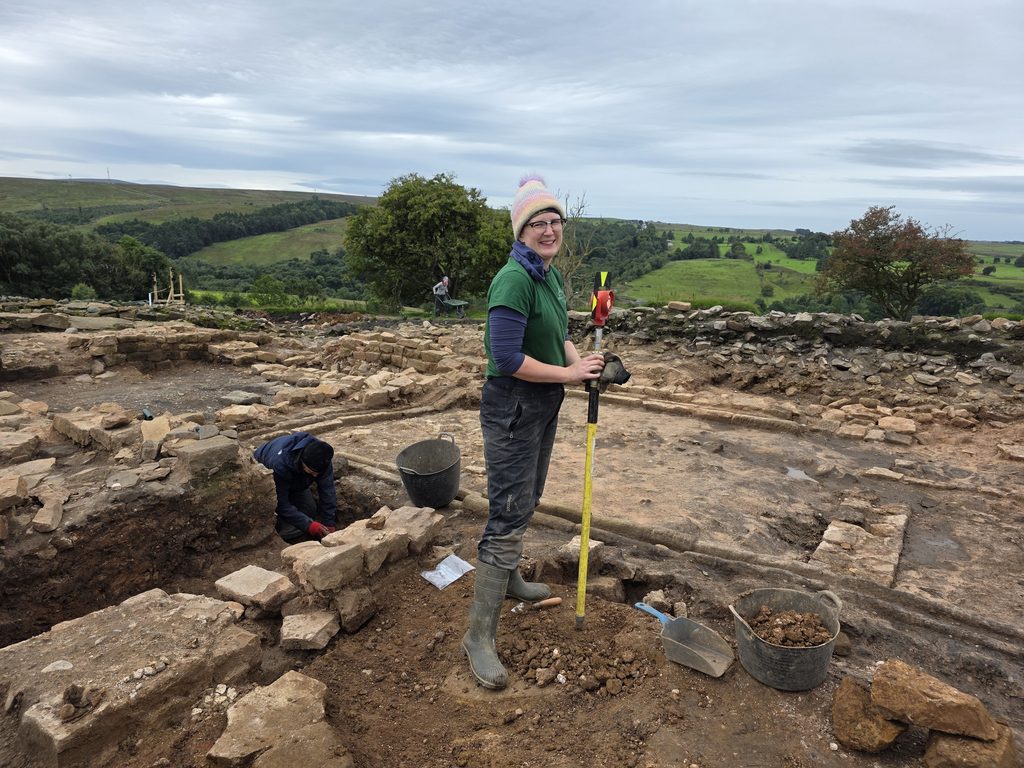
Week 1 at Magna has come and gone in a flash. And what a week it has been. Weekends bring a well earned respite from the hard work of digging, so here I am, sat on a sunny hillside overlooking Greenhead, reflecting on the week that has just gone.
Having excavated earlier this year at Vindolanda, I never imagined I would be digging again so soon . But with the temporary relaxation of booking restrictions for 2026, here I was, back in the trenches once again. Assigned to a team investigating a former storeroom, we set to work trowelling down through the layers to investigate the rooms function and find the floor. Initial evidence suggests our room was reused for various purposes, recycling being a far from modern invention.
Digging at Magna is what one can only descibe as proper archaeology; it’s hard work, it’s muddy, it gets you thinking and doesn’t always go the way you expect. Sometimes the weather is …well we are in Northumbria after all. But oh boy is it fun.
Whilst the floor surface continues to elude us, the former occupants of this place most certainly do not. With every scrape of the soil, shifting of a rock and discovery of an artifact, we uncover evidence of their lives on this wild yet breath taking frontier, some 1,800+ years ago. Finds have been aplenty, and there is always something of interest (especially if you like animal bones). At times, it feels that we are being supervised, not only by our team of professional archaeologists, but the former occupants of Magna as well.
Whilst excavating, it is hard not to pause and reflect on why archaeology continues to capture the imagination of so many. At its core, archaeology is all about legacy; the legacy we uncover of those who went before us, and the legacy we create ourselves through the process of discovery. Whilst we are coming into the final year of the Magna project, the discoveries made, relationships and memories formed throughout the project leave me in no doubt that legacy will endure.
So here is to the final week of the 2027 excavations, the Magna project, and us finally finding that elusive floor. Anne Volunteer
18th September
Well done to the Magna Period 12 crew who have done a smashing job in the final two weeks, especially in a very wet and windy final few hours!