

Period 7
Here we will post regular updates on the current excavations and post excavation taking place on site here at Magna Roman Fort during Period 7 of the 2026 excavation season.
You will hear from our archaeologists and volunteers as they share news and thoughts about what is being uncovered, the challenges and the highlights of the excavation season.
29th June
Before we dive into what the new crew is up to, we must give a massive shoutout to our previous group. Thanks to their incredible hard work, we made a genuinely insightful discovery: we’ve begun uncovering the multi-phased walls of the fort! We are potentially looking at four different walls in total, spanning from the earliest Roman sections right up to the final 4th-century iterations. A huge congratulations to that team for such a fantastic achievement!
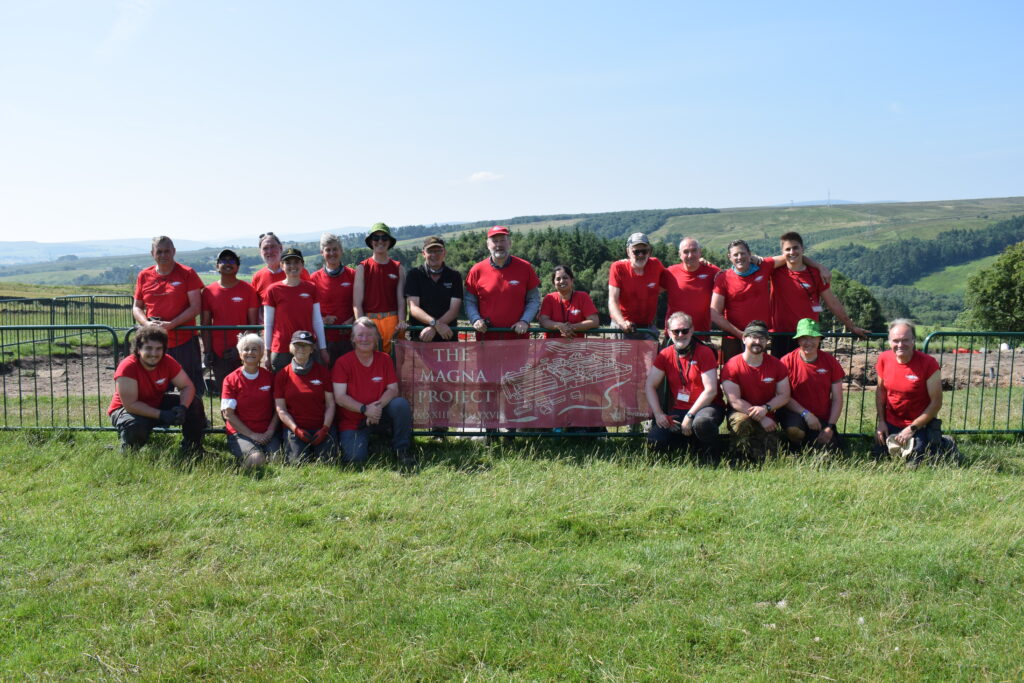
But the story moves on, and our Period 7 crew didn’t waste a single second. After the usual site tours and health and safety introductions, it was straight on with the coats and boots then out to the trenches!
Here is how the team is tackling the site this week.
Part of the team is back in the ‘courtyard’ area. In true, wonderful archaeological fashion, even more walls have suddenly appeared to add to the mystery. It’s a proper puzzle, and we another layer of mystery. Another group has been hard at work exposing and cleaning the beautiful stone surfaces running right through the middle of the site and doing a fantastic job of it for the start of the week!
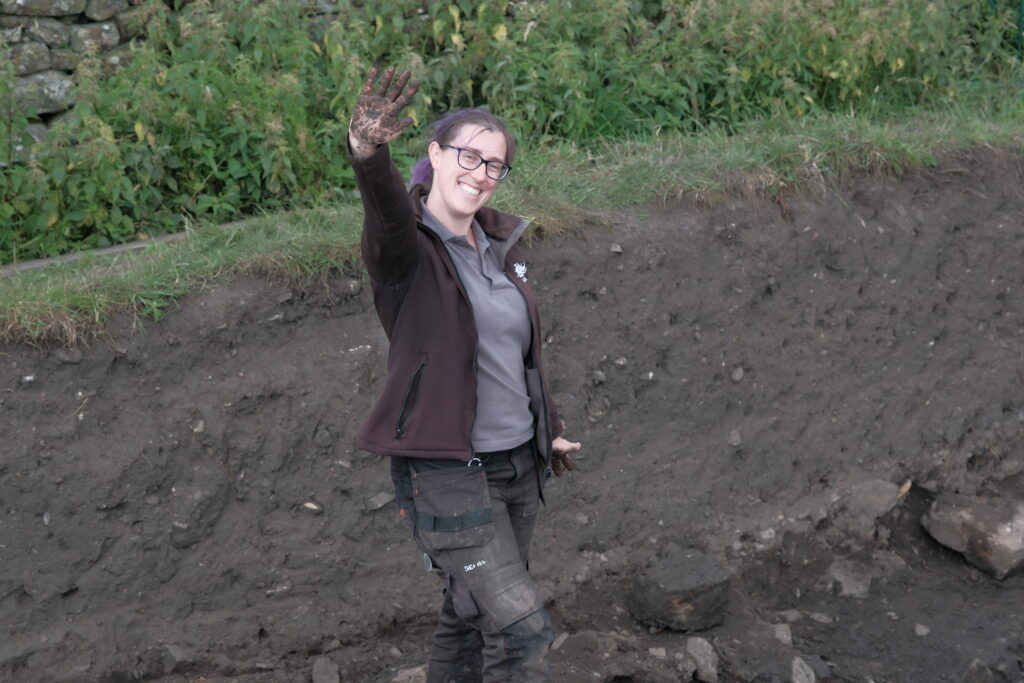
Saving the absolute best (and muddiest!) job for last, a dedicated crew has started working through our fascinating anaerobic layers. This is where the magic happens, if there are any Roman leather shoes or organic finds preserved on site, this is hopefully where they’ll be. It takes a huge amount of focus and very muddy hands, but the reward could be massive!
It’s quite a lot to take on for a first Monday, but this eager new crew is taking our archaeology completely head-on. We can’t wait to see what they find stay tuned for updates as the week unfolds! Tommy
1st July
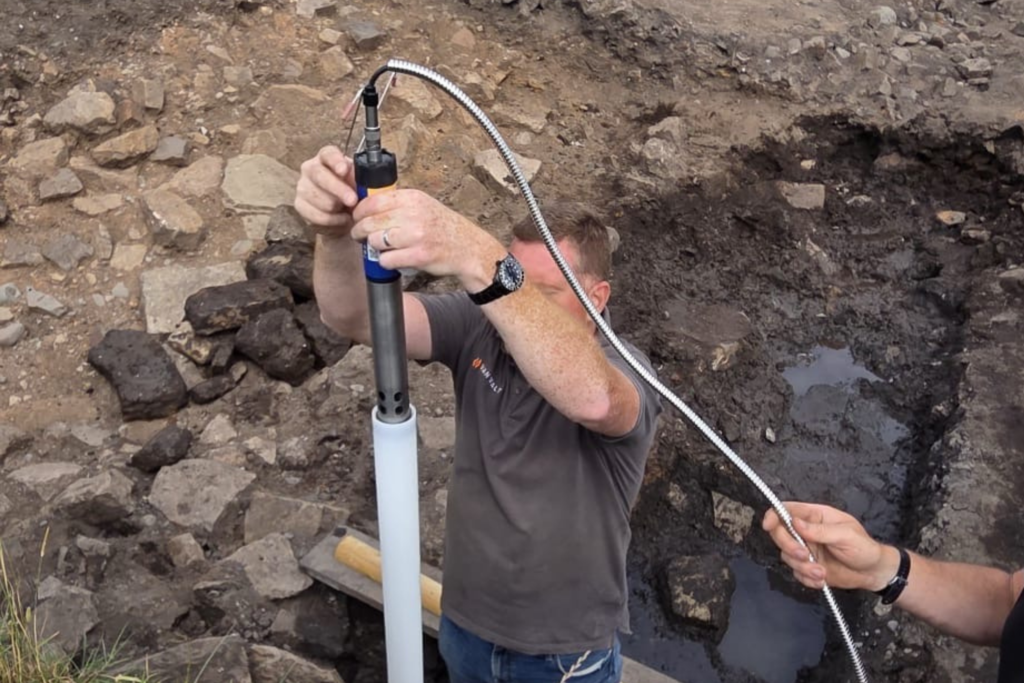
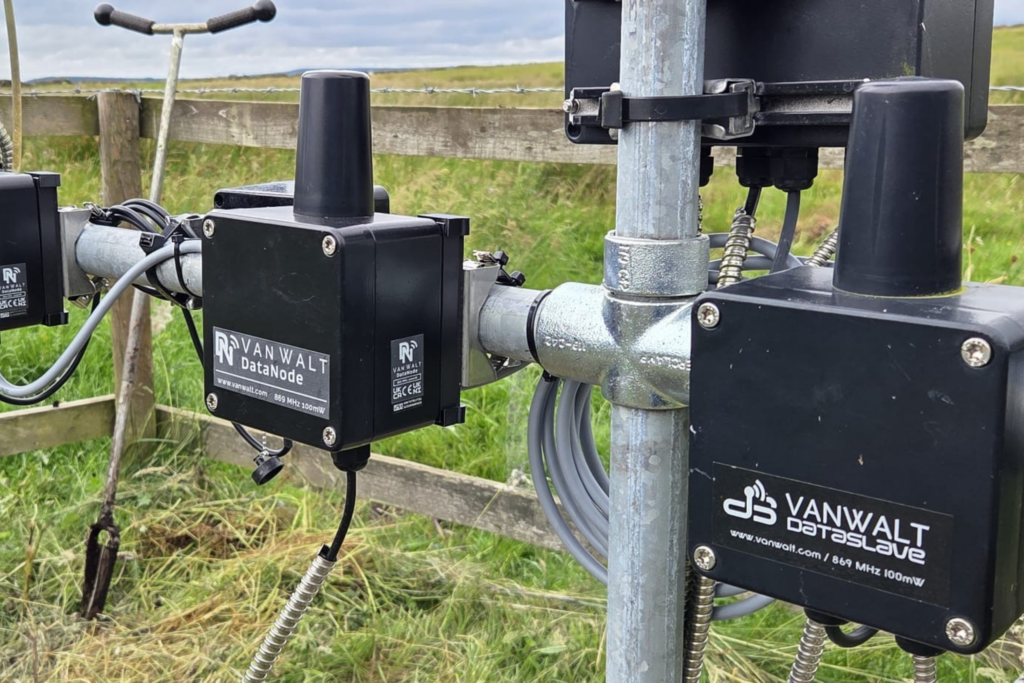
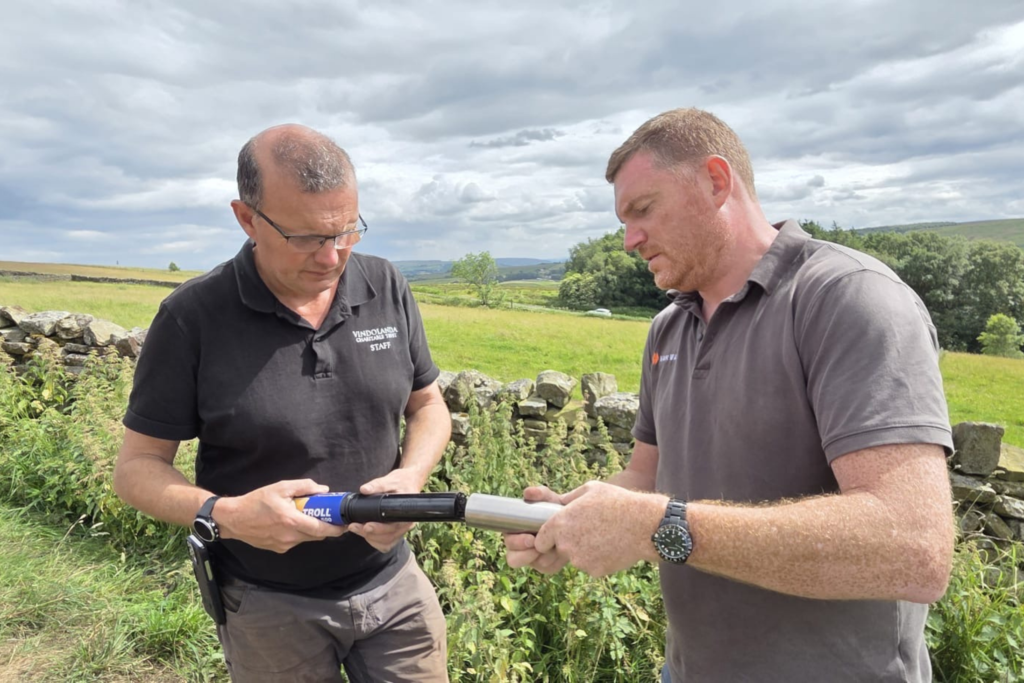
We’ve had another great day onsite here at the Magna excavations, where our weather station and probe array has been getting an upgrade. We’ve also been able to install a new monitoring probe in the southern ditches of our current excavation trench.
Thanks to the hard work of the team clearing out the southern ditch, our research partners at Van Walt have been on site over the past couple of days installing this new equipment. This will allow us to gather even more data about what’s happening below the ground in the south-west corner of Magna Fort – an area with the potential for up to six metres of anaerobic deposits, making accurate environmental monitoring here absolutely crucial.
Our weather station and probe array, Wall-E, has also been given some TLC, with upgrades to ensure we can keep collecting this vital information and learning more about the effects of climate change on the buried archaeology at Magna.
If you’d like to delve a little deeper into the data yourself, check out our Magna Monitoring Data Viewer, which lets you take a closer look at six of the key variables being monitored by Wall-E. Toggle between 15-minute, daily, or monthly intervals to explore the changes being recorded. Sophie
3rd July
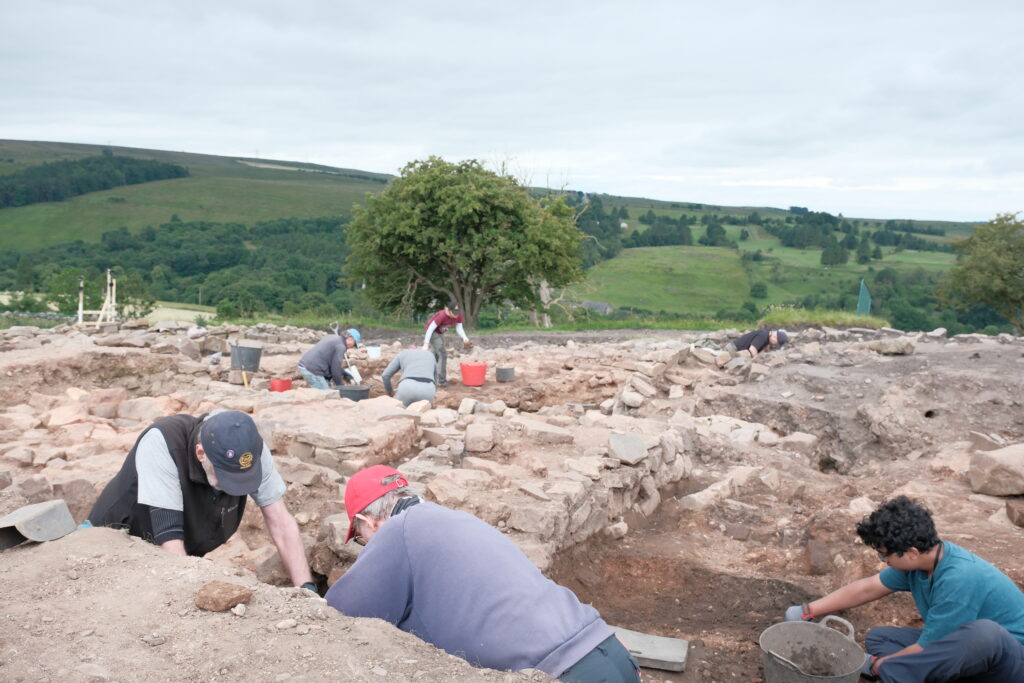
As we reach the end of week one, our latest team of volunteers have been settling in nicely and tackling the questions left for them by Period 6.
The continuing dry weather has meant we were able to continue working in the southern ditch for the first half of the week. The deposits here are now firmly waterlogged and semi-anaerobic, with fragments of preserved wood and the tell-tale organic smell starting to emerge from the soil. Unfortunately, the ditch is also full of collapsed masonry from the neighbouring fort wall, which is making progress a little bit slower than usual. Nonetheless, I have high hopes for anaerobic finds in the near future as we get deeper into the ditch fills.
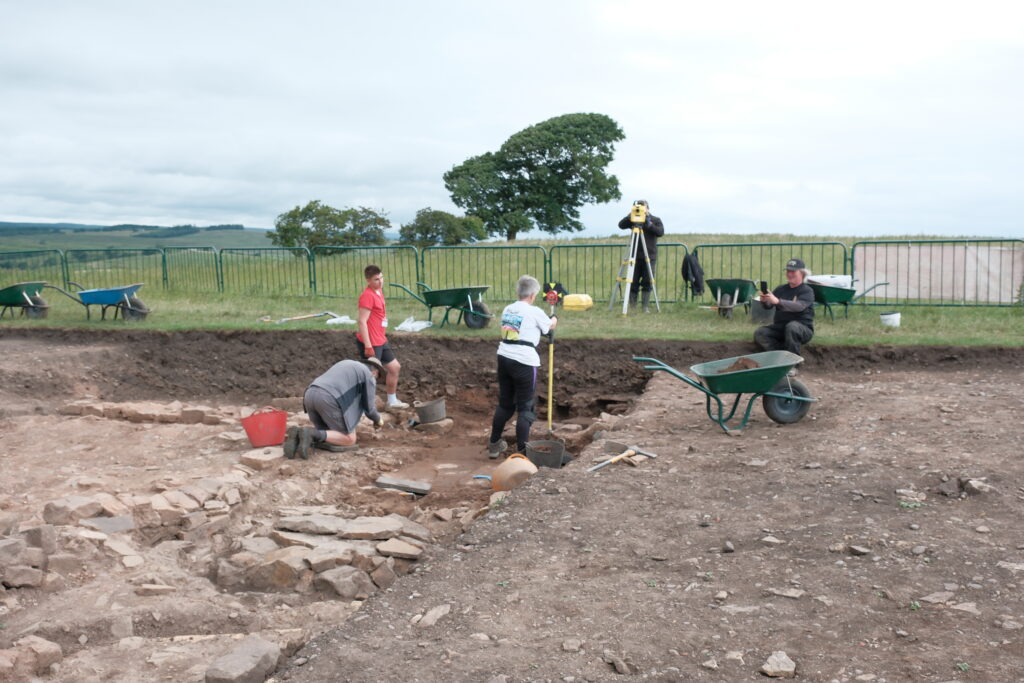
Meanwhile, the other half of the crew is continuing to unravel the complex floorplan and stratigraphy of the praetorium. We now have a better sense of where the north and west walls of the building are located and can see how some of them have been modified and moved over time. The westernmost room was removed and the area levelled in the Roman period, creating a time capsule underneath the rubble. We’re still not sure exactly what this room was for but finds such as amphora, window glass and large numbers of animal bones from a variety of species may help shed more light on the space. Elsewhere we have uncovered an area of well preserved flagstone flooring inside the northern range of the building and large potential capstones for a drain outside the wall. it would be great to have a matching drain for the one we excavated last year but we shall have to wait and see how this feature develops. Rachel
6th July
One week over! I knew very little, practically speaking, about archaeology one week ago, beyond what I’d read about and watched on TV. Going into my first excavation at Magna, I was worried I wouldn’t find anything or would be absolutely confused. I admit that I’ve been rather confused, but in a good, productive way; archaeology now seems to be a lot more about questions than answers, about knowing just how much you don’t know, but that iterative investigation is also what makes it interesting.
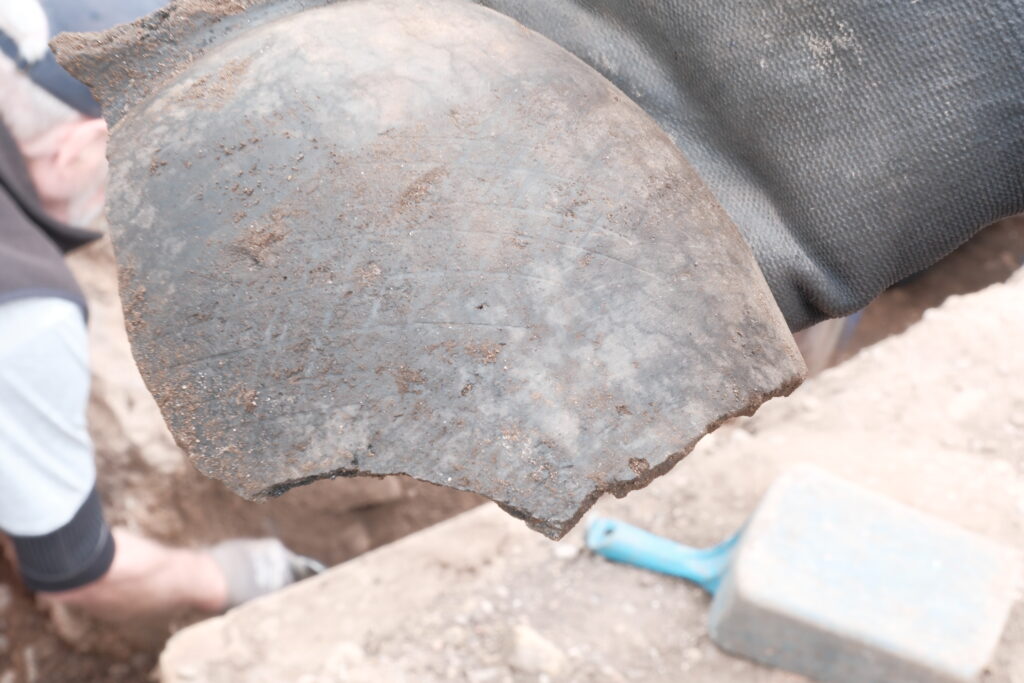
Beyond the usual nails and bones, we’ve had some great finds this past week: an absolutely beautiful piece of Neen Valley pottery found by Michael and Keith, a very large piece of blackware, and an arrowhead found by Pete, just to name a few. A big part of what I’ve been helping with over the past week has been searching for and defining walls in the praetorium. While finding artifacts is definitely exciting, there’s also something very satisfying about slowly etching away the dirt and clay to find the stones of a wall (or even better, a floor) beneath, that almost meditative process.
And the volunteers at Magna are all wonderful people. Their advice, good conversations and humor have made wind-battered hours in the trench fly by: the obligatory reference to a certain Beatles song every time the fickle Northumberland sun reappears; the “it’s not me” whenever the special anaerobic smell reaches us; the people who have a little too much fun mattocking; or the tortured relationship we all have with sheep (odi et amo…). There are also bigger things, like the shared excitement among everyone when any one person finds anything cool; or the sense of purpose that working toward a common goal brings; or even the stories we tell about what we find, because a big part of archaeology seems to be having a good imagination.
As a student, the experience has only affirmed my desire to study Classics in college. It’s one thing, though, to read and translate the writings of long-dead Greco-Roman authors, most of whom were elite men. It’s another, perhaps more rewarding endeavour, to touch and feel the remnants that ordinary people – men and women, adults and children – left behind. To restate a sentiment that’s probably a cliché in archaeology, but for good reason because it’s true: it’s unspeakably cool and humbling to be the first person to touch something in 2,000 years.
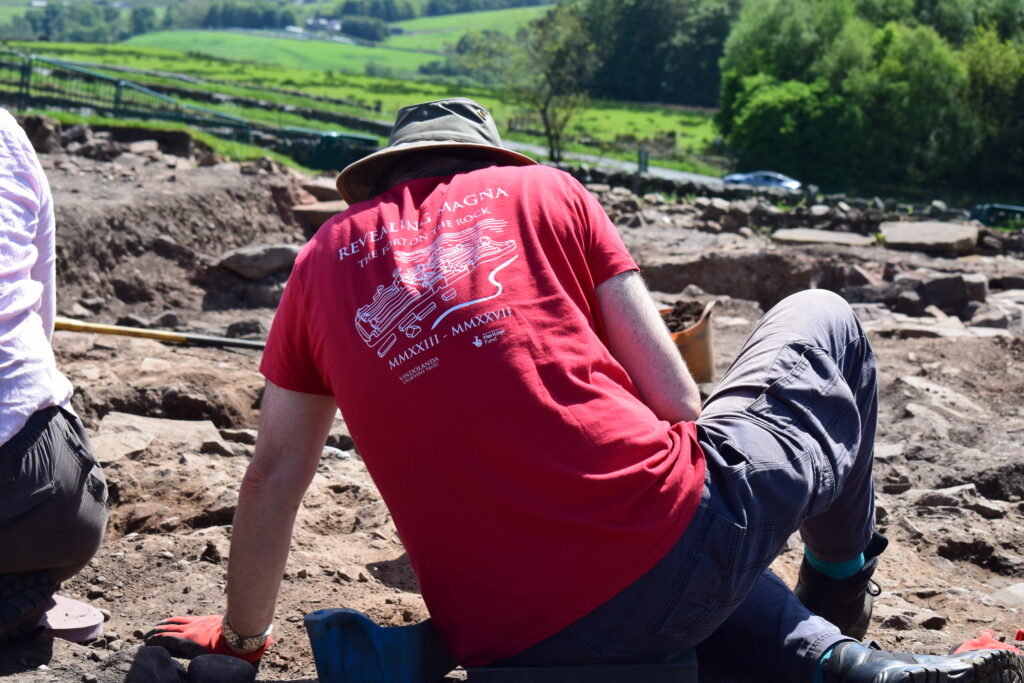
I’m really looking forward to the finds this second week will bring! I’m 16 now, so maybe I’ll be around to see the projected conclusion of the Vindolanda excavations in 2100. Until then, I’ll wear my Magna shirt with pride. Shreyas, Volunteer
10th July
A huge well done to our Period 7 crew, who worked incredibly hard in the recent heatwave to uncover more of Magna’s story and have been a pleasure to have on site!